In the field of Industrial Refrigeration, precise temperature control is the cornerstone. However, to ensure optimal quality and maximum shelf life for various products (especially fresh produce like fruits and vegetables) in Temperature-Controlled Storage, focusing on temperature alone is insufficient. Relative Humidity (RH) is an equally critical core parameter. Together with temperature management, inbound handling practices, and facility design, it forms the operational backbone of a modern, intelligent cold room.
I. Humidity: The Overlooked Guardian of Quality
Relative humidity refers to the percentage of water vapor present in the air relative to the maximum amount the air can hold at that temperature. In a cold room, improper humidity leads to two major issues:
Excessively Low RH: Causes product moisture loss (shrinkage), leading to wilting, shriveling, and deterioration in appearance and nutritional value. For example, leafy greens wilt rapidly.
Excessively High RH: Creates conditions for mold growth and bacterial proliferation, leading to rot. Condensation may also drip onto products or packaging.
Therefore, different products have specific “Optimum Storage Humidity Ranges”, which, like international temperature standards, are key to scientific preservation:
Onions, Garlic: Require a dry environment with an RH of 55%-65%. Higher humidity easily triggers root growth or mold.
Apples, Pears: Require a high-humidity environment with an RH of 75%-80% to maintain crispness and freshness.
Leafy Greens: Typically require very high humidity (90%-95%), coupled with pre-cooling, to minimize moisture loss.
Dry Goods, Packaging Materials: Require even lower humidity (typically below 50%) to prevent moisture absorption.
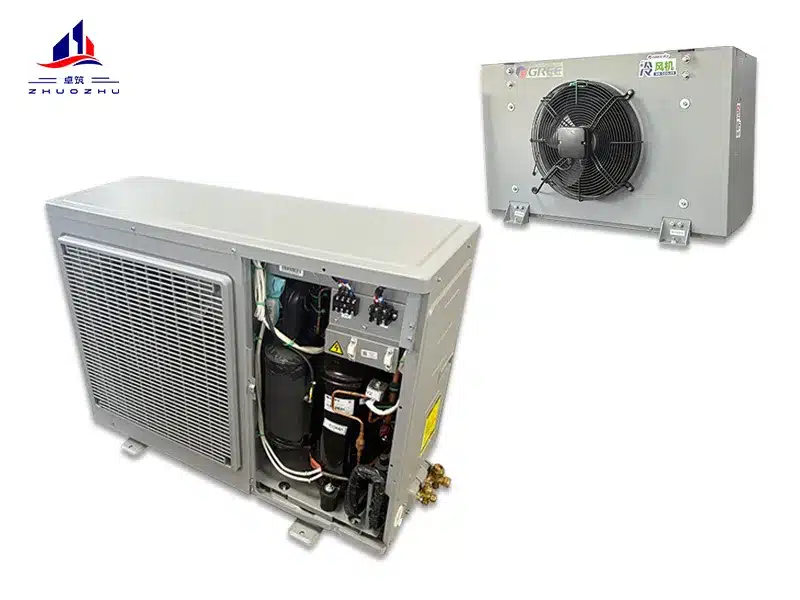
Professional Practice Note: Advanced cold rooms feature different Humidity-Controlled Zones or utilize humidifiers, dehumidifiers, and refrigeration systems with high-efficiency evaporators to precisely regulate the humidity environment in different chambers.
II. Dynamic Adjustment: Addressing the Challenge of Inbound Product Temperature
The temperature of goods upon arrival is another critical variable. Directly placing warm products (e.g., at 30°C in summer) into a standard cold room (0-5°C) causes serious problems:
Sharp Increase in Thermal Load: Forces the refrigeration system to work overtime, skyrocketing energy consumption and potentially causing temperature fluctuations for other stored products.
Condensation Flooding: Warm air meeting cold surfaces causes significant condensation on products and packaging, promoting microbial growth.
Quality Damage: Certain products (e.g., potatoes) can develop condensation from sudden temperature changes, accelerating decay.
Thus, professional cold room operations must include “targeted adjustment” procedures:
Pre-Cooling Room: A dedicated area for Blast Chilling to rapidly remove “field heat” or “transport heat,” bringing the product’s core temperature close to the storage temperature before transfer to the main storage cold room.
Gradual Temperature Reduction: A stepwise cooling protocol is necessary for certain sensitive products.
Inbound Handling Protocols: This is an indispensable link in the Cold Chain, ensuring temperature record continuity and compliance with food safety management systems like HACCP.
III. Facility Design: Cold Room Door Selection for Logistics Efficiency
The design details of a cold room directly serve its logistics function. The choice of doors is a prime example—it’s not just “an opening” but a critical node in the material flow.
Conclusion: Integrated Modern Cold Room Management
A professional Refrigeration Solution provides far more than just low temperatures of -18°C or +5°C. It is an integration of temperature, humidity, airflow, gas composition (e.g., for CA/MA Storage), and intelligent logistics design.
Dual Core Parameters: Adherence to international Temperature (≤5°C for chilling, ≤-18°C for freezing) standards and product-specific Humidity control are the foundation of preservation.
Dynamic Operational Procedures: Pre-cooling and other dynamic adjustments based on the inbound product temperature are key operational practices to ensure chamber stability and product quality.
Logistics-Centric Design: Everything from the type of cold room door to the internal layout is designed to enhance logistics efficiency and reduce temperature fluctuations.
Only by organically combining these three elements can a truly efficient, reliable, and modern Temperature-Controlled Storage System be built, ensuring that products remain in an ideal state at every step from the warehouse to the consumer.