Introduction: Redefining Industrial Roofing Safety Standards
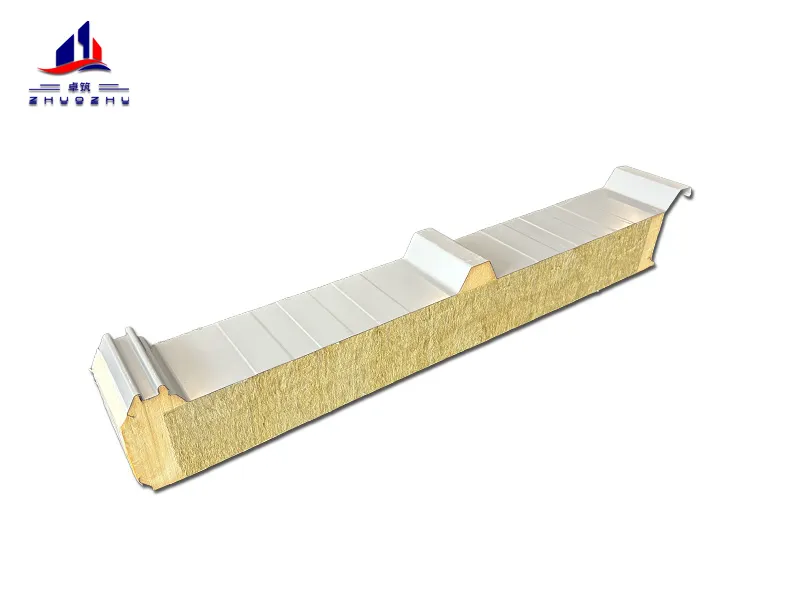
In an era where industrial fire safety regulations are becoming increasingly stringent and building resilience is paramount, rock wool sandwich roof panels represent more than just an insulation choice—they embody a fundamental commitment to asset protection, occupant safety, and regulatory compliance. Unlike conventional insulated roofing systems, rock wool panels offer a unique combination of non-combustible fire performance, exceptional acoustic control, and durable thermal efficiency that makes them the definitive choice for facilities where risk cannot be compromised. ZHUOZHU, with extensive expertise in manufacturing both PIR sandwich panels and rock wool systems for global industrial applications, provides this comprehensive guide to understanding, specifying, and benefiting from premium rock wool roofing technology.
Part 1: The Unmatched Fire Safety Proposition
1.1 Non-Combustible Performance by Design
Material Science Foundation:
Industrial Risk Mitigation:
Warehouse Protection: Critical for facilities storing flammable materials
Manufacturing Safety: Essential for plants with high-heat processes
Insurance Advantages: Often leads to reduced premiums for properly protected facilities
Regulatory Compliance: Meets and exceeds strictest international fire codes
1.2 Fire Performance Comparison Matrix
Part 2: Technical Specifications & Performance Data
2.1 Core Material Excellence
Rock Wool Core Properties:
Advanced Composite Options:
PU Edge-Sealed Variants: Polyurethane seals at panel edges reduce thermal bridging
Enhanced Density Cores: For areas requiring higher load capacity
Specialty Facing Combinations: Matching specific environmental or aesthetic requirements
2.2 Panel Configuration & Dimensions
Standard Specifications:
Panel Thickness: 80mm, 100mm, 120mm, 150mm, 200mm (custom available)
Effective Width: 1000mm standard (other widths: 950mm, 1150mm)
Maximum Length: Up to 12 meters (transport optimized)
Facing Materials:
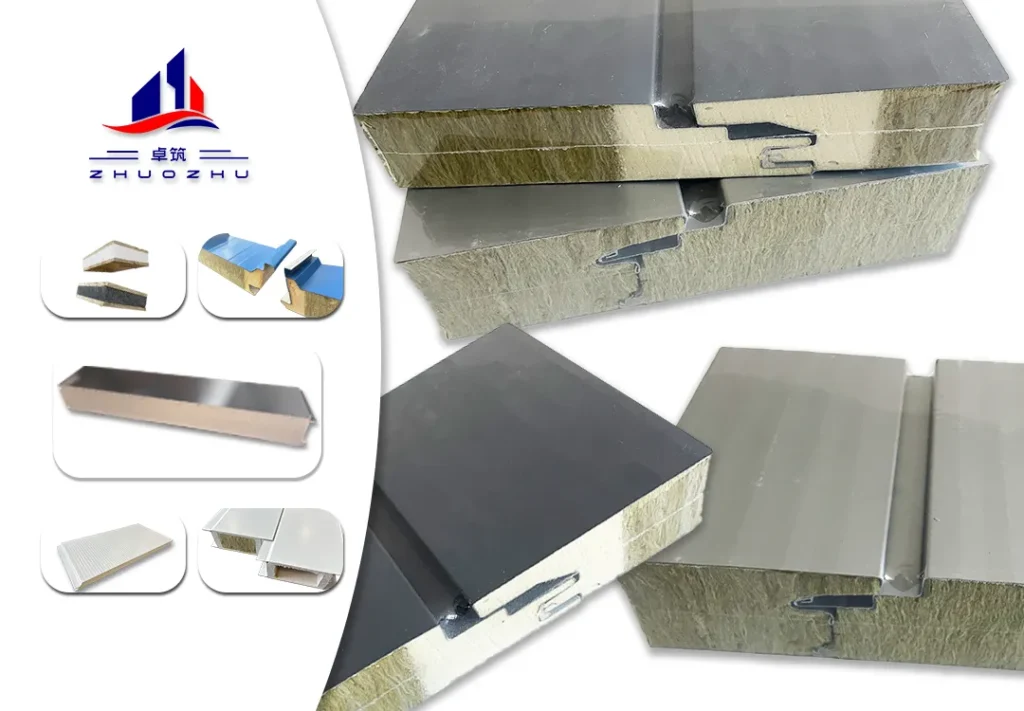
Joint Systems: Standing seam, secret-fix, or through-fix based on span requirements
2.3 Performance Specifications
Thermal Performance (U-Values):
80mm Panel: U ≈ 0.41 W/m²K | R ≈ 2.44 m²K/W
100mm Panel: U ≈ 0.33 W/m²K | R ≈ 3.03 m²K/W
150mm Panel: U ≈ 0.22 W/m²K | R ≈ 4.55 m²K/W
200mm Panel: U ≈ 0.17 W/m²K | R ≈ 5.88 m²K/W
Structural Performance:
Span Capacity: Up to 4.5m between supports (depending on thickness)
Wind Uplift Resistance: Certified to 2.5-3.0 kPa (depending on fixing system)
Snow Load Capacity: 1.5-3.0 kN/m² based on panel configuration
Point Load Resistance: 0.25-0.50 kN for maintenance access
Acoustic Performance:
Part 3: Application-Specific Solutions
3.1 High-Risk Industrial Facilities
Petrochemical & Chemical Plants:
Challenge: Potential flammable atmosphere, strict regulatory requirements
Solution: Class A1 roofing with enhanced chemical resistance coatings
Case Example: Middle Eastern refinery achieving full compliance with NFPA and ATEX requirements
Warehousing with Hazardous Materials:
Challenge: Storage of flammable liquids or materials requiring fire separation
Solution: Rock wool roof panels providing 60-90 minute fire resistance
Benefit: Potentially reduced insurance premiums and improved risk rating
3.2 Food & Pharmaceutical Manufacturing
Processing Facilities with High Hygiene Standards:
Challenge: Need for fire safety without compromising cleanability
Solution: Rock wool panels with smooth, hygienic interior facing
Integration: Compatible with cleanroom HVAC and condensation control systems
Cold Storage with Fire Safety Requirements:
Challenge: Maintaining low temperatures while meeting fire codes
Solution: Thicker rock wool panels (150-200mm) or hybrid PIR-rock wool systems
Performance: Achieves required U-values while providing non-combustible protection
3.3 Public & Institutional Buildings
Shopping Centers & Entertainment Venues:
Challenge: Large occupant loads requiring maximum fire safety
Solution: Class A1 roofing throughout public assembly areas
Additional Benefit: Enhanced acoustic performance for occupant comfort
Transportation Hubs:
Challenge: 24/7 operations, diverse fire load, public safety priority
Solution: Durable rock wool systems with enhanced impact resistance
Maintenance Advantage: Long service life with minimal maintenance
Part 4: Installation & Integration Systems
4.1 Installation Methodologies
Standing Seam Systems:
Profile Height: 40-60mm for optimal water shedding and structural performance
Advantages: Excellent weather tightness, thermal movement accommodation
Applications: Large-span industrial buildings, architectural projects
Through-Fix Systems:
Fastener Type: Self-drilling screws with EPDM sealing washers
Advantages: Cost-effective, suitable for standard industrial applications
Spacing Requirements: Typically 300-400mm along supports
Secret-Fix/Clip Systems:
Mechanism: Concealed clips providing clean exterior appearance
Advantages: Reduced thermal bridging, architectural aesthetic
Applications: Commercial buildings, retail facilities
4.2 Integration with Building Systems
Daylighting Compatibility:
FRP Panel Integration: Seamless incorporation of translucent panels (5-15% typical)
Skylight Details: Pre-engineered curbs and flashing for various skylight types
Light Transmission: Coordinated with artificial lighting design
Roof Penetration Solutions:
HVAC Equipment: Custom curbs for rooftop units with proper sealing
Piping & Conduits: Pre-fabricated penetration collars maintaining fire rating
Access Points: Integrated details for maintenance hatches and walkways
Edge & Transition Details:
Eaves & Verges: Complete systems with appropriate ventilation and drip edges
Parapet Connections: Maintaining continuous fire and thermal performance
Wall-to-Roof Transitions: Coordinated with wall panel systems
4.3 Fire Rating Maintenance at Details
Critical Interface Considerations:
Panel Joints: Mineral wool strips inserted during installation to maintain fire integrity
Penetration Seals: Fire-rated sealants and wraps for pipes and conduits
Edge Conditions: Proper detailing to maintain fire compartmentation
Fixing Systems: Selection of fire-rated fasteners and clips
Part 5: Economic & Operational Advantages
5.1 Total Cost of Ownership Analysis
20-Year Lifecycle Cost Comparison (10,000m² Industrial Facility):
5.2 Risk Management Value
Quantifiable Risk Reduction:
Business Continuity: Protection against production-stopping fire incidents
Asset Protection: Preservation of building structure and contents
Liability Reduction: Lower exposure to fire-related claims
Reputation Protection: Demonstration of safety commitment to stakeholders
Insurance Industry Recognition:
Many insurers recognize Class A1 construction with premium reductions
Some jurisdictions offer regulatory incentives for superior fire protection
Increasingly required for high-value or high-risk facilities
5.3 Sustainability & Environmental Performance
Material Environmental Profile:
Recycled Content: Typically 20-30% post-industrial recycled material
Manufacturing Energy: Lower than synthetic foam production
End-of-Life: Fully recyclable without specialized processing
Indoor Air Quality: No VOC emissions or chemical off-gassing
Building Performance Contributions:
Energy Efficiency: Good thermal performance reducing operational energy
Durability: Long service life reducing replacement frequency
Acoustic Comfort: Improved working environment quality
Resilience: Maintains performance in fire events
Part 6: ZHUOZHU’s Rock Wool Roofing Solutions
6.1 Engineering Excellence
Proprietary Manufacturing Advantages:
Density Control: Precise manufacturing for consistent performance
Hydrophobic Treatment: Factory-applied water repellency
Facing Adhesion: Advanced bonding ensuring facing integrity
Quality Verification: Batch testing for all critical parameters
Technical Support Services:
Load Span Calculations: Engineering support for specific applications
Fire Engineering: Assistance with fire strategy and compartmentation
Thermal Modeling: Condensation risk analysis and U-value calculations
Detailing Support: Comprehensive technical drawings for all conditions
6.2 Customization & Project Adaptation
Application-Specific Modifications:
Enhanced Load Capacity: For areas with heavy maintenance equipment
Specialty Finishes: Enhanced corrosion resistance for aggressive environments
Acoustic Upgrades: Additional sound absorption for sensitive areas
Hygienic Surfaces: Smooth, cleanable interiors for food/pharma applications
Integration Capabilities:
With ZHUOZHU Wall Systems: Complete envelope coordination
With Structural Systems: Engineered connections to steel structure framing
With Building Services: Pre-planned penetrations and supports
With Safety Systems: Compatibility with sprinklers and smoke vents
6.3 Quality Assurance & Warranty
Manufacturing Controls:
Raw Material Verification: Incoming rock wool quality assurance
Process Monitoring: Real-time production parameter tracking
Finished Product Testing: Regular independent performance verification
Traceability: Complete batch tracking from raw materials to installation
Performance Warranties:
Material Warranty: 10-15 years on facing materials
System Performance: 20+ year system durability warranties available
Fire Rating: Certified performance backed by test reports
Technical Support: Ongoing engineering support throughout project lifecycle
Part 7: Future Trends & Industry Developments
7.1 Regulatory Evolution
Global Code Developments:
Increased Stringency: Tighter fire safety requirements post major incidents
Performance-Based Design: More emphasis on engineered fire solutions
Sustainability Integration: Combining fire safety with environmental performance
Digital Compliance: BIM integration for fire safety documentation
7.2 Technological Advancements
Material Innovations:
Enhanced Thermal Performance: Developments in fiber technology
Improved Moisture Resistance: Next-generation hydrophobic treatments
Reduced Weight: High-performance lighter density options
Smart Roofing: Integration of sensors for condition monitoring
Installation Efficiency:
Modular Systems: Larger panel formats for faster installation
Digital Tools: AR-assisted installation and quality verification
Pre-Fabrication: More complex details factory-applied
Robotic Installation: Emerging technologies for large-scale projects
7.3 Market Drivers & Opportunities
Industry Trends:
Supply Chain Resilience: Preference for proven, reliable materials
Risk-Averse Investment: Increased focus on long-term asset protection
Sustainability Mandates: Balancing fire safety with environmental goals
Global Standardization: Harmonization of testing and certification
Growth Applications:
Renewable Energy Facilities: Solar farm support buildings, battery storage
E-commerce Logistics: High-value inventory protection
Data Centers: Critical infrastructure fire protection
Electric Vehicle Facilities: Battery manufacturing and storage
The Strategic Choice for Responsible Building
Rock wool sandwich roof panels represent more than an alternative insulation choice—they embody a comprehensive risk management strategy that protects not only the building structure but also the operations, assets, and people within. In an industrial landscape where fire incidents can have catastrophic consequences, the selection of roofing materials moves from a technical specification to a strategic business decision with implications for insurance, operations, compliance, and corporate responsibility.
The ZHUOZHU Perspective: Our experience across diverse industries and regions confirms that the most successful facilities are those where safety, performance, and economics are balanced from initial design through decades of operation. Rock wool roofing systems provide this balance through:
Uncompromised Safety: Class A1 performance that meets the strictest global standards
Predictable Performance: Durable, stable materials that perform as specified for decades
Economic Rationality: Lifecycle cost advantages that extend beyond initial investment
Regulatory Confidence: Compliance assurance in evolving regulatory environments
Sustainability Alignment: Environmental performance that supports corporate goals
For facility managers, architects, and building owners facing the complex decision matrix of modern industrial roofing, rock wool panels offer a future-proof solution that addresses today’s requirements while anticipating tomorrow’s challenges. In the critical calculus of industrial facility management—where risk is measured in potential lives, assets, and business continuity—the premium for non-combustible protection represents not an additional cost, but a fundamental investment in resilience.
As we look toward increasingly stringent safety standards and more volatile operating environments, the choice of rock wool roofing stands as a clear statement of commitment to responsible building, operational excellence, and long-term value preservation. In the world of industrial construction, some decisions define not just buildings, but the businesses they house—roofing material selection is undoubtedly one of those defining choices.
About the Author
Wald is the Chief Engineer at ZHUOZHU with specialized expertise in fire-safe building envelope design. His work focuses on the integration of non-combustible materials like rock wool into high-performance roofing systems for industrial, commercial, and institutional applications globally. Learn More About Us