
In architectural design and construction, fire safety is a primary consideration when selecting sandwich panel core materials. Due to differences in their chemical nature and structure, different core materials perform vastly differently in fires.

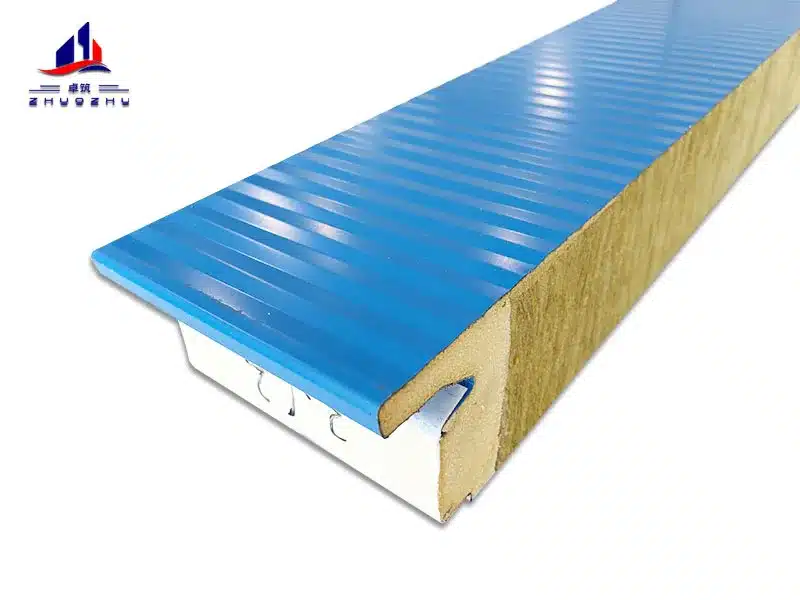
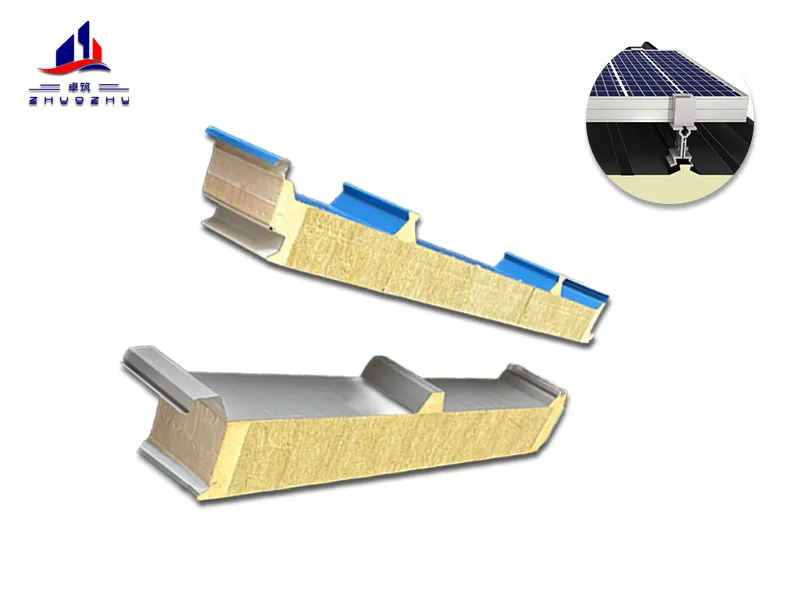
1. Rock Wool – The Benchmark for Fire Safety
Fire Rating: Class A (A1/A2) – Non-combustible Material
Rock wool is an inorganic material made from natural rock (such as basalt) melted at high temperatures and fiberized. Its fire performance is the best among the three.
- Core Advantages:
- Absolute Non-Combustibility: The melting point of rock wool exceeds 1000°C. It does not burn in a fire, nor does it contribute to flame spread, effectively blocking the fire and buying valuable time for evacuation and firefighting.
- No Melting Dripping: It does not melt or drip during a fire, avoiding the risk of igniting other items.
- High Stability: It does not decompose at high temperatures, maintaining structural integrity and preventing premature collapse of the building structure.
- Applications: Places with extremely high fire safety requirements, such as chemical plants, gas stations, firewalls and fire partitions in high-rise buildings, and public gathering places (hospitals, schools, shopping malls).
2. PIR (Polyisocyanurate) – Balancing Efficient Insulation and Good Flame Retardancy
Fire Rating: Class B (Typically B1 – Flame-Retardant Material)
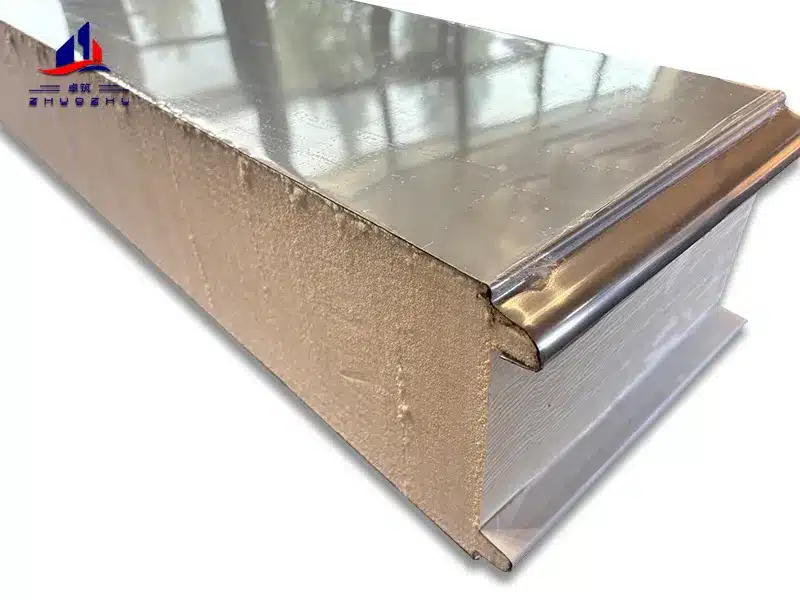
PIR is an upgraded version of PUR. By forming stable isocyanurate ring structures, its fire performance far surpasses that of PUR.
- Core Advantages:
- Excellent Flame Retardancy: When exposed to fire, its surface quickly carbonizes, forming a dense char layer. This layer effectively blocks the transfer of oxygen and heat inward, thereby delaying the spread of flames.
- Low Smoke Density: Compared to traditional PUR, PIR produces relatively less smoke when burned.
- Limitations: Although flame-retardant, it is still an organic material and will eventually burn under sustained intense flames. Its fire performance depends on its chemical formulation.
- Applications: Buildings that require both insulation efficiency and fire safety, such as logistics warehouses, industrial plants, and cold storage facilities. It is currently the mainstream choice in the industrial sector.
3. PUR (Polyurethane) – Flame Retardancy Dependent on Additives
Fire Rating: Class B (Typically B2 – Combustible, can be upgraded to B1)
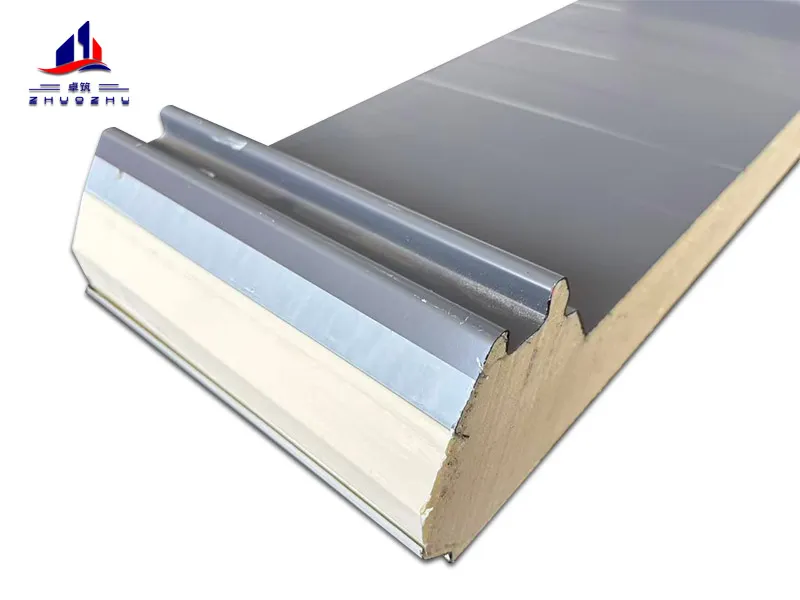
PUR itself is an organic polymer material and is flammable (B3) without treatment. By adding large amounts of flame retardants, it can achieve a B2 or B1 rating.
- Core Advantage: After adding flame retardants, it possesses certain flame-retardant capabilities.
- Core Disadvantages:
- Risk of Performance Degradation: Flame retardants may migrate or volatilize over time, affecting long-term fire stability.
- High-Temperature Melting Dripping: It will melt in a fire and produce flaming droplets, which can easily ignite other items and accelerate the spread of fire.
- High Smoke Density: It produces large amounts of thick smoke when burned, which is a major cause of fatalities in fires.
- Applications: Mainly used for temporary structures or internal partitions with low fire safety requirements. Use with caution.
4. EPS (Expanded Polystyrene) – Flammable Material
Fire Rating: Class B (Typically B3/B2 – Flammable/Combustible Material)
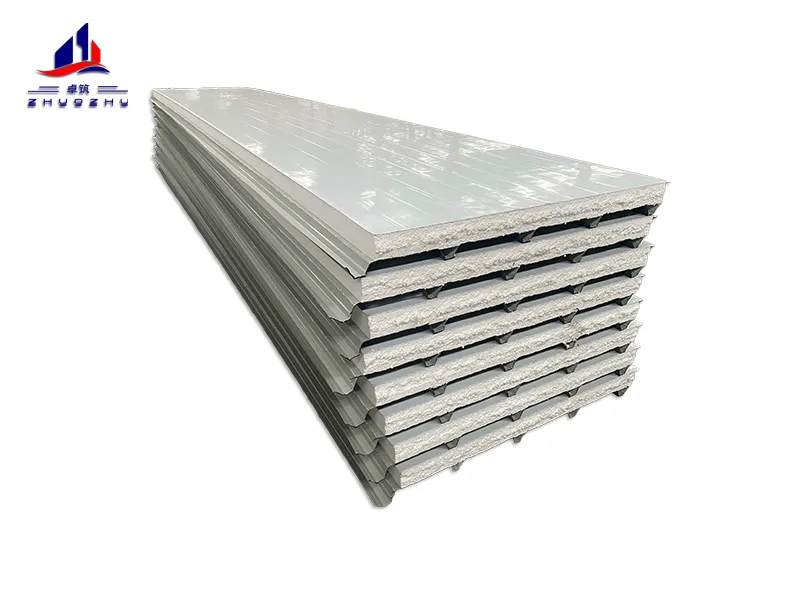
EPS is made by expanding polystyrene beads. It is highly flammable by itself, and even with the addition of flame retardants (becoming “flame-retardant EPS”), its fire performance is far inferior to the materials mentioned above.
- Core Disadvantages:
- Extremely Flammable: It shrinks and melts rapidly upon contact with fire, with flames spreading very quickly.
- Severe Melting Dripping: It produces burning droplets, akin to “fire rain,” posing extreme danger.
- High Smoke Toxicity: Burning produces large amounts of toxic smoke.
- Applications: Strictly prohibited for use in building envelopes with any fire safety requirements. Typically used only for ground leveling, packaging, etc. Its use in sandwich panels requires extremely strict fire isolation measures.
Summary Comparison Table
| Property | Rock Wool | PIR | PUR | EPS |
|---|---|---|---|---|
| Fire Rating | A1 (Non-Combustible) | B1 (Flame-Retardant) | B2 (Combustible) | B3/B2 (Flammable/Combustible) |
| Combustion Behavior | Does not burn, withstands >1000°C | Chars upon fire exposure, blocks flames | Contains additives, may drip | Burns rapidly, severe dripping |
| Smoke Production | None | Less | More | Heavy, toxic smoke |
| Core Principle | Inorganic, inherently non-combustible | Stable chemical structure, highly flame-retardant | Relies on additive flame retardants | Organic flammable material, limited retardancy |
| Safety Level | Highest | High | Moderate | Low |
Conclusion and Material Selection Advice
When selecting sandwich panel core materials, fire safety should be the core of the decision-making process:
- First Choice: Rock Wool: For any building with strict fire codes, high occupant density, or involving hazardous materials, rock wool is the only and necessary choice. It provides the highest level of passive fire safety.
- Second Choice: PIR: For industrial and commercial buildings requiring high insulation performance and good fire safety, PIR is an ideal balanced choice. It is superior to PUR and EPS but cannot replace the absolute non-combustibility of rock wool.
- Use PUR with Caution: Consider only for temporary structures with very low fire safety requirements and limited budgets, with clear acknowledgment of fire risks.
- Avoid EPS: Absolutely avoid using EPS core materials for building exteriors, roofs, or other envelope structures due to its extremely high fire risk.
Finally, always request official fire rating test reports from authoritative institutions from suppliers and make selections based on national building fire protection design codes to ensure the safety of life and property.

Pingback: Sandwich Panel Core Material - Rock Wool - ZHUOZHU
Pingback: Sandwich Panel Core Material - EPS (Expanded Polystyrene) - ZHUOZHU
Pingback: Comparison of Core Material Types for Sandwich Panels -