
EPS is a rigid foam plastic material made by expanding polystyrene beads with steam. It is one of the most widely used core materials in sandwich panels due to its lightweight nature, excellent thermal insulation properties, and cost-effectiveness.
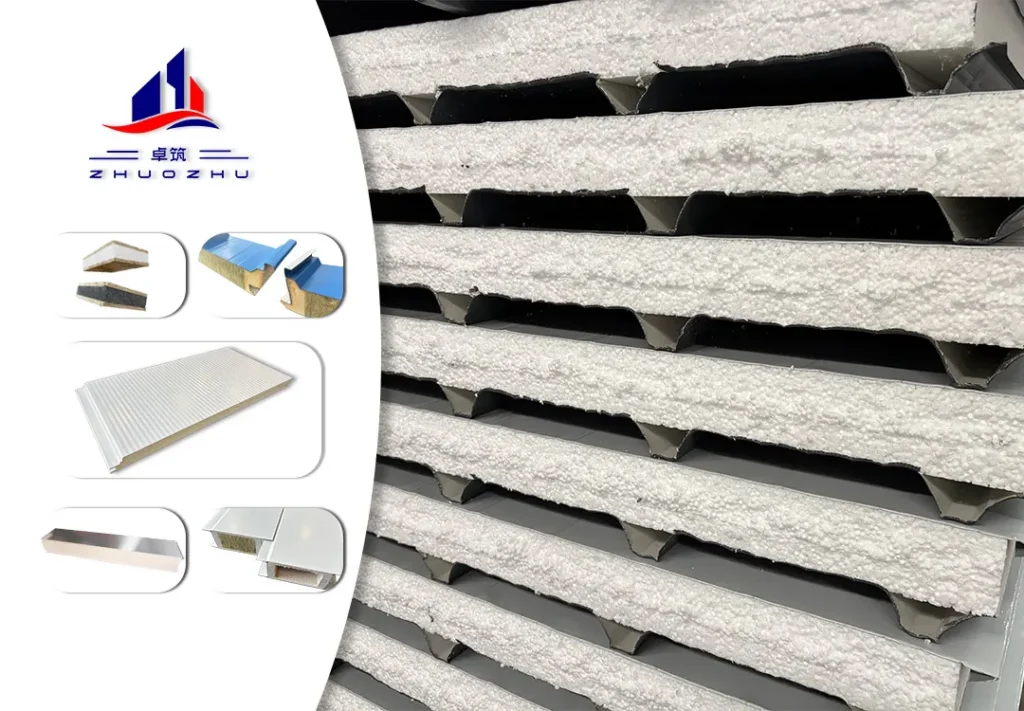
Core Characteristics of EPS
- Thermal Insulation
- Thermal Conductivity: 0.032–0.040 W/(m·K), providing efficient insulation performance.
- Operating Temperature: Suitable for temperatures ranging from -50°C to 70°C.
- Lightweight
- Density: 10–30 kg/m³, making it the lightest among common core materials.
- Ease of Handling: Easy to transport and install, reducing structural load.
- Moisture Resistance
- Water Absorption: Very low (≤1%), ensuring long-term insulation performance even in humid conditions.
- Cost-Effectiveness
- Lowest Cost: Among all sandwich panel core materials, EPS is the most economical option.
- Versatility
- Can be easily cut and shaped to fit various design requirements.
Applications of EPS Sandwich Panels
- Low-Budget Projects: Temporary structures, warehouses, and agricultural buildings.
- Cold Chain Logistics: Perishable goods storage, refrigerated trucks.
- ** Residential and Commercial Insulation**: Wall insulation, roofing systems.
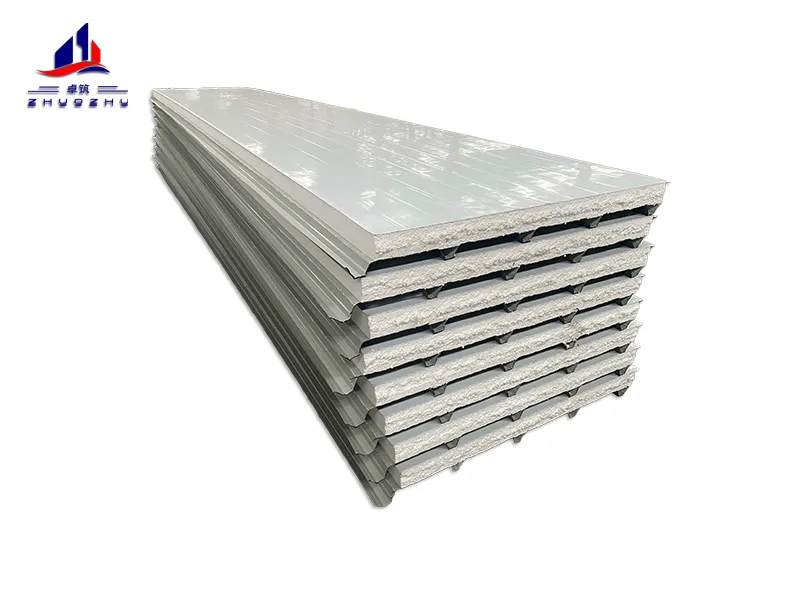
Limitations of EPS Sandwich Panels
- Fire Performance:
- Flammability: Typically classified as B3 (flammable) or B2 (combustible) even with flame retardants.
- Melting Dripping: Melts and produces flaming droplets in fire, accelerating fire spread.
- Toxic Fumes: Releases dense, toxic smoke when burned.
- Low Mechanical Strength: Prone to damage under heavy loads or impact.
- Environmental Concerns: Derived from fossil fuels; not biodegradable.
Selection Recommendations
- Avoid in Fire-Critical Applications: Not suitable for buildings with fire safety requirements.
- Use in Controlled Environments: Ideal for low-risk, temperature-controlled applications.
- Combine with Protective Measures: When used, ensure proper fire barriers and detection systems.
EPS offers an economical solution for projects where fire safety is not a primary concern. Its lightweight nature and excellent insulation make it suitable for temporary and low-risk applications. However, its poor fire performance limits its use in permanent or safety-critical structures. Always verify local fire regulations before specifying EPS core materials.
