
Hello, I’m Wald, Product and Technical Director at Linyi Zhuozhu New Material Co., Ltd. Today I need to talk about something that has been troubling me for weeks—the state of the metal carved panel market. I want to share a real conversation I had just three days ago with a client from Brazil, because it illustrates a growing problem that every buyer needs to understand before making a purchasing decision.
The Market Shift: Falling Prices, Rising Risks
The metal decorative panel market has been going through significant turbulence recently. Competition has been driving prices down continuously. In principle, competition is a good thing. It pushes manufacturers to innovate, to improve production efficiency, and to deliver better products at more affordable prices. That is how a healthy market should work.
But something has gone wrong. In the race to offer the lowest possible price, some sellers have abandoned the very foundation of product quality. They are not competing by becoming more efficient or by developing better materials. They are competing by cutting corners—using substandard raw materials, reducing density, and switching to cheap adhesives. The result is a product that looks acceptable in photos, arrives at a tempting price, but fails completely in the real world.
And that is exactly what happened to my client in Brazil.
A Real Case: The $3.90 FOB Panel That Wasn’t What It Seemed
Three days ago, a client from Brazil reached out to me, frustrated and worried. He had recently purchased a batch of metal decorative panels at what he described as a “very attractive price”—FOB 3.9 US dollars per square meter. From the outside, the deal looked excellent. The supplier had provided samples, and the client had approved them. The price was significantly lower than anything else he had found in the market. It seemed like a smart buy.
Then the shipment arrived.
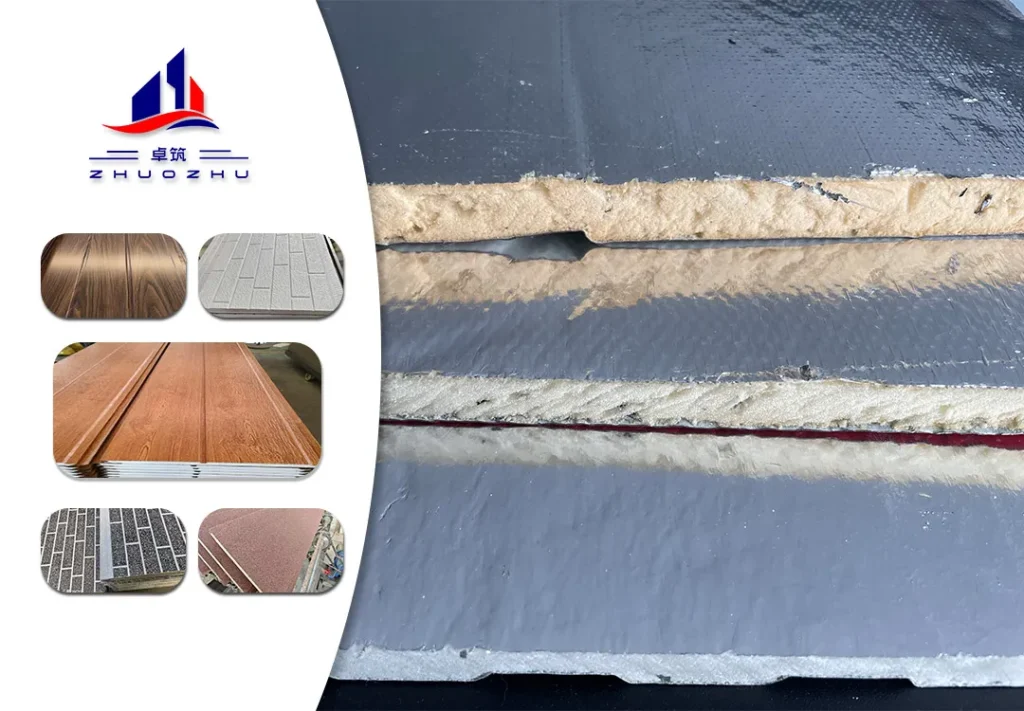
The panels he received were completely different from the samples he had approved. Not a minor variation—a fundamental difference. The density was wrong. The overall quality was visibly inferior. And most alarming of all, the smell of the adhesive was so strong and unpleasant that it was immediately obvious this was not the same product he had been shown. The panels simply could not be used. Once installed, the homeowner would instantly notice the harsh odor of low-grade glue inside their building.
But the problems went deeper than the smell. The low-density polyurethane core in these panels simply did not meet the thermal insulation requirements for the project. Worse, its oxidation resistance was severely compromised. Even before any installation work could begin, the edges of the panels had already turned yellow from oxidation while sitting in the warehouse. The metal layer had started to show signs of rust.
In short, the client had paid for a product that was already failing before it was even installed.
Why This Happens: The Mechanics of Cheating
When the market price drops below what is physically possible for a properly manufactured panel, something has to give. Here is what unscrupulous sellers are doing:
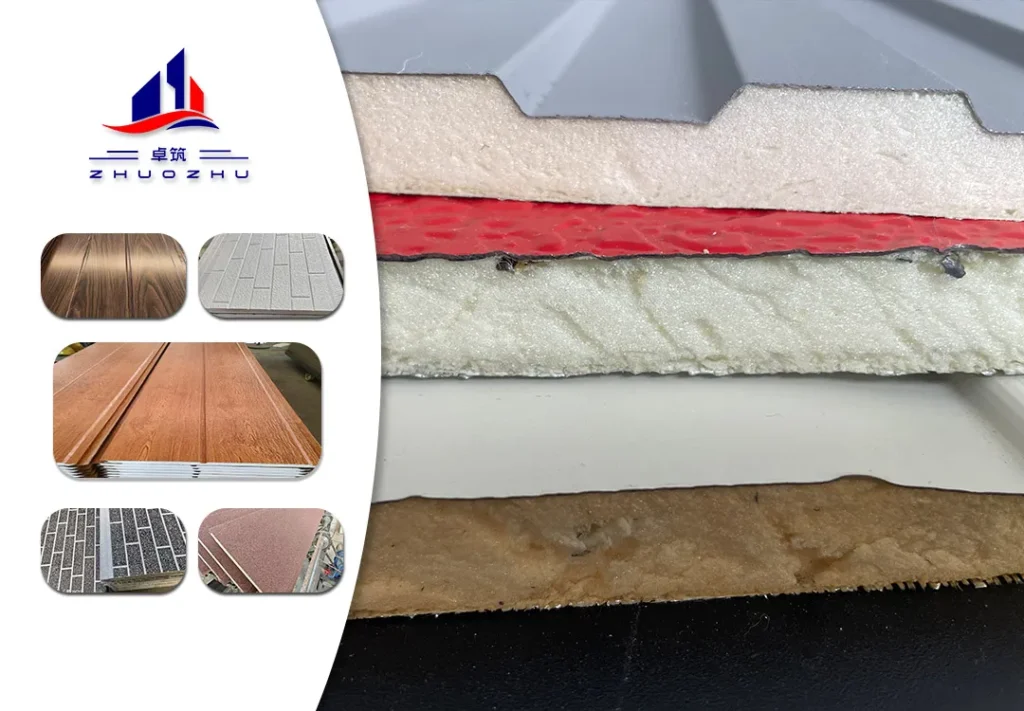
- Lowering foam density. The density of the polyurethane core directly affects thermal performance, structural strength, and long-term dimensional stability. Cheap panels use less foam or foam with excessive blowing agent, creating a soft, low-density core that fails on insulation and support.
- Using inferior adhesives. The glue that bonds the metal facing to the foam core is a major cost component. Cheap alternatives emit strong odors, lose adhesion over time, and can contribute to delamination.
- Skipping proper metal treatment. Quality metal facings require proper galvanizing or coating to resist corrosion. Cheap panels use thinner, poorly treated metal that rusts quickly, especially at cut edges.
The math is simple: if a panel is priced at $3.90 FOB, the manufacturer is not magically more efficient. They are cutting costs somewhere, and in every case, that cost comes out of the product’s quality and the buyer’s risk.
What Every Buyer Should Do to Protect Themselves
I am not writing this to scare you away from competitive pricing. I am writing it to help you avoid a very expensive mistake. Here is the practical advice I gave to my Brazilian client, and it applies to every buyer in this market:
First, never accept a price that seems too good to be true without asking hard questions. Ask the supplier to explain, in writing, how they achieve that price. What is the foam density? What is the metal facing specification? What adhesive system is used? If they cannot or will not answer, walk away.
Second, insist on a pre-shipment sample from the actual production batch. An approved sample from months ago is not enough. The sample must come from the same production run as your order. At ZHUOZHU, we invite clients to send a third-party inspector to our factory to take samples directly from the production line before shipment. That is the only way to guarantee that what you approved is what you receive.
Third, require test reports, not just certificates. A B-s1,d0 fire report or a thermal conductivity test only means something if it matches the exact product configuration you are buying. As I explained in my previous article, these reports are thickness-specific and configuration-specific. Demand to see the report for the exact panel you are ordering.
Fourth, check the supplier’s track record and willingness to take responsibility. What happens if the product arrives damaged or different? At ZHUOZHU, if damage occurs due to our packaging, we compensate with a refund or free replacement—provided the client supplies photos and videos. And if there is ever a discrepancy between sample and batch, we take responsibility. That is the standard every buyer should expect.
Our Position at ZHUOZHU
I want to be honest with you: at ZHUOZHU, we have not chased this race to the bottom. Our prices are competitive, but they reflect the real cost of producing a panel that works. We do not lower density below engineering requirements. We do not use cheap adhesives that smell like chemicals. We do not cut corners on metal treatment. That is not because we are expensive. It is because we refuse to sell a product that we would not install on our own building.
The metal decorative panel market will eventually correct itself. The sellers cutting corners will face claims, returns, and a destroyed reputation. But in the meantime, every buyer must be their own quality advocate. Ask questions. Demand proof. And remember that the real cost of a panel is not the FOB price on the invoice—it is the total cost of installing it, living with it, and possibly replacing it when it fails.
If you are looking for metal carved panels, sandwich panels, cold room panels, or any of the products we manufacture at ZHUOZHU, reach out to me. I’m Wald. I won’t promise the lowest price, but I will promise that the panel you approve is the panel you receive, and that it will perform the way a properly manufactured panel should—for years, not weeks.
