
Hello, I’m Wald, Product and Technical Director at Linyi Zhuozhu New Material Co., Ltd. Today I want to share a recent project inquiry from the United Arab Emirates that highlights a critical distinction many buyers overlook: the difference between pure rock wool sandwich panels and polyurethane-edge rock wool sandwich panels, and why that difference can determine whether your building meets fire code or fails inspection.
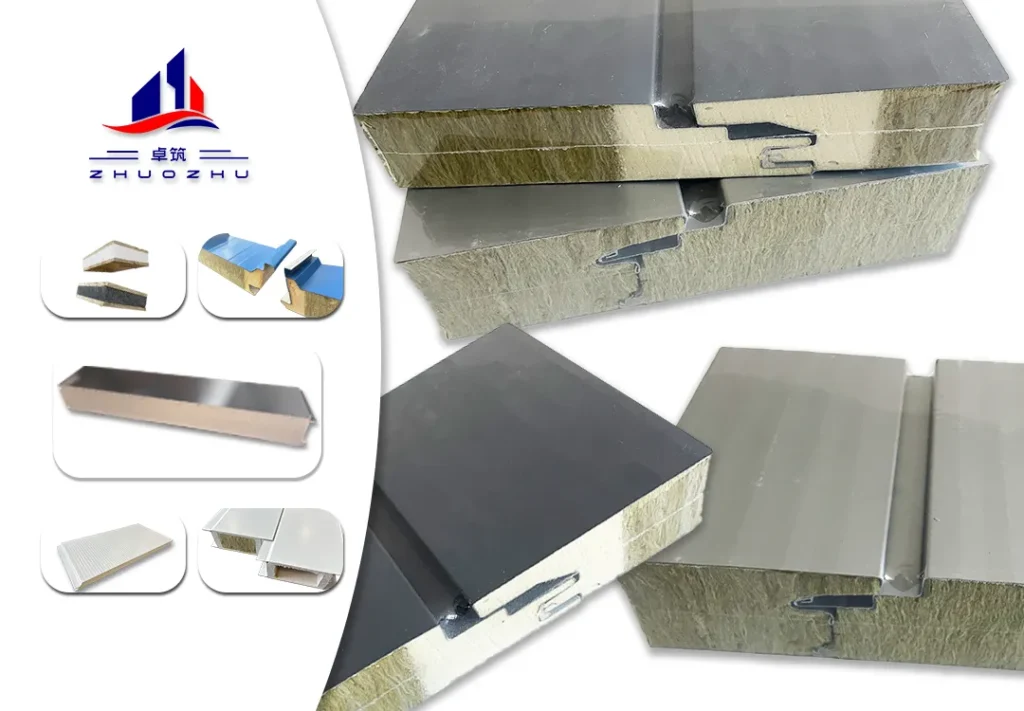
The Project: A Factory Building in the UAE
A construction company in the UAE contacted us regarding a factory building project. Their requirement was specific and non-negotiable: the exterior wall panels must be pure rock wool sandwich panels. They explicitly stated that polyurethane-edge rock wool panels would not be accepted.
Why? The answer is simple and rooted in fire safety regulations.
The Fire Rating Difference: A-Class vs. B-Class
Pure rock wool sandwich panels achieve an A-class fire rating. This is the highest fire performance classification for building materials. A-class means the material is non-combustible and makes no contribution to fire growth. For factory buildings, especially in industrial zones where fire risk is a serious concern, A-class cladding is often a mandatory requirement.
Now consider polyurethane-edge rock wool panels. These panels use rock wool as the core insulation, but the edges—the tongues and grooves that lock adjacent panels together—are filled with polyurethane (PU or PIR) foam. The PU edge serves a purpose: it improves the panel’s thermal performance at the joints, enhances structural integrity, and provides a tighter seal. It is a clever engineering solution for many applications.
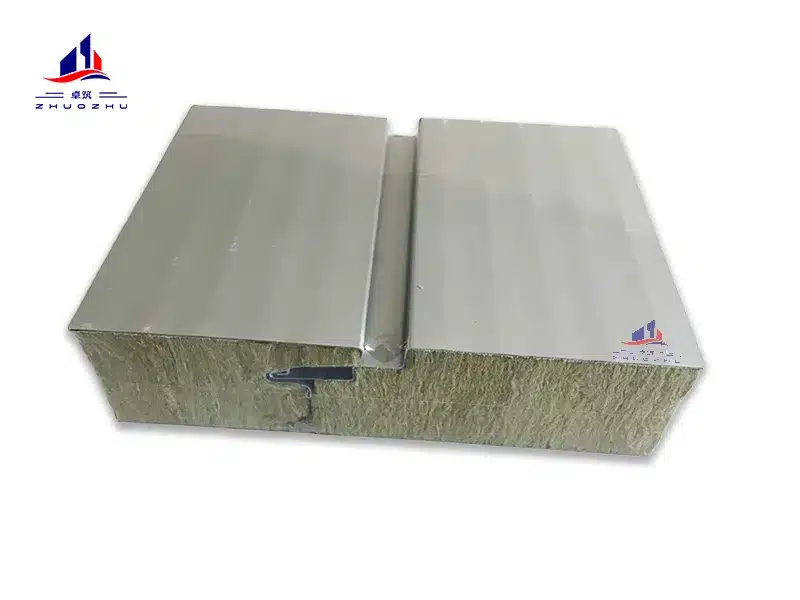
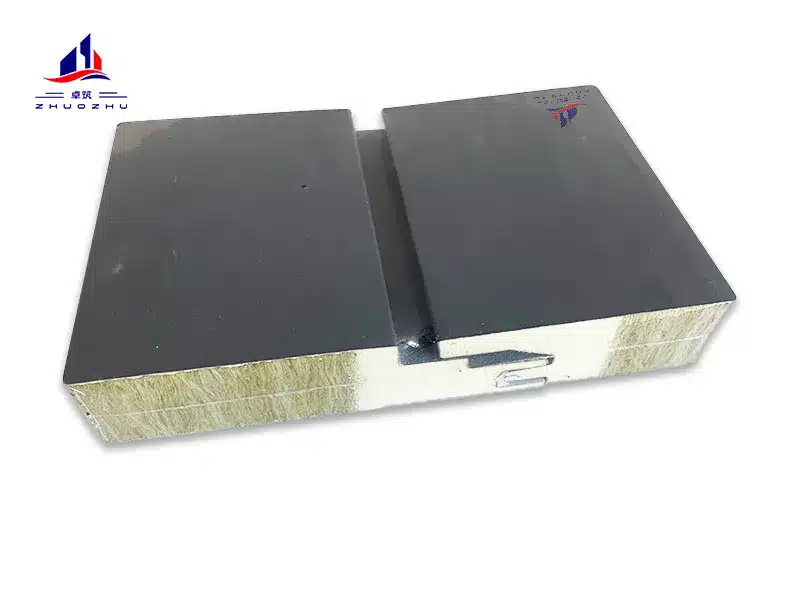
But here is the critical point: once you add polyurethane to the panel, the overall fire rating drops. The polyurethane edge, however small in proportion, is a combustible organic material. When the entire panel assembly is tested for fire classification, the presence of PU means the panel can no longer achieve A-class. It typically falls to a B-class rating.
For the UAE project, this was unacceptable. The building code and the client’s own fire safety requirements demanded A-class performance. A B-class panel, no matter how good its insulation or how well it performs in other respects, would not pass inspection.
Why This Distinction Matters Beyond the UAE
This is not an isolated requirement. Across the Gulf region, in Europe, and in many other parts of the world, fire safety regulations for industrial and commercial buildings are becoming stricter. The trend is clear: A-class non-combustible materials are increasingly mandated for building exteriors, particularly for factories, warehouses, and high-occupancy structures.
Many buyers, however, are not aware of the subtle but crucial difference between “rock wool panel” and “pure rock wool panel.” They see the word “rock wool” and assume the panel is A-class. They may receive a quotation for polyurethane-edge rock wool panels at a lower price and believe they are getting the same product. They are not. And the consequences can be severe: failed inspections, project delays, forced replacement of materials, and in the worst case, a building that does not meet life safety standards.
Our Approach: Clarity First, Then Supply
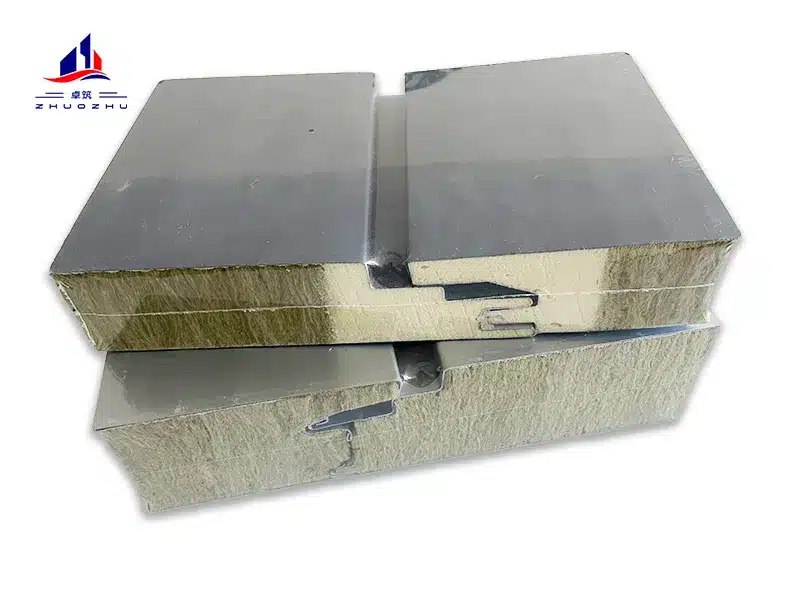
When this UAE client approached us, we confirmed their requirement without hesitation. We manufacture both types of panels—polyurethane-edge rock wool panels and pure rock wool panels—and we understand exactly when each is appropriate.
For this project, we are supplying pure rock wool sandwich panels for the exterior walls. The panels use high-density rock wool core, with no polyurethane at the edges. The locking mechanism is designed to maintain tightness and thermal performance while keeping the entire assembly non-combustible. The fire rating is A-class, fully compliant with the project’s requirements.
We also provided our standard engineering support: reviewing the drawings, calculating the precise panel quantities with appropriate loss allowance, and preparing shop drawings to show how the panels interface with the steel structure. The client received a complete quotation covering panels, flashings, fasteners, and all necessary accessories.
The Lesson for Buyers
If your project requires an A-class fire rating for exterior walls, do not assume that any rock wool panel will meet the requirement. Ask your supplier directly: Is this a pure rock wool panel, or does it have polyurethane edges? Request the fire test report and verify that the tested configuration matches the product being offered. The difference between A-class and B-class is not a matter of degree—it is a matter of compliance or non-compliance.
At ZHUOZHU, we are committed to helping our clients get the right product for their specific regulatory environment. If you have questions about fire ratings, panel configurations, or which sandwich panel is suitable for your project, reach out to me directly. I’m Wald, and I’m here to help you build safely and correctly.
