(Roofing & Wall Cladding Enclosure)
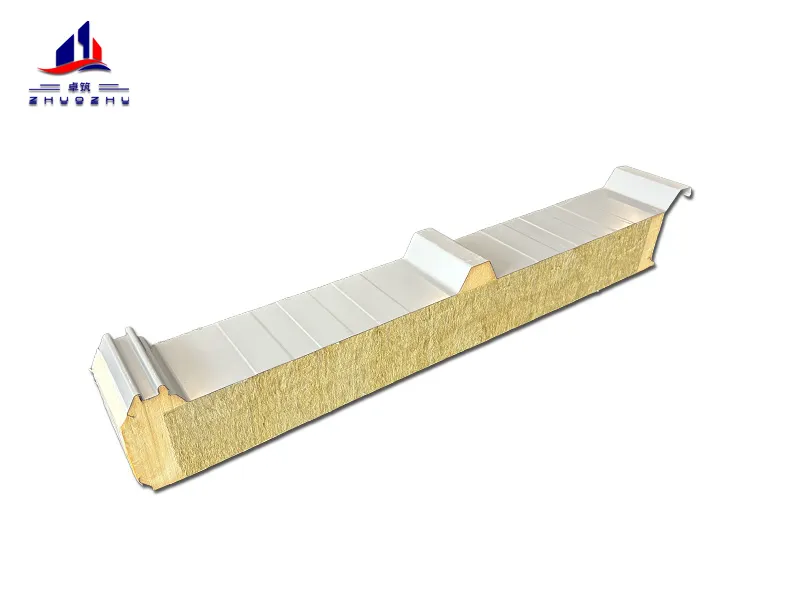
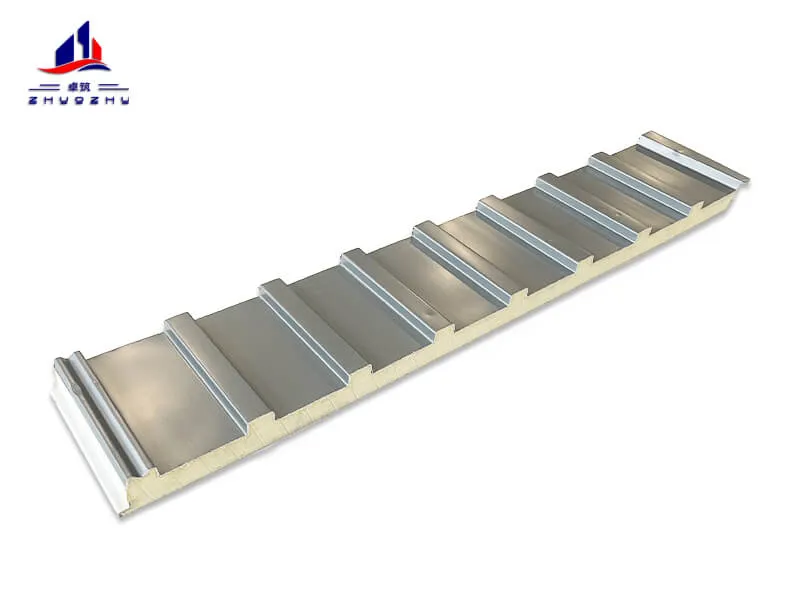
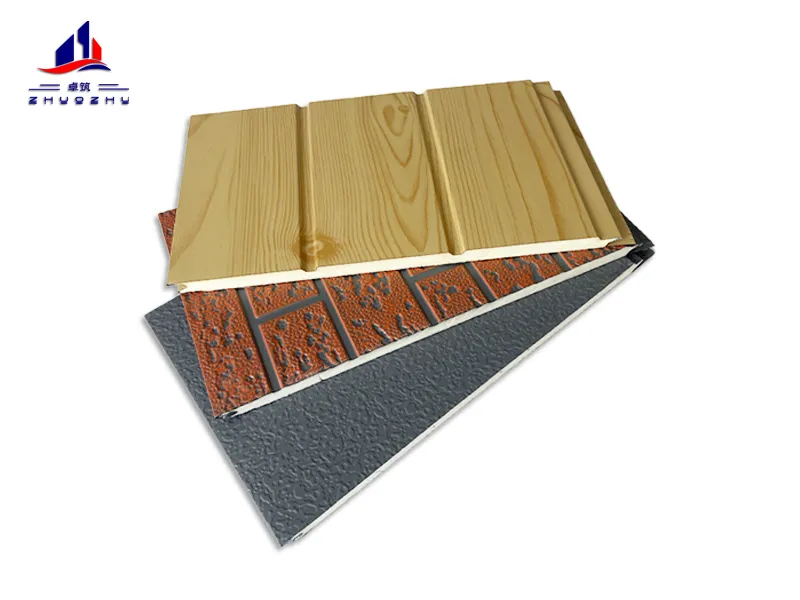
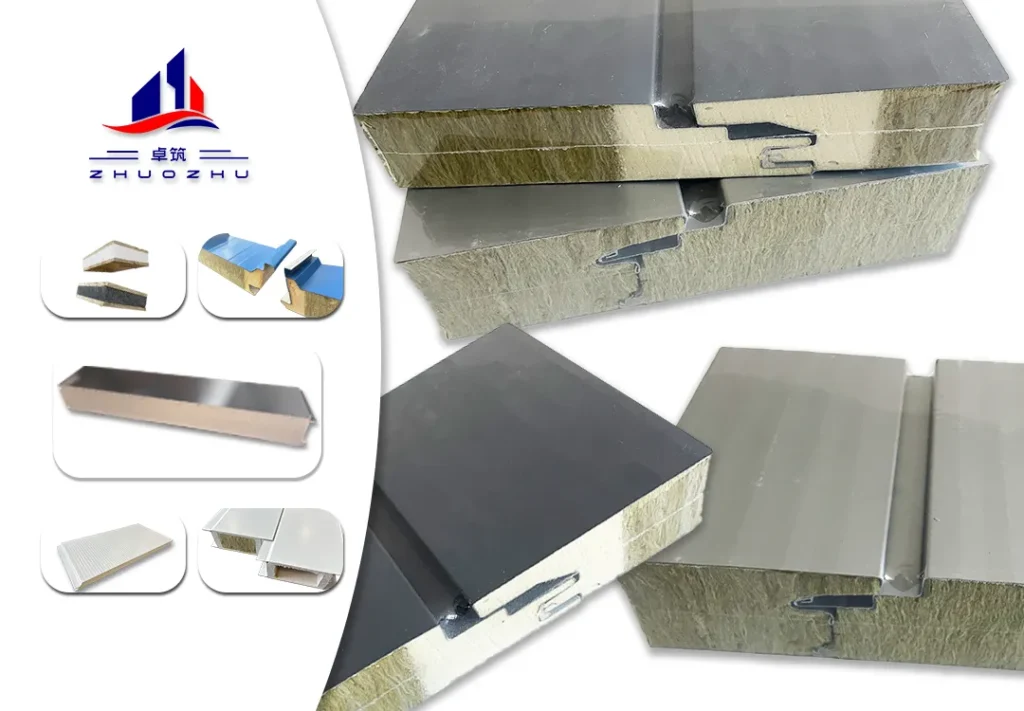
In modern industrial architecture, sandwich panels (insulated metal panels) are widely specified for their superior thermal efficiency and structural performance. However, the integrity of the entire building envelope—its weather tightness, airtightness, wind-load resistance, and aesthetic finish—heavily relies on the precise integration of flashings, trims, fasteners, and sealants.
Below is a classified technical glossary of the essential accessories used in sandwich panel construction.
1. Roofing System Accessories
Roofing accessories are highly engineered components designed to withstand severe weather, prevent water ponding, and eliminate capillary action (water siphoning).
Ridge Components
Due to the dual-skin nature of insulated roof panels, a double-layer ridge capping design is standard practice:
External Ridge Flashing / External Ridge Cap: The primary, outermost weather defense shield installed over the apex of the roof, directly exposed to wind and rain.
Internal Ridge Flashing / Internal Ridge Cap: Also known as Under-ridge Flashing. It is fixed beneath the roof panels (visible from inside the building) to provide a clean interior aesthetic, continuous air barrier, and thermal break.
Vented Ridge Cap: A specialized outer ridge cap integrated with ventilation matrixes or perforated profiles, used when roof-space ventilation or heat dissipation is required.
Eaves & Drainage Components
Boxed Eaves / Box Eave: An enclosed eave design where the rafter tails and panel edges are completely boxed in using fascia and soffit trims for a sleek, protected finish.
Box Gutter / Eave Box Gutter: A rectangular-sectioned perimeter drainage channel formed from galvanized or color-coated steel sheets, installed at the eaves to collect and route rainwater.
Pipe Flashing / Boot Flashing: A flexible, cone-shaped rubber (EPDM or Silicone) collar used to seal penetrations where pipes, vents, or flues pass through the sandwich roof panels.
2. Wall Cladding & Opening Accessories
Wall accessories handle the complex geometry of building corners, transitions, and penetrations while concealing raw panel cuts.
Wall Base Components
Base Flashing / Wall Base Flashing: A heavy-gauge flashing profile installed at the junction where the bottom of the wall panel meets the concrete foundation or plinth beam. It diverts cascading wall water away from the slab.
Plinth Drip Flashing: A base flashing featuring a pronounced outward kicked lip with a 180° hemmed edge (drip edge) that forces water to drop clear of the foundation via gravity.
Base Flashing Support Bracket: Heavy-duty metal brackets or angles anchored to the foundation to support, hold, or shape the base flashing.
Base Track / Floor Track: A continuous U-channel or L-angle anchored to the concrete floor slab. The sandwich wall panels slide into this track, which often serves as the structural backing for the external base flashing.
Wall Corner Components
External Corner Flashing / External Corner Trim: Also called Outside Corner Cap. A 90° flashing piece fitted over external building corners to seal the joint between perpendicular wall panels.
Internal Corner Flashing / Internal Corner Trim: Also called Inside Corner Cap. A flashing piece installed at internal corner junctions or partition walls to conceal panel cut edges and maintain a clean interior finish.
Window & Door Opening Components
These are collectively referred to as Opening Surround Trims / Perimeter Flashings:
Window Sill Flashing / Window Sill Trim: Installed along the bottom edge of a window frame. It must feature a sloped drainage pitch and an outer drip edge to prevent sill leaks.
Window / Door Head Flashing: Also called a Drip Cap or Lintel Flashing. Installed horizontally right above door or window frames to redirect down-wall water runoff outwards.
Window / Door Jamb Flashing: Vertical trim profiles installed on the left and right sides of door or window openings to cap off the exposed core insulation of the cut sandwich panels.
3. Mechanical Fasteners & Fixings
Mechanical fasteners must provide immense pull-out resistance to combat wind suction loads while maintaining a leak-proof seal.
Self-drilling Screw with EPDM Washer: The primary fastener for building envelopes. Featuring a drill point that cuts through steel purlins without pre-drilling, it is equipped with an EPDM (Ethylene Propylene Diene Monomer) washer that compresses upon installation to create a permanent water-tight seal.
Stitch Screw / Lap Screw: Short, self-tapping screws used exclusively to stitch thin sheet-metal-to-sheet-metal connections together (e.g., securing ridge caps to the crowns of roof profiles).
Saddle Washer / Storm Washer: Large, profile-matching metal washers lined with rubber, placed over self-drilling screws on roofing panel crowns. They distribute high wind loads across a larger surface area to prevent the steel sheet from tearing or cratering under cyclonic conditions.
Pop Rivet / Blind Rivet: Used for fast, low-load sheet metal connections, such as securing flashing overlaps or internal decorative trims.
4. Sealants, Fillers & Thermal Barriers
These represent the “hidden engineering” critical to maintaining structural thermal ratings, moisture isolation, and building airtightness.
Polyurethane Sealant: A high-performance, weather-resistant gun-grade sealant applied to external flashing laps and panel joints to ensure weather tightness.
Butyl Sealant Tape / Butyl Tape: A non-hardening, double-sided sticky ribbon tape applied inside the laps of sandwich panels and flashings. It serves as the long-term primary air and vapor barrier.
Foam Closure Strip / Profiled Filler: Factory-cut foam blocks that perfectly match the specific corrugation profile of the sandwich panel. They are wedged into ridge and eave cavities to completely block wind-driven rain, birds, and insects.
Thermal Break Strip: A strip of low-conductivity PVC or high-density foam adhered between the steel structural purlins/girts and the internal steel skin of the sandwich panels to disrupt thermal bridging and eliminate interior condensation.
5. Technical Procurement Categorization
When compiling a Bill of Materials (BOM), Request for Quotation (RFQ), or Shop Drawings, these accessories are generally categorized into three commercial divisions:
Flashings & Trimmings: All custom-bent or pre-formed sheet metal profiles.
Mechanical Fasteners: All screws, rivets, and specialty load-bearing washers.
Sealants and Adhesives: All wet sealants, butyl tapes, and profile foam fillers.