
Rock wool is an inorganic fiber material primarily made from natural basalt through high-temperature melting and centrifugal fiberization. Due to its exceptional fire resistance, thermal insulation, and sound absorption properties, rock wool has become one of the core filling materials for sandwich panels in the construction and industrial sectors.
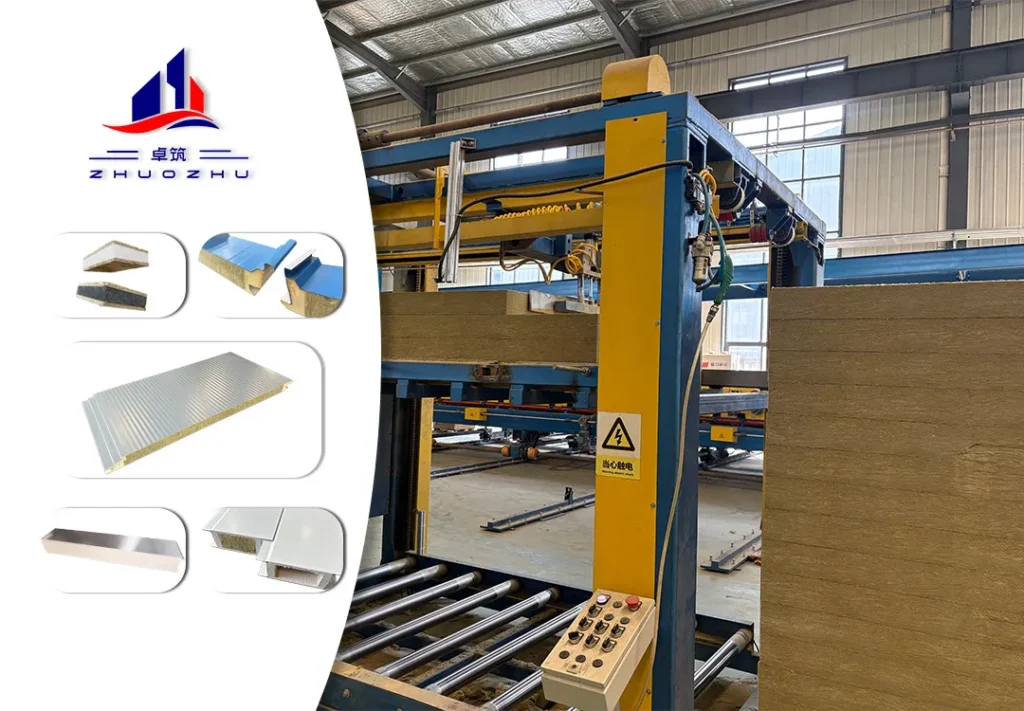
Core Characteristics of Rock Wool
- Fire Performance (Core Advantage)
- Rating: Class A non-combustible material (A1 grade), with a melting point exceeding 1000°C.
- Performance: Does not burn, produce open flames, or generate toxic smoke in a fire, effectively blocking the spread of flames and buying time for evacuation and rescue.
- Thermal Insulation
- Thermal Conductivity: 0.030–0.045 W/(m·K), providing good insulation performance, though slightly inferior to PIR/PUR.
- Operating Temperature: Can stably operate in environments ranging from -196°C to 650°C for extended periods.
- Sound Absorption and Noise Reduction
- The porous fiber structure effectively absorbs sound waves, reducing ambient noise, making it suitable for acoustically sensitive spaces.
- Hydrophobicity and Stability
- Water repellency rate ≥98%, preventing moisture absorption that could degrade insulation performance or cause structural corrosion.
- Chemically stable, resistant to corrosion and aging, with a long service life.
- Environmental and Health Benefits
- Made from natural rock raw materials, free from harmful substances such as asbestos or CFCs, compliant with green building standards.
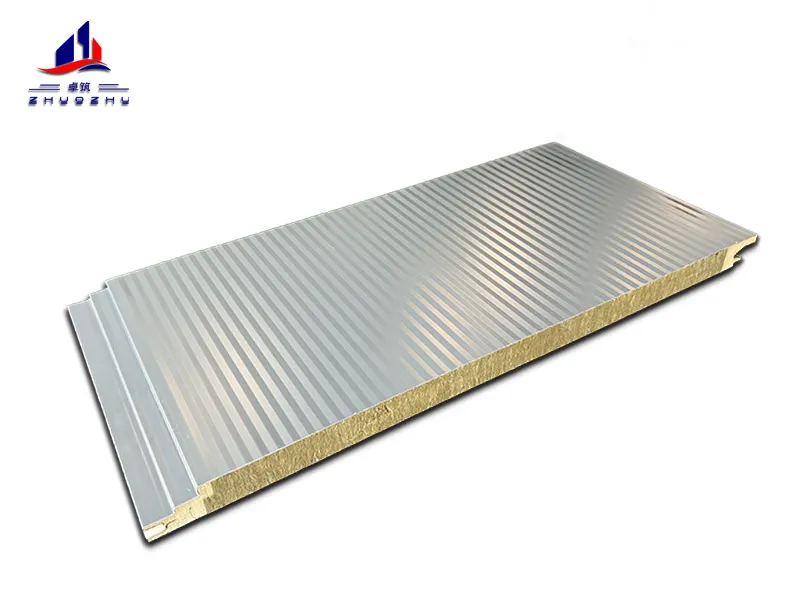
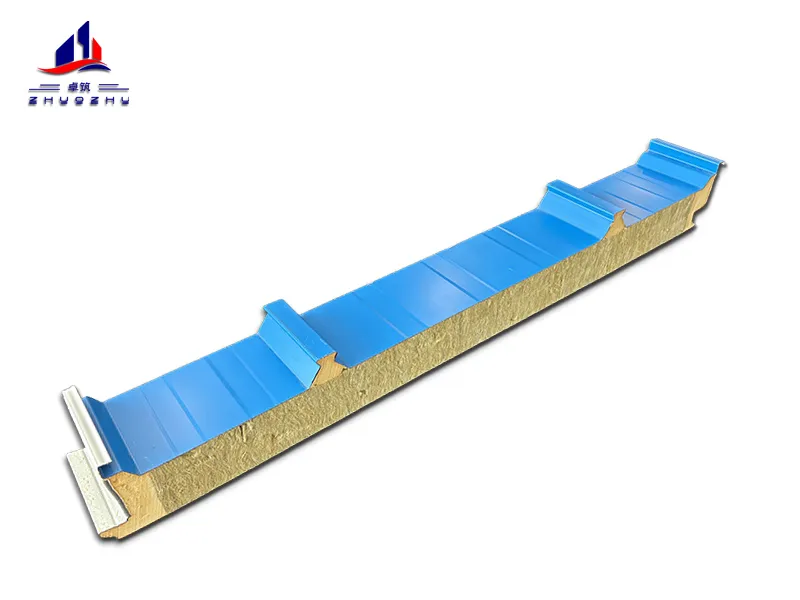
Applications of Rock Wool Sandwich Panels
- High Fire Safety Requirements: Chemical plants, gas stations, power facilities, firewalls in high-rise buildings.
- High-Temperature Environments: Industrial furnaces, pipeline insulation, high-temperature workshops.
- Acoustically Sensitive Spaces: Concert halls, conference rooms, hospitals, schools.
- Humid Environments: Cold room, food processing plants (requires waterproof panels).
Limitations of Rock Wool Sandwich Panels
- Heavier Weight: Density (60–200 kg/m³) is higher than PUR/PIR and EPS, imposing certain load-bearing requirements on the main structure.
- Higher Cost: Priced higher than EPS, comparable to PIR, but lower than high-end PUR products.
- Installation Requires Protection: Fibers are prone to floating, requiring protective gear during construction to avoid skin or respiratory discomfort.
Selection Recommendations
- Clarify Fire Rating: If Class A fire resistance is required, rock wool is the only option (PIR/PUR up to B1 grade).
- Balance Comprehensive Performance: Rock wool is the optimal choice when considering fire resistance, thermal insulation, and sound absorption collectively.
- Pay Attention to Joint Treatment: Ensure seams are sealed during installation to avoid thermal bridging or water leakage paths.
Rock wool, with its absolute fire safety and comprehensive performance, is the preferred core material for projects with high safety and quality requirements. Although slightly heavier and more expensive, its value in ensuring life and property safety is irreplaceable. When selecting, ensure compliance with authoritative testing standards (such as GB/T 19686, EN 13501) and choose certified products.
For clean rooms that require both extreme fire protection and chemical resistance, ZHUOZHU’s Silica clean room panels are the best choice.

Pingback: Sandwich Panel Core Materials: PUR/PIR, Rock Wool, and EPS - ZHUOZHU