
In modern building energy-efficient design, “thermal bridges” are a crucial concept, while “continuous insulation” is the most effective technical method to eliminate them. For buildings using modern exterior wall systems such as metal sandwich panels and decorative insulated metal wall siding, understanding thermal bridging and implementing effective mitigation measures directly impact a building’s energy efficiency, occupant comfort, and long-term durability.

What Are Thermal Bridges?
Thermal bridges, also commonly referred to as cold bridges, are areas in the building envelope where the insulation layer is discontinuous. In these areas, the resistance to heat flow is significantly lower than in the surrounding areas, causing heat to escape rapidly, as if crossing a “bridge.”
- A Vivid Analogy: Imagine wearing a thick down jacket (equivalent to the building’s insulation layer) on a cold winter day, but the zipper is left open. Cold air will primarily intrude through this weak point, and your body heat will rapidly dissipate from there. This “zipper opening” is the “thermal bridge” in a building.
Common Types and Causes of Thermal Bridges
Thermal bridges are ubiquitous in traditional construction:
- Structural Thermal Bridges: Structural components like concrete beams, columns, and floor slabs that penetrate the exterior wall, interrupting the continuity of the insulation layer. The thermal conductivity of these reinforced concrete elements is much higher than that of the insulation material, becoming primary pathways for heat loss.
- Repetitive Thermal Bridges: Recurring metal components in the exterior wall, such as studs, rails, or brackets. Metal is an excellent conductor of heat, creating “highways” that bypass the insulation layer.
- Geometric Thermal Bridges: Locations where the building geometry changes abruptly, such as corners, window reveals, and balconies. The heat transfer area is greater than the surface area for heat dissipation at these points, leading to localized concentration of heat flow.
The Dangers of Thermal Bridges: Beyond Just Energy Loss
The problems caused by thermal bridges are multifaceted and interconnected:
- Significant Energy Loss: Thermal bridges can account for up to 30% or more of additional heat loss, substantially increasing heating and cooling costs, which contradicts the principles of green building.
- Condensation and Mold Growth: This is one of the most serious consequences. In winter, the interior surface temperature at thermal bridge areas is much lower than other interior areas. When warm, moist indoor air contacts these cold surfaces, the temperature can drop below the dew point, causing water vapor to condense. Persistent dampness provides an ideal environment for mold growth, severely impacting indoor air quality and occupant health.
- Building Structure Damage: Long-term condensation can erode the building structure, leading to corrosion of steel reinforcement, reduced strength of wall materials, and a shorter building lifespan.
- Poor Thermal Comfort: Even when heating is on, occupants near thermal bridge areas (like external wall corners or near windows) can feel a noticeable “cold radiant” effect, compromising comfort.
Continuous Insulation: The Fundamental Solution to Eliminate Thermal Bridges
Continuous insulation involves creating an uninterrupted, fully enveloping insulation layer across all parts of the building envelope, like putting a seamless “insulating coat” on the building.
How to Achieve Continuous Insulation?
Modern, industrialized exterior wall systems are an ideal choice for achieving continuous insulation:
- Using
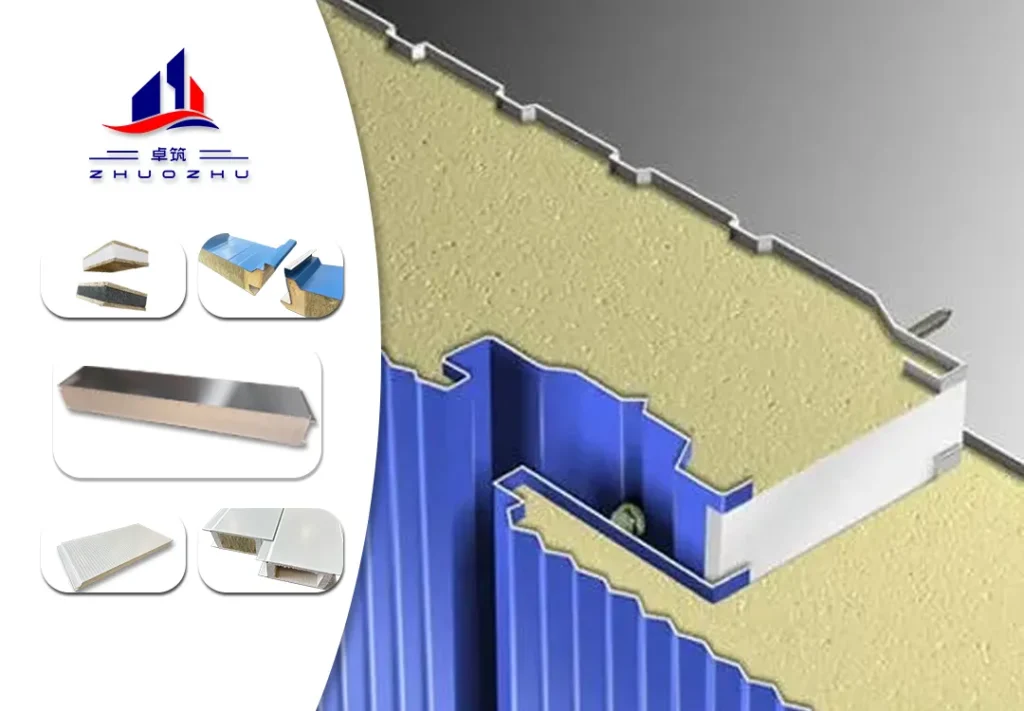
Sandwich Panels: Products like ZHUOZHU’s PUR/PIR sandwich panels and rockwool sandwich panels are prefabricated in the factory, integrating the decorative face, high-performance insulation core (like PUR/PIR), and a backing layer into a single unit. During installation, specialized fasteners and sealing systems ensure the insulation layer forms a continuous whole across the entire wall surface, effectively blocking all structural thermal bridges. - Avoiding Metal Penetrations: Using thermal break anchors or specialized fixtures minimizes direct metal penetrations from the interior to the exterior.
- Detailed Design at Junctions: Implementing meticulous insulation design and construction at critical areas like windows, roofs, and foundations ensures the continuity of the insulation layer is not compromised.
Core Advantages of Continuous Insulation Systems
For buildings utilizing ZHUOZHU insulated composite panels, continuous insulation systems provide fundamental improvements:
- Ultimate Energy Efficiency: Fundamentally prevents unnecessary energy loss, minimizing the building’s energy consumption.
- Prevents Condensation: Maintains uniformly high temperatures on the interior side of walls, eliminating the risk of condensation and mold at the source.
- Enhanced Comfort: Creates uniform indoor temperatures, eliminating cold spots and cold radiant surfaces.
- Protects Structure: A dry wall environment significantly extends the service life of the building structure.
- Potential for Reduced System Cost: Because heating/cooling loads are significantly reduced, HVAC equipment capacity can sometimes be downsized, saving initial costs.
Thermal bridges are a hidden yet costly “leak” in traditional construction. Continuous insulation, especially achieved through high-performance systems like ZHUOZHU metal sandwich panels and decorative insulated metal wall siding, is the essential choice for plugging this leak and creating ultra-low energy, healthy, durable, and high-comfort buildings. As building energy codes become increasingly stringent, understanding and applying the principles of continuous insulation has become the cornerstone of every quality construction project.
