
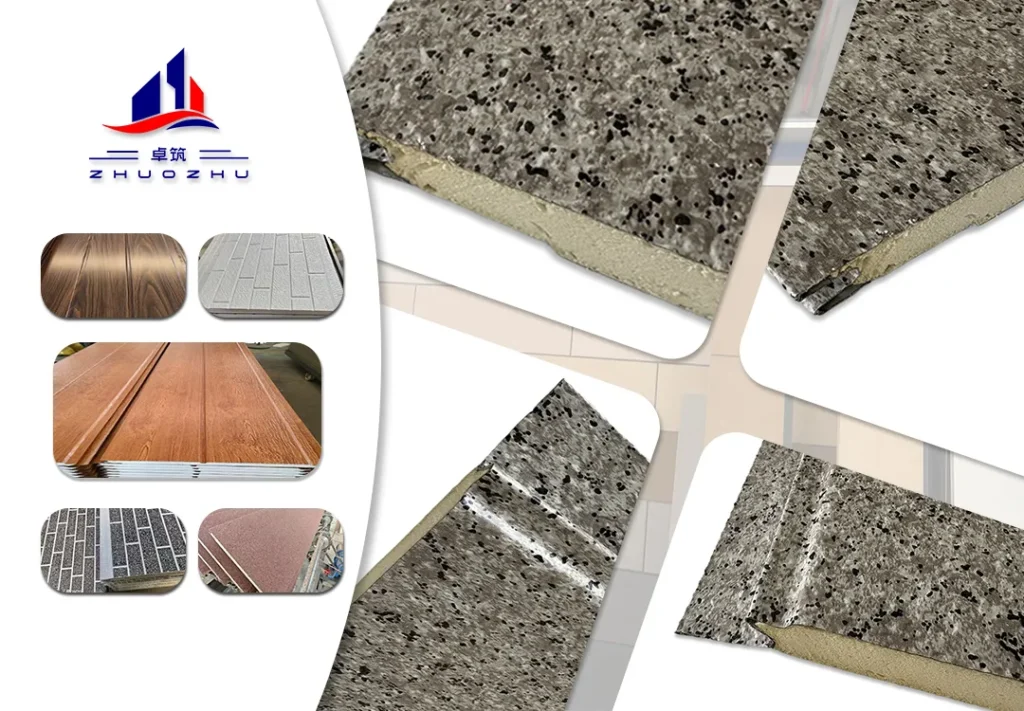
Decorative insulated metal wall cladding, particularly solutions like Brick finish insulated metal siding, has become a dominant choice in modern construction for its blend of aesthetics and performance. Beyond its visual appeal, the true value of these systems lies in their technical capability to enhance building envelope performance. Two of the most critical metrics for evaluating this performance are R-value (thermal resistance) and airtightness. This analysis delves into the science behind these factors in the context of advanced decorative insulated panels.

The Critical Role of R-Value in Continuous Insulation
R-value measures a material’s resistance to heat flow. The higher the R-value, the better the insulating power. For architectural granite finish insulated panels, the R-value is primarily determined by the type and thickness of the core insulation material.
- Core Material Matters: Panels utilizing a PUR/PIR core are industry leaders in thermal efficiency. PIR and PUR insulation possess a fine, closed-cell structure that results in one of the highest R-values per unit thickness among common insulating materials, typically ranging from R-6 to R-7 per inch (RSI-1.4 to RSI-1.6 per 25mm). This allows for slimmer panel profiles to achieve the same thermal performance as thicker, less efficient materials.
- The Principle of Continuous Insulation (ci): Unlike traditional stick-built systems where insulation is placed between studs (creating thermal bridges), an insulated metal wall system like this provides a continuous layer of insulation. This unbroken thermal barrier is crucial for preventing energy loss, minimizing condensation risk, and ensuring consistent interior temperatures, thereby significantly reducing HVAC operational costs.
Achieving Superior Airtightness with Engineered Panel Systems
Airtightness refers to the building envelope’s resistance to uncontrolled air leakage. It is a separate but equally important factor from insulation in achieving energy efficiency, occupant comfort, and indoor air quality.
- Integrated Barrier: The structure of a
granite finish metal composite insulated panelis inherently geared towards creating an airtight seal. The fusion of the metal faces and the solid insulation core creates a monolithic barrier. - The Key is in the Joint: The performance of any panel system is defined by its joint details. High-quality decorative insulated metal cladding features integrated tongue-and-groove or similar mechanical joint systems. When combined with factory-applied gaskets or sealants, these joints form a tight seal upon installation, drastically reducing air infiltration and exfiltration. This engineered approach is far superior to achieving airtightness with site-applied membranes and tapes in conventional construction.
The Synergy of R-Value and Airtightness
The highest R-value is compromised if the building envelope is leaky. Conversely, an airtight building with poor insulation will also be inefficient. The power of a decorative insulated metal wall cladding system lies in the synergy of these two properties:
- Maximized Energy Efficiency: The continuous high-efficiency PUR/PIR core resists conductive heat transfer (high R-value), while the tight joint system resists convective heat transfer (airtightness). This dual action ensures the building’s thermal performance is optimized, leading to the lowest possible energy consumption.
- Prevention of Condensation: Condensation occurs when warm, moist air passes through a building assembly and meets a surface below its dew point. The airtight seal prevents moist indoor air from penetrating the wall cavity. Meanwhile, the continuous insulation maintains the internal surface temperatures of the wall, keeping them above the dew point and eliminating the conditions that lead to interstitial condensation, mold growth, and structural degradation.
- Enhanced Durability and Comfort: By controlling both heat flow and air movement, these panels protect the building structure and create a more comfortable, draft-free interior environment with better acoustic performance.
From a technical standpoint, decorative insulated metal wall cladding is more than a facade. It is a high-performance building envelope system. The integration of a high R-value PUR/PIR core within an inherently airtight panelized design provides a level of performance that is difficult and costly to achieve with traditional multi-layer wall systems. For architects and builders aiming to meet stringent energy codes and sustainability goals, understanding and leveraging the combined benefits of R-value and airtightness in these systems is paramount.
