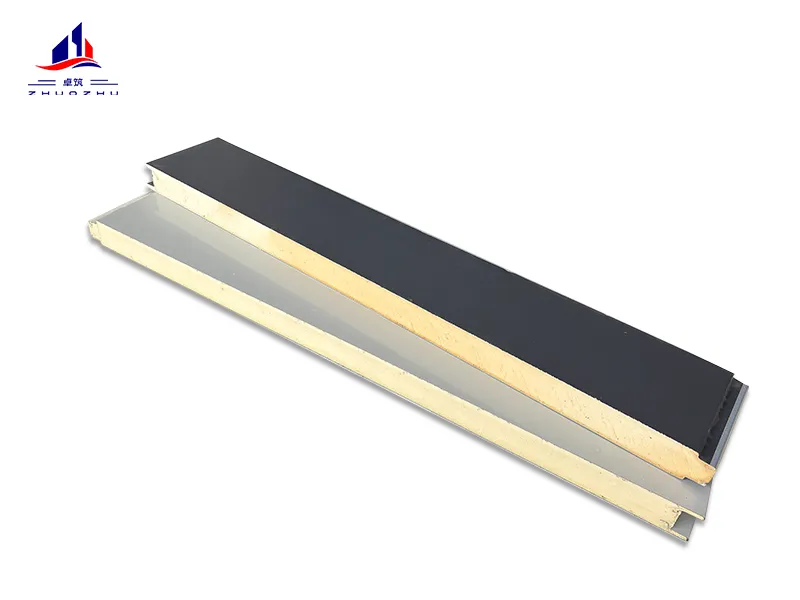
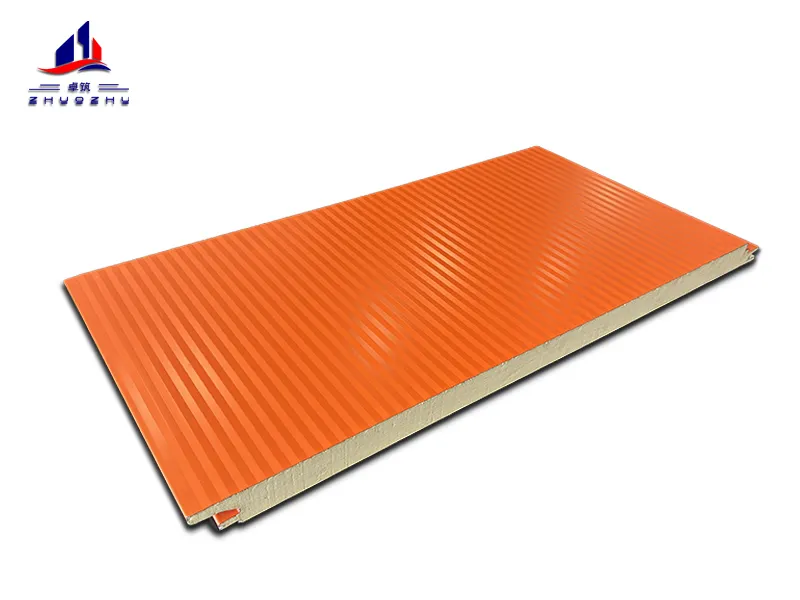
Hello, I’m Wald, Product and Technical Director at Linyi Zhuozhu New Material Co., Ltd. Lately, I’ve been hearing a recurring concern from clients, and I want to address it openly and thoroughly. The situation usually goes like this: a client contacts us needing PIR sandwich panels—say, 100mm thick—for a project that requires B-s1,d0 fire classification under EN 13501-1. They ask us to send the test report before we proceed any further. When we explain that the specific report for their exact panel configuration doesn’t exist yet and needs to be generated through actual testing, there is understandable frustration. I get it.
I want to walk you through why this is the case, not to make excuses, but because understanding the “why” will actually help your project move forward with confidence.

The Certificate Template We Provide: A Framework, Not the Final Report
Sometimes, we share a certificate template or a sample report from a previous project. This is not a trick, and it’s not a substitute for the real thing. The purpose of this template is simple: we want you to review and confirm the format and content framework of the report. Does it match the requirements of your local authority? Is the layout what your building inspector expects? Does it contain all the necessary fields and declarations? By aligning on the template early, we ensure that when the actual test is conducted and the final report is issued by the accredited laboratory, it will fully comply with your country’s acceptance standards, with no formatting surprises that could delay your approval.
Think of it as agreeing on the blueprint before building the house. The template sets the expectation. The real report comes after the physical work is done.
What You Actually Need: A Formal, Fully Completed Report
Let’s be clear about what you are asking for—and rightly so. You need an official EN 13501-1 reaction-to-fire classification report, issued by an accredited and notified laboratory. This report must explicitly state the tested product: your specific PIR sandwich panel, at the exact thickness you have selected—say, 100mm. It must include the full laboratory name, a unique report number, test dates, and detailed results. Every field must be completed. It must be a final, signed, official document—not a draft, not a generic industry certificate, not a template with blank spaces to fill in later.
I completely understand why you want this document in hand before committing. It’s the key that unlocks your building permit, your insurance, and your compliance file. Without it, you cannot move forward. I respect that pressure.
Why This Report Cannot Exist Before We Have Your Final Specification
Here is the part that often surprises clients. The reason we cannot simply pull a B-s1,d0 report from our files and send it to you is not because we lack testing—it’s because under European certification rules, a fire classification report is legally and technically tied to one specific product configuration, down to the last detail.
The correct industry process works like this:
- You confirm your final panel specification, including the overall panel thickness and the exact thickness of both the top and bottom steel facings.
- We produce sample panels matching that exact specification.
- We send those samples to an accredited laboratory for full-scale fire testing under EN 13501-1.
- The laboratory issues a report that names that specific product configuration.
- That report is valid only for that configuration.
This is not a policy we invented. It is the requirement of the European standard system. The correspondence is strict and non-negotiable. For example, a B-s1,d0 report for a 100mm panel with 0.5mm steel facings on both sides is legally and technically invalid for a 100mm panel with 0.6mm steel facings, or with 0.5mm on the bottom and 0.6mm on the top. The fire behavior of the panel is influenced by the total thermal mass, the steel thickness, the adhesive system, and the core formulation—all of which change slightly when the steel gauge changes. The notified bodies that audit these reports will reject any attempt to use a report for a product configuration that was not actually tested.
This is why we ask for a deposit or prepayment before commissioning the test. The testing is conducted specifically for your order, based on your confirmed specifications. It is not a generic service we perform once and then reuse for everyone.
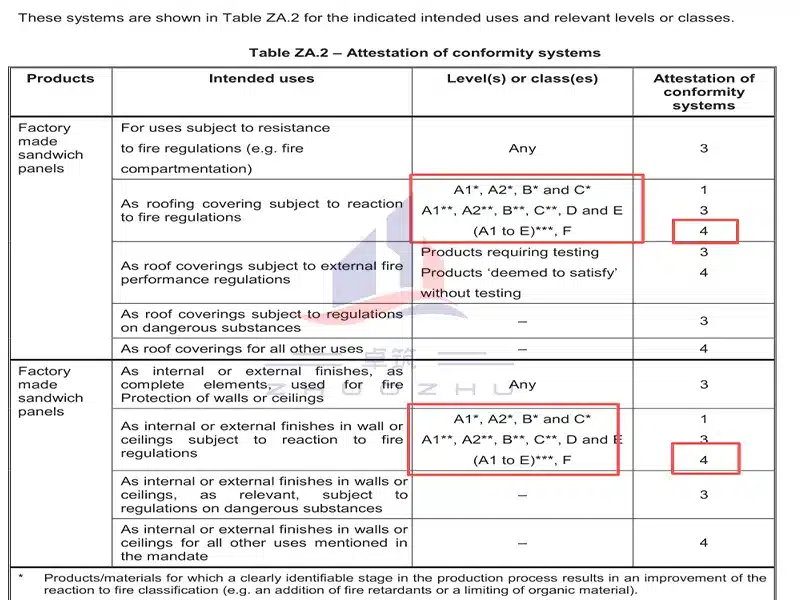
The Sheer Number of Possible Combinations
To give you a sense of scale: based on the requirements of clients we have worked with in the past, the possible combinations of steel facing thicknesses for just a single panel thickness—say, 100mm—can run into the hundreds. 0.45mm top / 0.5mm bottom, 0.5/0.5, 0.5/0.6, 0.6/0.6, 0.6/0.7, and so on. Each combination is considered a distinct product under the fire classification system.
No manufacturer in the world maintains a library of pre-existing, valid EN 13501-1 reports for every possible permutation of panel thickness, steel thickness, and facing material. The cost and time involved would be astronomical. Instead, the industry operates on a project-specific testing basis. The report you need will be generated specifically for your confirmed product configuration, not pulled from a shelf of ready-made certificates.
Your Project Will Not Be Delayed by This Process—It Will Be Protected
I know the underlying fear: you worry that the absence of an immediate report signals that we are unqualified or that your project will be delayed. Please rest assured, neither is true. This requirement is not a reflection of insufficient capability on our part. On the contrary, it is proof that we follow the certification rules correctly. A manufacturer who sends you a B-s1,d0 report without confirming your exact specification and without conducting a corresponding test is either cutting corners or misunderstanding the regulations—and that should worry you far more.
The report you receive from us will be defensible, auditable, and perfectly matched to the panels delivered to your site. When the building inspector checks the report against the product labels, everything will align. That is the only way to guarantee compliance and avoid costly rejections later.
How We Will Move Forward Together
If you have a project requiring B-s1,d0 or any other fire classification, here is the path we will follow:
- You provide your panel thickness and facing specifications.
- We confirm the test scope and cost, and you place a deposit.
- We commission the test at an accredited EU laboratory.
- The final, official report is delivered to you, fully completed and bearing your product details.
It is a linear, transparent process. There is no shortcut, but there is also no mystery. I’m Wald, and if you have any questions about fire certification, test procedures, or how to prepare your specification for testing, you can reach out to me directly. I’ll walk you through it personally. Your compliance is our business, and we will not hand you a document that doesn’t stand up to scrutiny.
Note: This article is for educational and informational purposes. All certification processes described follow standard industry practice. ZHUOZHU strictly protects client privacy, and no specific project or client details are disclosed.
Potentially needed products: