
A building’s roof is its first line of defense, directly facing sunlight, rain, snow, and extreme temperatures. A high-performance insulated roof can significantly reduce energy consumption while enhancing the building’s overall comfort and service life.

1. PUR/PIR Sandwich Roof Panels: The King of Energy Efficiency
What are they?
PUR (Polyurethane) and PIR (Polyisocyanurate) sandwich roof panels are “sandwich” panels composed of two metal facings and a rigid foam insulation core. PIR is an enhanced version of PUR, generally offering better fire performance.
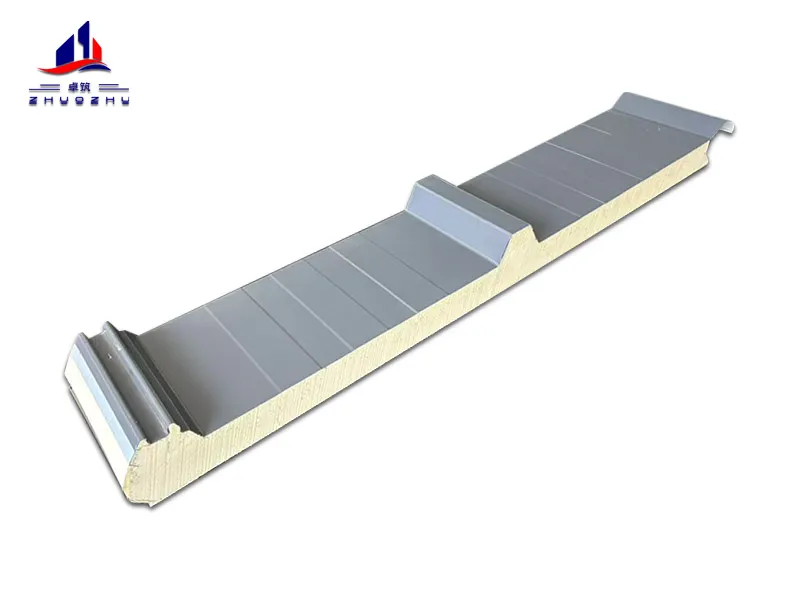
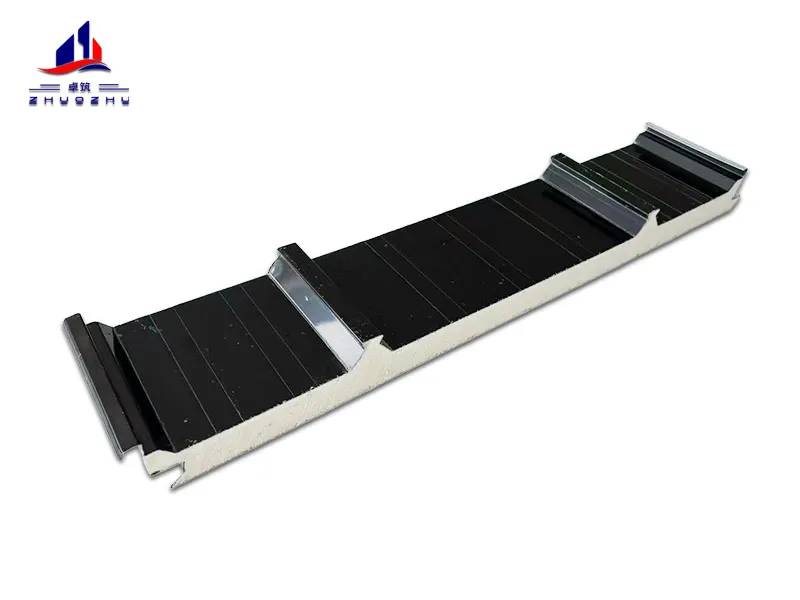
Core Data & Advantages:
- Superior Insulation: Boasts the lowest thermal conductivity (0.022-0.024 W/m·K) among common insulation materials. This means excellent thermal performance can be achieved with thinner panels, making them ideal for high-efficiency buildings.
- Exceptional Moisture Resistance: A closed-cell content exceeding 95% makes it an excellent vapour barrier, effectively preventing performance degradation caused by moisture penetration.
- Lightweight & High-Strength: Offers a very high strength-to-weight ratio, reducing the roof load while being capable of withstanding wind and snow loads.
- Rapid Installation: Large panel dimensions and efficient interlocking systems allow for quick installation, significantly shortening construction timelines.
Ideal Applications:
- Buildings sensitive to energy costs (e.g., logistics warehouses, cold storage centers).
- Industrial plants requiring strict control of indoor temperature and humidity.
- Any project pursuing ultimate thermal performance and fast-track construction.
2. Rock Wool Sandwich Roof Panels: The Shield of Safety
What are they?
Rock wool sandwich roof panels are made primarily from natural basalt rock, which is melted and spun into fibers, then sandwiched between metal facings. Their most prominent feature is their unparalleled fire safety.

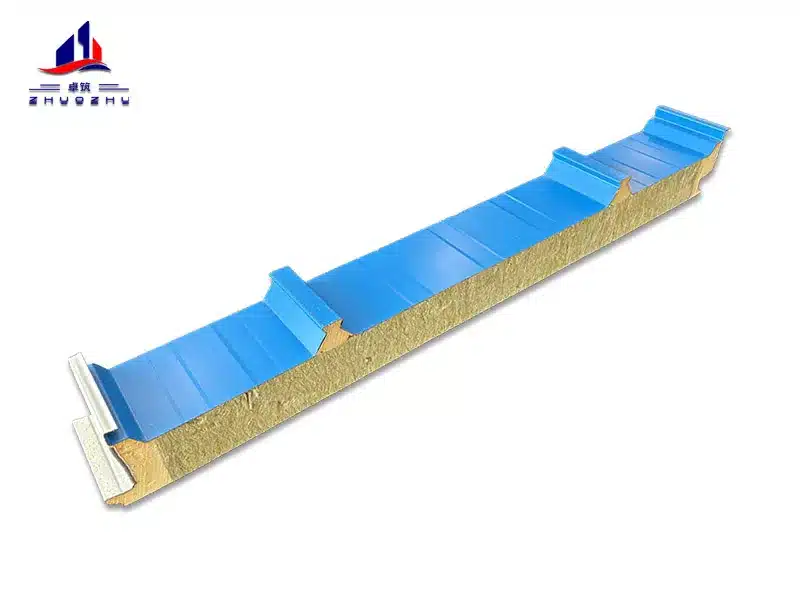
Core Data & Advantages:
- Class A Fire Rating: Classified as a non-combustible material, with a melting point exceeding 1000°C. In a fire, it effectively blocks flame spread, buying crucial time for evacuation and property protection.
- Excellent Sound Insulation: Its multi-fiber structure effectively absorbs and blocks sound, reducing indoor noise levels and creating a quieter environment.
- High-Temperature Stability: Maintains dimensional stability and performance even in high-temperature environments, without emitting harmful gases.
- Eco-Friendly & Healthy: Made from natural minerals, free from substances harmful to human health.
Ideal Applications:
- Buildings with mandatory fire rating requirements (e.g., chemical plants, gas stations, high-rises).
- Spaces requiring noise control (e.g., sports halls, music venues, manufacturing workshops).
- Factory roofs in high-temperature operating environments.
3. OSB Structural Insulated Panels (SIPs): The All-in-One Solution
What are they?
OSB SIPs are composite building materials consisting of two Oriented Strand Board (OSB) facings bonded under pressure to a thick core of insulation (typically Expanded Polystyrene EPS or polyurethane). They function as both structural elements and insulation layers.


Core Data & Advantages:
- Integrated Structure & Insulation: Possesses excellent structural strength and can be used for walls, roofs, and floors, simplifying building construction.
- Superior Airtightness: The nearly seamless panel design minimizes thermal bridging and air infiltration, resulting in a super-tight and energy-efficient building envelope.
- Design Flexibility: Ideal for residential homes, villas, and modular construction requiring rapid assembly.
- Green & Energy Efficient: Helps buildings easily achieve high standards of energy efficiency certification, such as Passive House.
Ideal Applications:
- Residential houses, villas, and low-rise commercial buildings.
- Prefabricated and modular construction.
- Projects pursuing ultra-high airtightness and energy savings.
Overview of Other Roof Insulation Materials
Beyond the three mainstream options mentioned above, other notable choices exist in the market:
- EPS Sandwich Panels (Expanded Polystyrene): One of the lowest-cost options, lightweight with good insulation properties. Disadvantages include poorer fire performance (Class B) and relatively lower strength. Often used in cost-sensitive, low fire-risk applications like temporary structures or warehouses.
- Fiberglass Batts/Rolls: This is not a sandwich panel but a commonly used insulation installed on-site. It offers good thermal and acoustic performance and is cost-effective. However, it has poor moisture resistance—its insulating properties degrade significantly when wet—and requires a separate weatherproof roof layer.
How to Choose the Best Material for Your Project?
There’s no single “best” choice; the key is matching the material to the requirements. Consider the following questions:
- What is Your Top Priority?
- Maximum Energy Savings? → Choose PUR/PIR Panels.
- Highest Fire Safety? → Choose Rock Wool Panels.
- Integrated Structure & Fast Assembly? → Consider OSB SIPs.
- What is Your Budget?
- Regarding initial cost, EPS might be the most economical, but PUR/PIR offers better long-term energy savings.
- What is the Building Type and Use?
- Large industrial plants typically choose PUR/PIR or Rock Wool sandwich panels.
- Residential homes and villas are better suited for OSB SIPs or site-installed fiberglass.
Why Choose ZHUOZHU?
ZHUOZHU, as a leading Chinese manufacturer of building sandwich panels, provides a full range of roof insulation solutions. From high-performance PUR/PIR panels and highly fire-resistant Rock Wool panels to cost-effective EPS panels, we offer a comprehensive product portfolio.
We understand that a superior roof is crucial to a building’s success. Our team will recommend the most suitable materials and solutions based on your specific project needs, local climate conditions, and budget.
Contact us today for free technical consultation and product samples. Let ZHUOZHU’s expertise become the solid foundation for your building’s quality!
