
The Critical Role of Partitions in Contamination Control
In controlled environments where airborne particles, microbial contamination, and environmental stability determine product quality and patient safety, cleanroom partitions are far more than simple wall dividers—they are engineered barriers that actively contribute to contamination control, pressure management, and environmental stability. From pharmaceutical aseptic processing to semiconductor fabrication and biotechnology research, the selection and specification of partition systems fundamentally impacts cleanroom performance, regulatory compliance, and operational efficiency. ZHUOZHU, as a leading manufacturer of advanced cleanroom panels and specialized partition systems for global pharmaceutical, electronics, and food processing facilities, provides this comprehensive guide to understanding, specifying, and implementing cleanroom partition technology.

Part 1: Understanding Cleanroom Partition Fundamentals
1.1 What Makes a Partition “Cleanroom-Grade”?
Cleanroom partitions differ fundamentally from standard interior walls or even industrial PUF partition panels. They are engineered to meet specific performance criteria essential for controlled environments:
Core Requirements:
- Non-Particulating Surfaces: Materials that do not shed particles or fibers into the cleanroom environment
- Cleanability: Surfaces that withstand repeated cleaning and disinfection without degradation
- Chemical Resistance: Resistance to cleaning agents, disinfectants, and sanitizers
- Airtight Construction: Minimal air leakage to maintain pressure differentials
- Smooth, Monolithic Surfaces: Elimination of crevices where contaminants can accumulate
- Material Compatibility: No off-gassing or outgassing that could contaminate processes
1.2 Cleanroom Classification and Partition Requirements
Cleanrooms are classified by the number and size of particles permitted per volume of air, as defined by ISO 14644-1 . Partition requirements become increasingly stringent as cleanliness levels increase:
ISO Classification and Partition Implications:
| ISO Class | Equivalent FS 209E | Typical Applications | Partition Requirements |
|---|---|---|---|
| ISO 3-4 | Class 1-10 | Semiconductor fab, advanced research | Ultra-low particle shedding, seamless construction, electropolished surfaces |
| ISO 5 (Grade A) | Class 100 | Aseptic filling, sterile compounding | Monolithic surfaces, validated cleanability, VHP-resistant |
| ISO 6 (Grade B) | Class 1,000 | Aseptic preparation areas | Smooth surfaces, chemical resistance, airtight joints |
| ISO 7 (Grade C) | Class 10,000 | Pharmaceutical manufacturing | Cleanable surfaces, pressure retention, fire-rated options |
| ISO 8 (Grade D) | Class 100,000 | Less critical areas | Good cleanability, basic airtightness |
1.3 Regulatory Framework
Cleanroom partitions must comply with a complex overlay of international standards and regulations:
Key Standards and Guidelines:
- ISO 14644 Series: Defines cleanroom classification, testing, and monitoring
- EU GMP Annex 1: Governs sterile medicinal product manufacturing
- FDA Aseptic Processing Guide: US requirements for sterile drug manufacturing
- USP <797> / <800>: Pharmaceutical compounding standards
- ISO 13485: Medical device quality management systems
- GB 50472: Chinese standard for electronic industry cleanrooms
Part 2: Cleanroom Partition Material Technologies
2.1 Advanced Core Materials
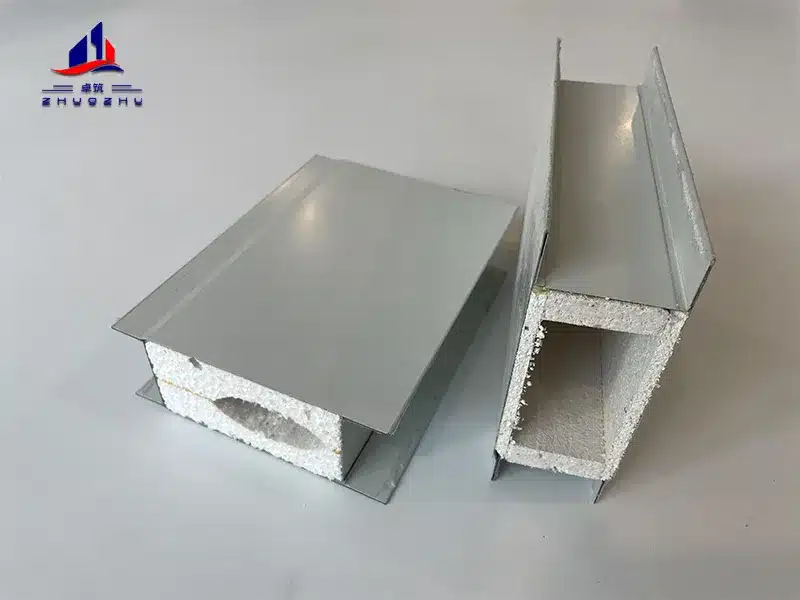
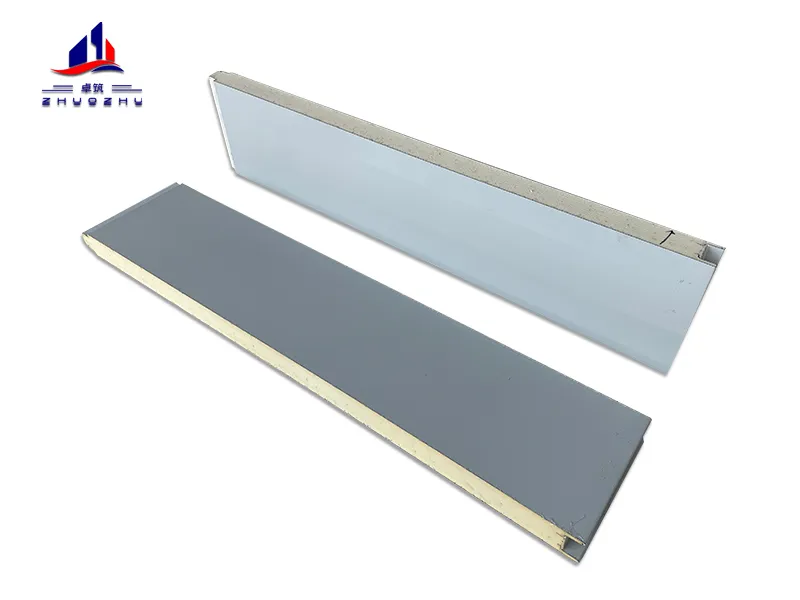
The insulation core of cleanroom partitions provides structural integrity, thermal performance, and in some cases, fire resistance:
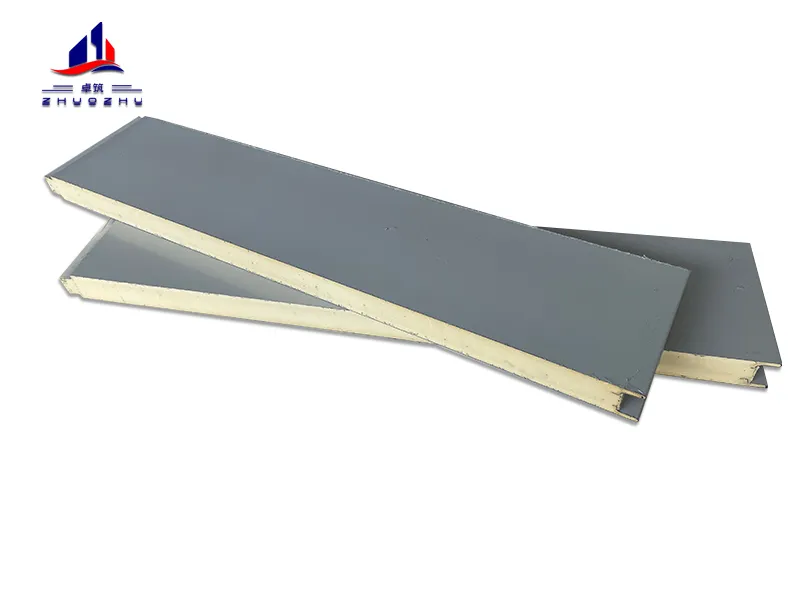
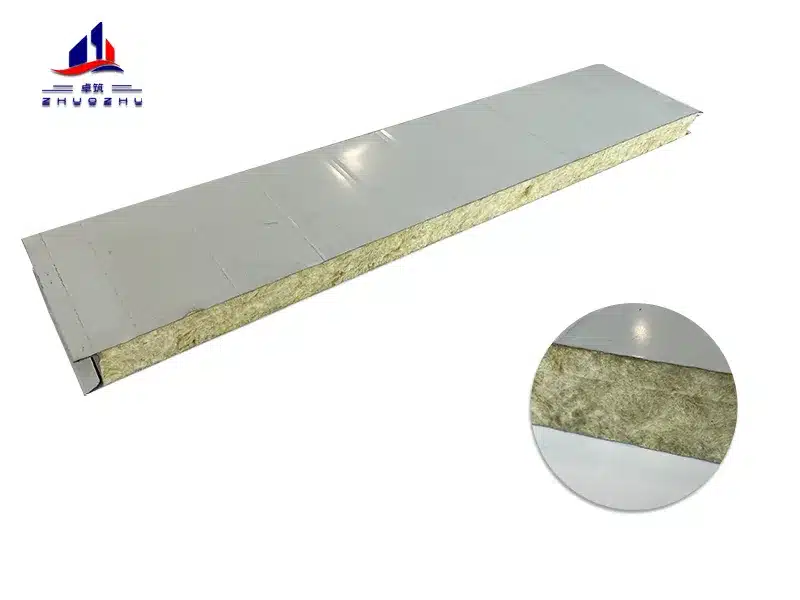
ZHUOZHU Cleanroom Panel Core Options:
| Core Material | Key Properties | Best Applications | Fire Rating |
|---|---|---|---|
| PIR Foam | 0.018 W/m·K thermal conductivity, >90% closed-cell | General cleanrooms, controlled environments | Class B-s1,d0 to A2 |
| Rock Wool | Non-combustible, excellent acoustic performance | Fire-critical areas, escape routes | Class A1 |
| Magnesium Oxide (MgO) | Inorganic, non-hygroscopic, zero VOC | Pharmaceutical, biotechnology | Class A1 |
| Honeycomb | Ultra-lightweight, high strength | Cleanrooms with weight constraints | Varies by material |
PIR Foam Advantage:
Modern cleanroom partitions increasingly utilize PIR (Polyisocyanurate) cores with 0.018 W/m·K thermal conductivity, offering superior thermal performance while maintaining cleanroom compatibility .
2.2 Surface Technologies for Cleanroom Applications
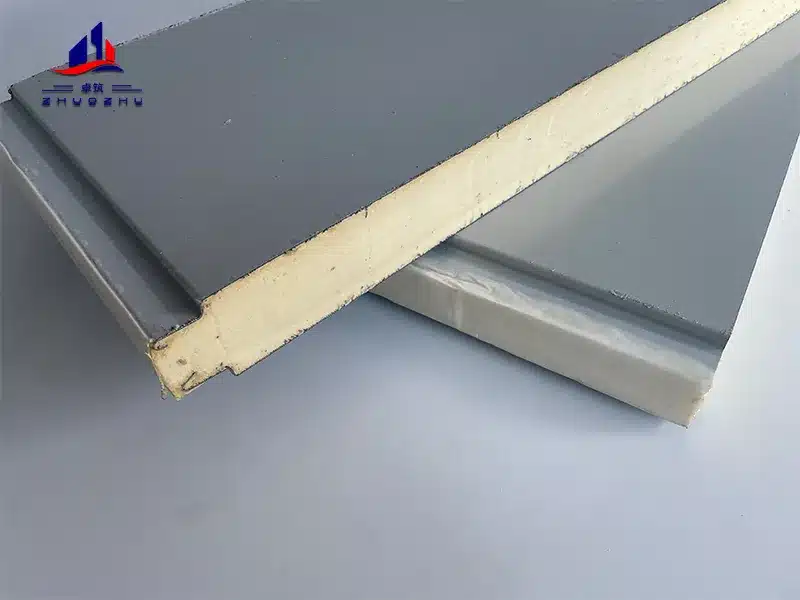
The interior surface of cleanroom partitions is the critical interface with the controlled environment:
Surface Material Options:
| Surface Type | Properties | Cleanability | Chemical Resistance | Applications |
|---|---|---|---|---|
| Stainless Steel (304/316L) | Durable, non-shedding, heat-resistant | Excellent | Excellent (all agents) | Aseptic areas, sterile filling |
| Pre-Coated Steel | Cost-effective, various finishes | Good | Good (standard agents) | ISO 7-8 cleanrooms |
| FRP (Fiberglass) | Corrosion-resistant, seamless | Good | Excellent (acids/bases) | Chemical processing, wet areas |
| Epoxy-Coated | Seamless, chemical-resistant | Excellent | Excellent | Pharmaceutical, biotech |
| Anti-Static Coatings | ESD protection (10⁶-10⁹ Ω/sq) | Good | Good | Electronics, semiconductor |
| Antimicrobial Coatings | Microbial growth inhibition | Good | Varies | Healthcare, food processing |
Surface Performance Characteristics:
- Surface Roughness: Ra < 0.8 μm (pharmaceutical grade) to prevent bacterial adhesion
- Hardness: Pencil hardness ≥H for durability
- Gloss Level: 40-60% for optimal cleanability and visual inspection
2.3 Critical Performance Requirements
Cleanability Validation:
Cleanroom surfaces must withstand repeated cleaning with aggressive agents:
- Disinfectants: Quaternary ammonium compounds, peracetic acid, hydrogen peroxide
- Sterilants: Vaporized Hydrogen Peroxide (VHP), formaldehyde (where permitted)
- Cleaning Frequency: Daily to weekly, depending on classification
Chemical Resistance Testing:
ZHUOZHU panels undergo testing against common cleanroom agents to ensure long-term performance without degradation, discoloration, or surface compromise.
Particle Shedding:
Materials must be tested for particle generation under standardized conditions, meeting stringent limits for each cleanroom class.
Part 3: Cleanroom Partition System Components
3.1 Complete Partition System Architecture
A complete cleanroom partition system includes multiple engineered components working together:
ZHUOZHU Cleanroom Partition System:
├── Primary Wall Panels
│   ├── Field panels (standard widths)
│   ├── Corner panels (internal/external)
│   └── Junction panels (T, X intersections)
├── Door Systems
│   ├── Hinged cleanroom doors
│   ├── Sliding doors (space-saving)
│   ├── Automatic doors (high traffic)
│   └── Interlocking airlock doors
├── Glazing Systems
│   ├── Fixed vision panels
│   ├── Pass-through windows
│   └── Full-glass partitions
├── Service Integration
│   ├── Electrical outlet boxes (flush-mounted)
│   ├── Data port enclosures
│   ├── Utility pass-throughs
│   └── Equipment access panels
└── Finishing Components
    ├── Coved base systems
    ├── Ceiling transition details
    ├── Corner guards
    └── Expansion joint covers
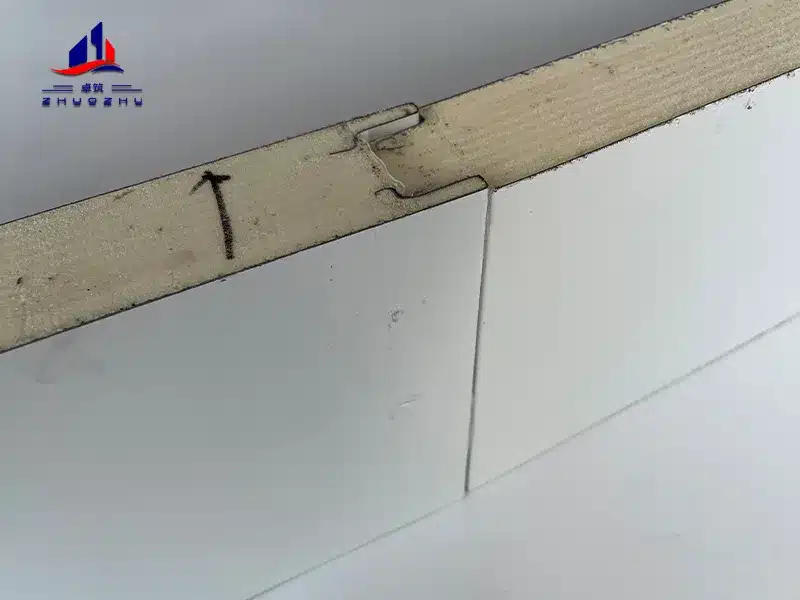
3.2 Joint and Connection Technology
The integrity of a cleanroom partition system depends critically on its joints and connections:
Joint Types and Performance:
| Joint Type | Sealing Method | Air Leakage | Cleanability | Applications |
|---|---|---|---|---|
| Tongue-and-Groove + Gasket | Integrated EPDM gasket | Minimal | Good | Standard cleanrooms |
| Extruded Aluminum Profiles | Double-gasket system | Very low | Excellent | ISO 5+ cleanrooms |
| Flush Joints + Sealant | Cleanroom-grade sealant | Near-zero | Excellent | Critical areas |
| Coved Corners | Seamless radius | Zero | Superior | Pharmaceutical |
Critical Design Features:
- Flush Surfaces: Eliminating ledges where particles can accumulate
- Radius Corners: 25-50mm radii at all junctions for cleanability
- Continuous Seals: No gaps or interruptions in sealing
- Accessibility: Joints designed for inspection and maintenance
3.3 Integration with Other Cleanroom Systems
Partitions must integrate seamlessly with other cleanroom elements:
Ceiling Integration:
- Compatibility with HEPA/ULPA filter grids
- Sealed connections to ceiling panels
- Coordination with lighting fixtures
- Fire damper integration where required
Floor Integration:
- Coved base details (50-100mm radius)
- Sealed transitions to various floor finishes
- Coordination with raised floor systems
- Drainage integration where applicable
MEP Integration:
- Pre-planned electrical and data outlet locations
- Sealed penetrations for pipes and conduits
- Integration with process utility panels
- Coordination with HVAC diffusers and returns
Part 4: Application-Specific Cleanroom Solutions
4.1 Pharmaceutical & Biotechnology Cleanrooms
Special Requirements:
- GMP Grade A-D compliance
- Sterilization compatibility (VHP, autoclave)
- Documentation and validation support
- Smooth, non-porous surfaces
ZHUOZHU Pharmaceutical Solutions:
- MediShield™ Panels: VHP-resistant surfaces with validated cleanability
- Seamless Construction: Coved corners and flush joints
- Documentation Package: Material certifications, cleanability validation
- Compliance Support: IQ/OQ documentation available
Case Example: Sterile Filling Facility
- Challenge: EU GMP Annex 1 compliance for aseptic filling line
- Solution: ISO 5 (Grade A) cleanroom with stainless steel-faced panels
- Result: Successful regulatory inspection with zero observations
4.2 Electronics & Semiconductor Cleanrooms
Special Requirements:
- Electrostatic Discharge (ESD) Control: Surface resistance 10⁶-10⁹ Ω/sq
- Ultra-Low Particle Emission: Minimal outgassing and shedding
- Chemical Resistance: To process gases and solvents
- Vibration Control: For sensitive equipment
ZHUOZHU Electronics Solutions:
- ESD-Safe™ Panels: Controlled surface resistivity with permanent conductive layers
- Low-Outgassing Formulations: Tested per ASTM E595
- Cleanroom Class Compatibility: ISO 3-6 applications
- EMI Shielding Options: For sensitive testing areas
Key Specifications:
- Surface resistance: 10⁶-10⁹ Ω/sq
- Static decay: <2 seconds (from 5000V to 100V)
- Particle shedding: <1 particle/cm² >0.5μm
4.3 Food & Beverage Cleanrooms
Special Requirements:
- Hygienic Design: Smooth, cleanable surfaces
- Chemical Resistance: To cleaning and sanitizing agents
- Temperature/Humidity Tolerance: For processing environments
- Impact Resistance: For high-traffic areas
ZHUOZHU Food Solutions:
- FoodSafe™ Panels: FDA-compliant surfaces
- Washdown Rated: Withstands high-pressure cleaning
- Temperature Range: -30°C to +50°C capability
- Moisture Resistance: Sealed against humidity
4.4 Medical Device & Healthcare Cleanrooms
Special Requirements:
- ISO 13485 Compliance: Medical device quality systems
- Biocompatibility: For implantable device manufacturing
- Cleanroom Integration: With gowning and changing areas
- Flexibility: For changing production needs
ZHUOZHU Healthcare Solutions:
- USP Class VI Options: For biocompatibility requirements
- Modular Design: Demountable for future reconfiguration
- Acoustic Performance: For quiet operation
- Infection Control: Antimicrobial coating options
Part 5: Performance Validation & Quality Assurance
5.1 Testing and Certification Requirements
Cleanroom partitions must undergo rigorous testing to verify performance:
Key Tests and Standards:
| Test | Standard | Acceptance Criteria | Frequency |
|---|---|---|---|
| Air Leakage | EN 12114 | <1.0 m³/h·m² @50Pa | Type test |
| Surface Cleanability | EN 13697 | >4 log reduction | Certification |
| Chemical Resistance | ISO 2812-1 | No visible change | Material qualification |
| Particle Shedding | IEST-RP-CC034.2 | <1 particle/cm² | Type test |
| ESD Performance | EN 61340-5-1 | 10⁶-10⁹ Ω/sq | Batch test |
5.2 Documentation and Validation Support
ZHUOZHU provides comprehensive documentation for cleanroom projects:
Standard Documentation Package:
- Material test reports and certificates
- Cleanability validation reports
- Chemical resistance matrices
- Installation qualification (IQ) protocols
- Operation and maintenance manuals
Enhanced Documentation (for regulated industries):
- USP Class VI biocompatibility reports
- ISO 10993 cytotoxicity testing
- Extractables and leachables (E&L) profiles
- Validation support files
5.3 Long-Term Performance Monitoring
Cleanroom partitions require ongoing monitoring to maintain performance:
- Visual Inspection: Regular checks for surface damage or seal integrity
- Particle Monitoring: Continuous or periodic particle counting
- Pressure Differentials: Monitoring of room-to-room pressure cascades
- Cleaning Validation: Swab testing for residual contamination
Part 6: Installation & Commissioning
6.1 Cleanroom Installation Protocol
Proper installation is critical to partition performance:
Installation Sequence:
- Site Preparation: Clean area, verify dimensions, mark layouts
- Floor Track Installation: Precisely leveled and anchored
- Panel Installation: Sequence maintaining alignment and plumb
- Joint Sealing: Application of cleanroom-grade sealants
- Door and Glazing Installation: Pre-hung or site-assembled
- Service Integration: Electrical, data, utility connections
- Cleanroom Commissioning: Testing and certification
6.2 Cleanroom Commissioning Process
Commissioning verifies that the completed cleanroom meets specifications:
Commissioning Phases:
- Installation Qualification (IQ): Verify components installed per design
- Operational Qualification (OQ): Test function of systems (doors, seals, pressures)
- Performance Qualification (PQ): Demonstrate ongoing performance under operating conditions
Key Tests:
- Room pressurization and cascade verification
- Air change rate measurement
- Particle count testing (at rest and in operation)
- Recovery time testing
- Filter integrity testing
6.3 Common Installation Challenges and Solutions
| Challenge | Solution |
|---|---|
| Misaligned panels | Precision leveling systems, laser-guided installation |
| Sealant failures | Proper surface preparation, compatible materials, skilled applicators |
| Service conflicts | Pre-planning, BIM coordination, flexible service panels |
| Schedule pressure | Modular prefabrication, phased installation, experienced crews |
Part 7: ZHUOZHU’s Cleanroom Partition Solutions
7.1 Complete System Offering
ZHUOZHU provides comprehensive cleanroom partition solutions for all classifications:
Product Range:
- Standard Cleanroom Panels: For ISO 7-8 applications
- Pharmaceutical-Grade Panels: For GMP-compliant facilities
- ESD-Safe Panels: For electronics and semiconductor cleanrooms
- Hygienic Panels: For food and beverage processing
- Fire-Rated Systems: For compartmentation requirements
7.2 Customization Capabilities
- Non-Standard Dimensions: Custom widths, heights, and thicknesses
- Specialty Finishes: Custom colors, textures, or coatings
- Integrated Features: Pre-cut openings, service panels, viewing windows
- Performance Modifications: Enhanced acoustic, thermal, or fire performance
7.3 Technical Support Services
- Design Assistance: Early involvement for optimal solutions
- Detail Engineering: Complete drawing sets for approval and installation
- Installation Support: On-site guidance for complex projects
- Validation Assistance: Documentation and testing support
7.4 Manufacturing Quality Assurance
- ISO 9001 Certified: Quality management systems
- Material Traceability: Complete documentation from source to finished product
- In-Process Testing: Continuous quality monitoring during production
- Final Verification: Performance testing before shipment
Part 8: Future Trends in Cleanroom Partition Technology
8.1 Smart Cleanroom Integration
- IoT-Enabled Panels: Integrated sensors for temperature, humidity, pressure
- Real-Time Monitoring: Continuous data on environmental conditions
- Predictive Maintenance: AI-driven alerts for potential issues
- Digital Twins: Virtual models for simulation and optimization
8.2 Sustainable Cleanroom Design
- Recycled Content: Panels with 30-40% recycled materials
- Low-Embodied Carbon: Reduced environmental footprint
- Energy-Efficient Systems: Better thermal performance reducing HVAC loads
- Circular Economy: Demountable designs for reuse and recycling
8.3 Advanced Material Development
- Self-Cleaning Surfaces: Photocatalytic coatings that break down contaminants
- Enhanced Antimicrobials: Longer-lasting, broader-spectrum protection
- Bio-Based Materials: Renewable sources for sustainable construction
- Nano-Technology: Surfaces with enhanced cleanability and durability
8.4 Modular and Flexible Cleanrooms
- Rapid Deployment: Prefabricated modules for faster installation
- Reconfigurable Systems: Demountable partitions for changing needs
- Scalable Design: Easy expansion as requirements grow
- Temporary Cleanrooms: For research, clinical trials, or emergency response
Conclusion: The Foundation of Controlled Environments
Cleanroom partitions are not merely walls—they are engineered systems that form the foundation of contamination control, environmental stability, and regulatory compliance in critical manufacturing and research environments. The selection of appropriate partition technology influences every aspect of cleanroom performance: from particle counts and pressure cascades to cleaning efficacy and operational costs.
The ZHUOZHU Advantage:
Our expertise in cleanroom panel manufacturing brings specific value to partition applications:
- Technical Excellence: Advanced core materials with 0.018 W/m·K thermal performance
- Surface Technology: Multiple finish options meeting industry-specific requirements
- System Integration: Complete solutions from panels to doors and service components
- Validation Support: Comprehensive documentation for regulatory compliance
- Global Experience: Successful installations across pharmaceutical, electronics, and food sectors
For cleanroom designers, facility managers, and quality assurance professionals, the choice of partition system is a critical decision with long-term implications for operational success, regulatory compliance, and product quality. By understanding the technical requirements and available solutions, project teams can select systems that not only meet today’s needs but adapt to tomorrow’s challenges.
Take the Next Step:
Contact ZHUOZHU today to discuss your cleanroom partition requirements. Our technical team combines cleanroom engineering expertise with manufacturing capability to deliver solutions that perform, comply, and endure.
About the Author
Wald is the Chief Engineer at ZHUOZHU with specialized expertise in cleanroom technology and controlled environment design. His work focuses on advancing partition systems for pharmaceutical, electronics, and biotechnology applications globally. Learn More About Us
