
Selecting the right insulated sandwich panel for an industrial building roof is a critical decision that impacts long-term operational costs, building safety, and production efficiency. Among the many options available, PIR sandwich panels and EPS sandwich panels have emerged as mainstream choices due to their respective outstanding characteristics. This article provides an in-depth analysis of both from multiple dimensions including technical performance, economic benefits, and application scenarios, offering clear selection guidance. The content is provided by the ZHUOZHU technical team, aiming to serve as an objective and professional reference for engineers, architects, and project decision-makers.

Core Material Properties: The Fundamental Differences Between PIR and EPS
Understanding the performance differences between the two panels begins with their core materials.
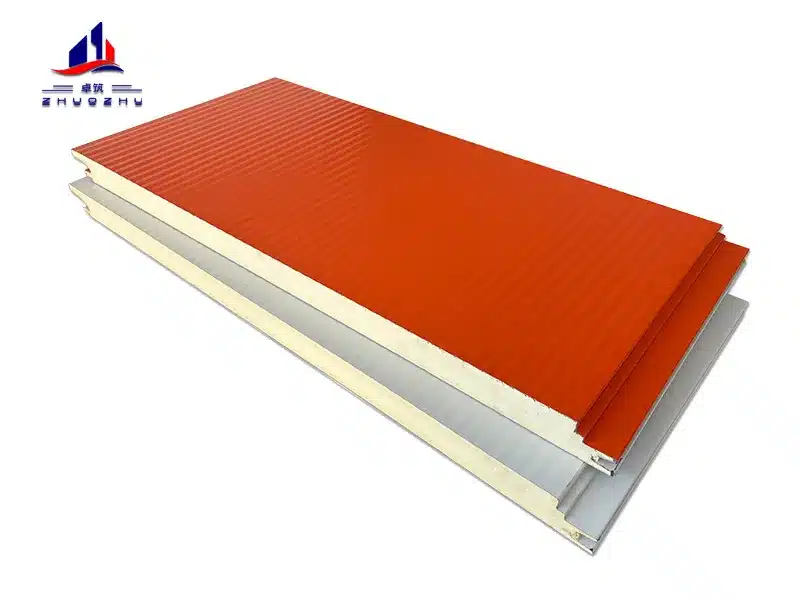
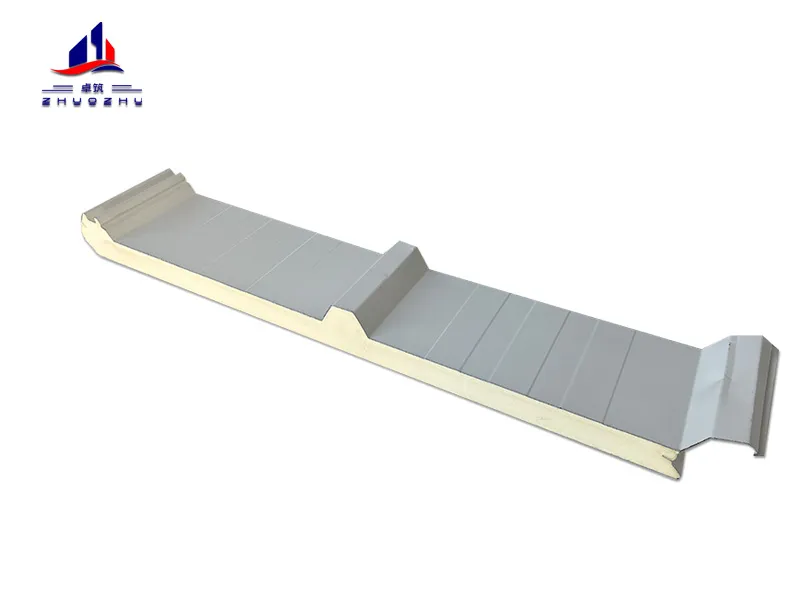
- PIR (Polyisocyanurate): A high-performance rigid closed-cell foam plastic. It is an evolution of PUR (Polyurethane), achieving significant improvements in insulation and fire performance through optimized molecular structure, which results in more stable chemical bonds.
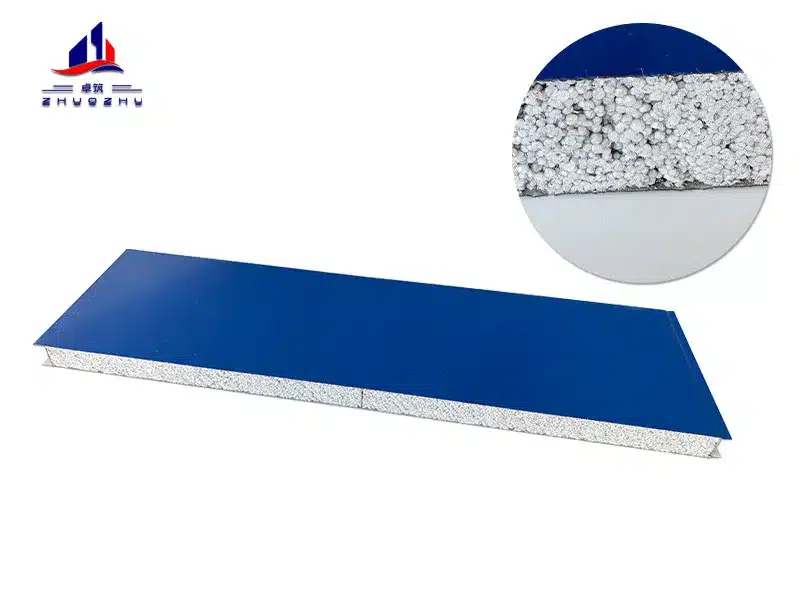
- EPS (Expanded Polystyrene): A lightweight foam plastic formed by steam expansion molding. It consists of numerous closed, bead-like cavities and is a historically well-established, widely-used insulation material.
Six-Dimensional Comparison for Industrial Roofing Applications
1. Thermal Insulation Performance & Energy Consumption
This is the core function of roofing material, directly impacting the energy consumption for interior temperature control.
- PIR Sandwich Panels: Significant advantage. Its thermal conductivity (λ-value) typically ranges between 0.022 – 0.025 W/(m·K), Among the lowest for civilian insulation materials. This means that at the same designed thickness, a PIR panel provides a higher thermal resistance (R-value), effectively blocking heat transfer. For factories requiring constant temperatures (e.g., precision machining, food packaging) or buildings in severe cold/hot climates, choosing a PIR roof can dramatically reduce long-term HVAC operating costs.
- EPS Sandwich Panels: Good insulation performance, with thermal conductivity generally around 0.035 – 0.040 W/(m·K). While inferior to PIR, EPS panels are sufficient for basic needs in ordinary warehouses, light assembly workshops, etc., where insulation demands are not extreme and seasonal temperature control is primary, offering a lower initial cost.
2. Fire Safety Rating
Fire safety for industrial roofs is paramount, concerning lives and asset protection.
In-Depth Analysis of Sandwich Panel Core Material Fire Performance: PUR/PIR vs. Rock Wool vs. EPS >>
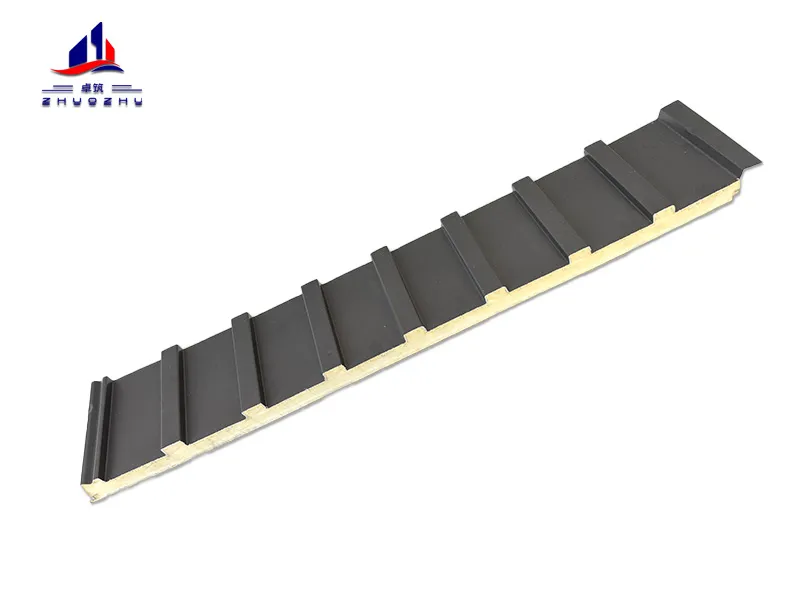
- PIR Sandwich Panels: Superior fire performance. PIR material inherently has better flame retardancy. Its foam structure forms a dense char layer upon fire exposure, effectively blocking oxygen and further flame spread. High-quality PIR sandwich panels typically achieve a Class B1 (Flame-retardant) or higher fire rating, making them a safer choice for meeting the fire codes of most industrial buildings.
- EPS Sandwich Panels: Traditional EPS material is Class B2 (Combustible). While the addition of flame retardants can improve its resistance, it can still burn and potentially produce melting droplets under sustained open flame. Therefore, EPS panels are generally not suitable for areas with strict fire compartment requirements or factories with high fire risks.
3. Structural Strength & Load-Bearing Capacity
Industrial roofs must withstand wind and snow loads, and may carry additional weight from maintenance equipment.
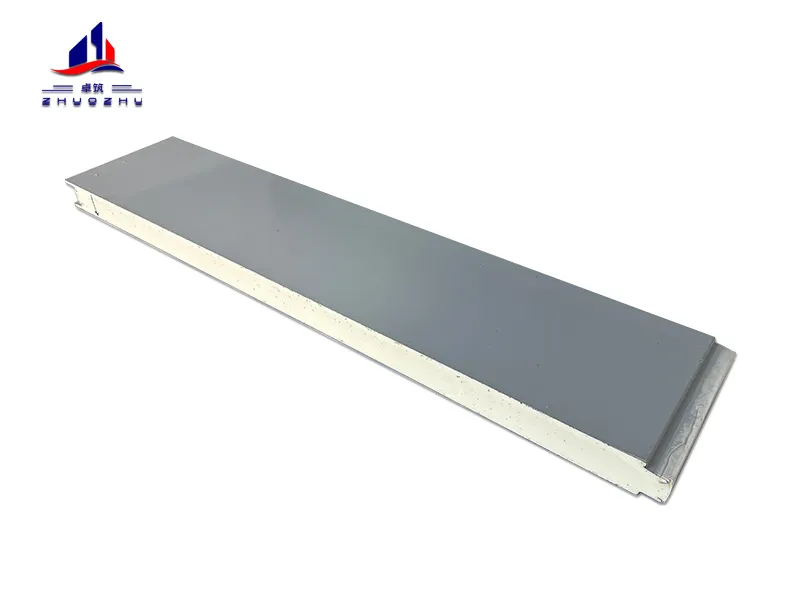
- PIR Sandwich Panels: Benefiting from higher closed-cell content and density (typically 30-45 kg/m³), the bond strength between the PIR core and metal facings is superior, resulting in excellent overall panel bending and compressive performance. This allows PIR sandwich roof panels to achieve larger unsupported spans at the same thickness or bear heavier loads, providing a more open, column-free interior space.
- EPS Sandwich Panels: Lower density (typically 12-20 kg/m³), softer texture. Their structural strength relies mainly on the metal facings, with the core providing less support. Therefore, using EPS panels often requires closer purlin spacing to ensure roof stiffness, which may increase some structural costs.
4. Long-Term Durability & Dimensional Stability
Roofs are constantly exposed to temperature and humidity fluctuations. Material stability determines roof flatness and service life.
- PIR Sandwich Panels: Excellent stability. Closed-cell content close to 90%, extremely low water absorption (<3%), making it difficult for moisture to penetrate. Thermal conductivity decays slowly over long-term use, ensuring lasting insulation performance. Its temperature tolerance range is also wider, with minimal dimensional change in high/low-temperature environments, maintaining roof flatness long-term and reducing the risk of cold bridges or leaks at joints due to core shrinkage.
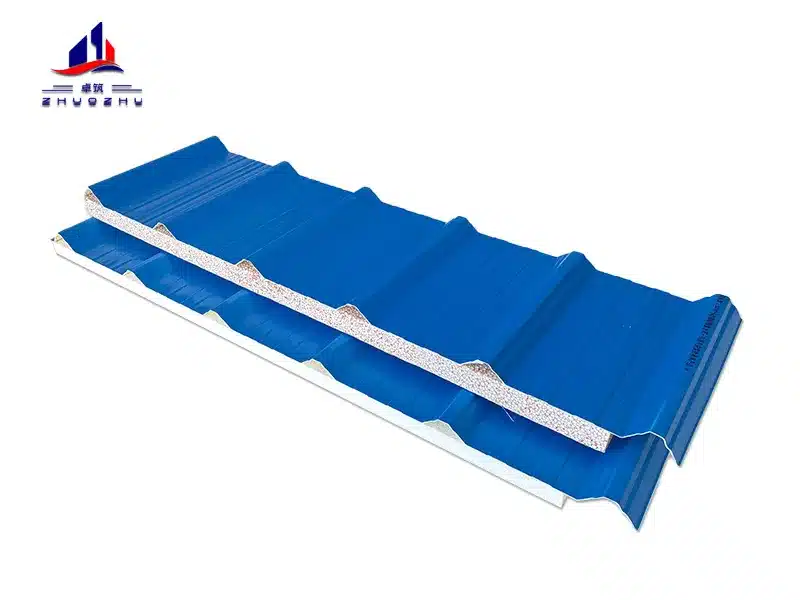
- EPS Sandwich Panels: Although closed-cell, gaps exist between beads, potentially leading to slow moisture absorption over long-term exposure and gradual decline in insulation performance. Its dimensional stability under continuous thermal cycling is inferior to PIR, posing a slight risk of shrinkage.
5. Economic Analysis (Initial Investment vs. Life-Cycle Cost)
- Initial Investment: EPS Sandwich Panels have a clear advantage in material cost, often the first choice for budget-constrained projects.
- Life-Cycle Cost: While PIR Sandwich Panels have a higher unit price, the energy savings from their superior insulation, longer lifespan, lower maintenance needs, and potential reduction in structural costs (due to larger spans) often demonstrate higher economic value over the project’s entire lifecycle. A detailed Return on Investment (ROI) analysis is crucial for large factories.
6. Environmental & Sustainability
- PIR Sandwich Panels: Modern PIR blowing agents often use environmentally friendly types (e.g., cyclopentane) with low ozone depletion potential. Their high insulation efficiency directly reduces carbon emissions from building operation.
- EPS Sandwich Panels: Recyclable, with relatively low production energy consumption. However, its raw materials are derived from petrochemicals.
Decision Guide: When to Choose PIR? When to Choose EPS?
| Decision Factor | Prioritize PIR Sandwich Panels | Prioritize EPS Sandwich Panels |
|---|---|---|
| Primary Driver | Long-term energy savings, high fire rating, large span requirements | Lowest initial investment, temporary or light construction |
| Typical Applications | Food processing plants, cold chain warehouse roofs, precision electronics workshops, chemical equipment platforms, any factory with strict temperature control requirements. | Ordinary goods warehouses, logistics sorting centers, seasonal agricultural sheds, interior mezzanines, auxiliary buildings with no special fire requirements. |
| Climate Conditions | Severe cold or hot regions, continental climates with large temperature swings. | Temperate climate regions, non-extreme insulation requirements. |
| Project Positioning | Pursuing high quality, low operating costs, long-term held industrial assets. | Tightly controlled budget, short-term use, or fast-track construction projects. |
ZHUOZHU’s Professional Perspective & Product Quality Commitment
As a professional building materials manufacturer and exporter, ZHUOZHU deeply understands the needs of industrial construction. Our PIR sandwich panels and EPS sandwich panels are produced in strict accordance with relevant standards, ensuring reliable performance data.
- Compliance with National Standards: Our metal-faced sandwich panel products actively adhere to national standards such as 《建筑用金属面绝热夹芯板》(GB/T 23932) to ensure quality control from material to finished product. The industry’s focus on quality traceability systems is increasing, and the development of related standards (e.g., 《建材产品质量追溯 隔热保温材料》) will further enhance market standardization.
- Systematic Solutions: We provide not only panels but a complete roofing system including dedicated connectors and sealants, ensuring roof airtightness, water tightness, and minimizing thermal bridge effects.
- Global Project Support: Wherever your factory is located, ZHUOZHU, as a reliable factory from China, can provide a one-stop service from technical selection consultation and customized production to international logistics.
About the Author
The technical content of this article has been reviewed and informed by Wald, Chief Engineer at ZHUOZHU. Wald holds a Bachelor’s degree in Building Materials Engineering and has over eight years of professional experience in the building insulation and refrigeration engineering field, specializing in sandwich panel material R&D and system application. He has been deeply involved in and led multiple projects for transnational cold chain logistics centers and industrial energy-saving plants, ensuring the performance and reliability of insulation systems in extreme environments. The technical practice of Wald and his team is a cornerstone of ZHUOZHU‘s reputation as a trusted manufacturer and exporter for global clients.
Learn more about our team: About Us
Any technical inquiries? Contact Us
