
The Strategic Value of High-Performance Industrial Envelopes
Global industrial construction is undergoing a transformation, with the warehouse and logistics sector experiencing significant growth. In this competitive landscape, the choice of industrial wall and roof systems moves beyond basic shelter to become a strategic business decision impacting operational efficiency, energy consumption, worker safety, and long-term asset value. A well-engineered building envelope can dramatically reduce operational expenses while enhancing productivity. ZHUOZHU, having supplied extensive engineered panel systems globally for automotive plants, e-commerce fulfillment centers, and manufacturing facilities, understands that industrial buildings require robust solutions that balance technical performance with practical economics.

Part 1: Core System Selection for Industrial Applications
1.1 The Performance-Based Material Selection Matrix
Different industrial operations demand specific panel characteristics, with the insulation core being particularly critical for energy performance and safety.
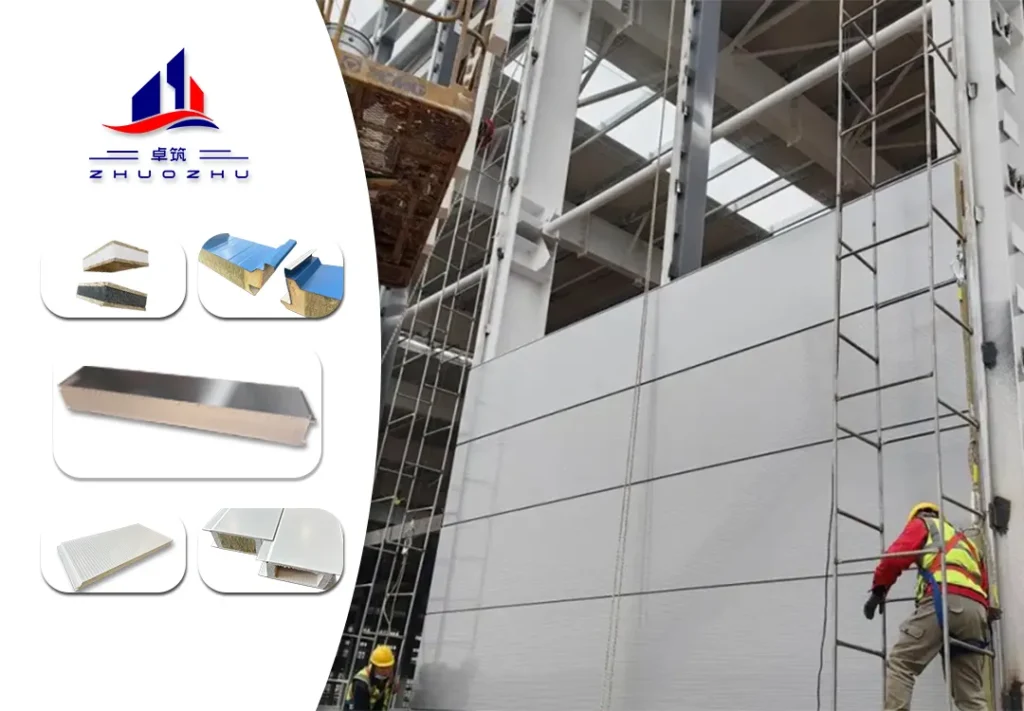
- PIR/PUR Foam Core: With exceptionally low thermal conductivity, our PIR sandwich panels deliver superior energy efficiency for temperature-controlled environments and manufacturing areas requiring stable conditions. They offer an excellent balance of insulation value and structural capability.
- Mineral Wool Core: For zones with elevated fire risk or stringent acoustic requirements, our rock wool sandwich panels provide non-combustible protection and effective noise reduction. This makes them ideal for facilities processing volatile materials or housing loud machinery.
- EPS Core: When project parameters call for reliable thermal performance with particular budget considerations, our EPS sandwich panels present a proven and effective solution for various industrial applications.
1.2 Structural Integration with Building Frameworks
Modern industrial facilities require seamless integration between the envelope and the primary structure for optimal performance and construction efficiency.
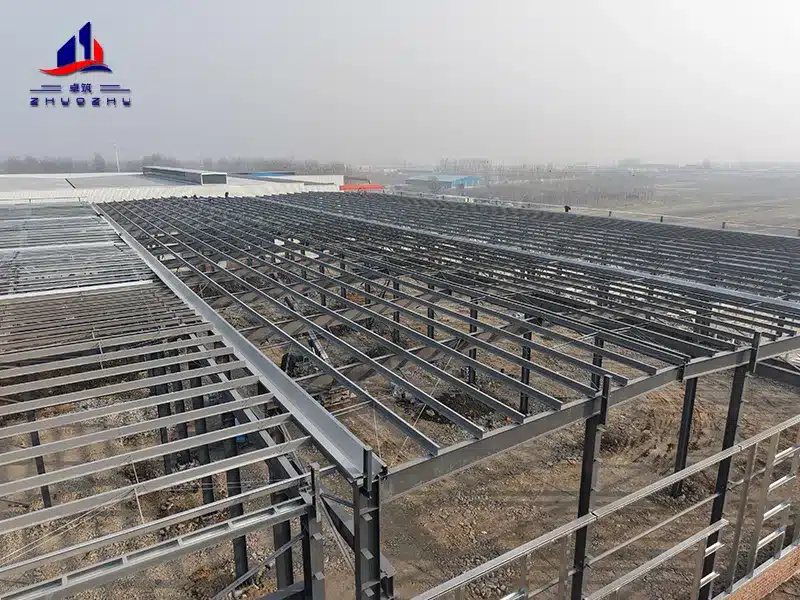
- Steel Structure Compatibility: Our panel systems are precision-engineered for integration with industrial steel structure framing. This includes compatible connection details for C/Z purlins and fastening systems that ensure both structural integrity and thermal continuity.
- Long-Span Capabilities: For warehouses and factories requiring large, column-free spaces, certain panel profiles offer enhanced spanning capabilities, reducing the need for intermediate supports and maximizing usable floor area.
Part 2: Application-Specific Engineering Solutions
2.1 Manufacturing & Production Facilities
Manufacturing environments often have unique requirements for temperature stability, cleanliness, and process integration.
- Temperature & Humidity Control: Consistent production quality, especially in sectors like automotive painting or electronics assembly, often depends on stable ambient conditions. High-performance insulated panels help maintain these conditions with lower energy expenditure compared to standard building materials.
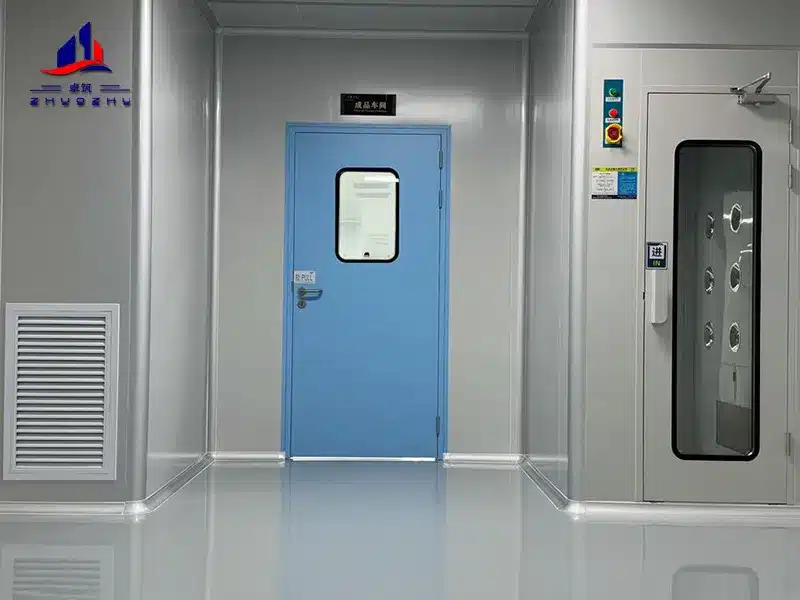
- Hygienic & Cleanable Surfaces: For food processing or pharmaceutical manufacturing areas adjacent to higher-grade zones, wall systems with smooth, impervious surfaces facilitate cleaning and meet prerequisite hygiene standards. This design philosophy mirrors that used in specialized cleanroom panels.
- Process Integration: Walls can be designed with integrated conduits, mounting points, or reinforced sections to support heavy equipment, conveying systems, or utilities, reducing later retrofit costs and disruptions.
2.2 Logistics & Distribution Centers
The rise of e-commerce has transformed logistics facilities into high-speed efficiency engines, where the building envelope contributes directly to operational throughput.
- Speed of Construction: Prefabricated panelized systems enable the rapid enclosure of large spaces, significantly shortening the project timeline from groundbreaking to operational occupancy. This allows businesses to respond faster to market opportunities.
- Durability for High-Traffic Areas: Areas around loading docks and internal logistics routes are subject to impact. Reinforced panel designs or protective finishes can withstand incidental contact from equipment, minimizing maintenance and downtime.
- Natural Lighting Integration: Strategic incorporation of translucent panel sections or compatible glazing systems can reduce reliance on artificial lighting during daytime operations, contributing to lower energy costs and a better working environment.
2.3 Specialized Storage & Cold Chain
Facilities for cold storage or hazardous material containment present some of the most demanding challenges for a building envelope.
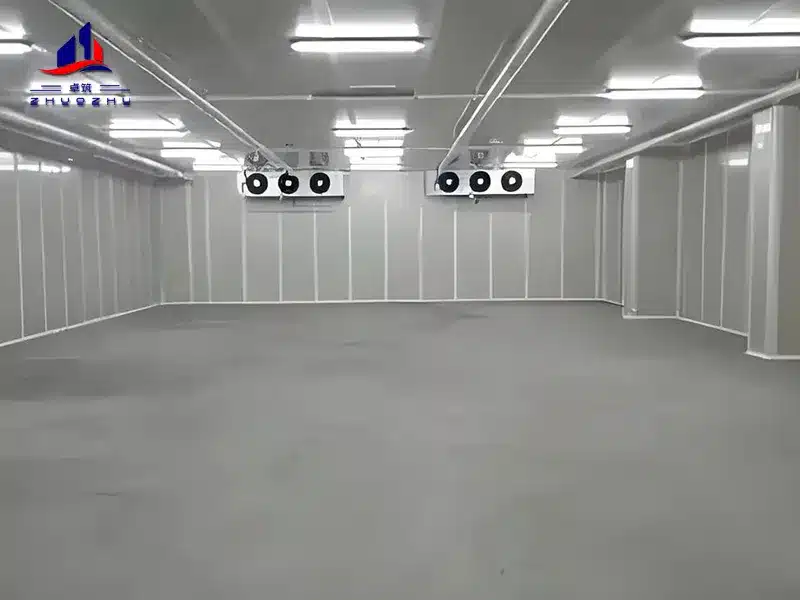
- Thermal Efficiency for Cold Storage: Maintaining low temperatures economically requires envelope systems with high thermal resistance (R-value) and exceptional airtightness. Thicker PIR sandwich panels or composite systems are commonly employed to minimize thermal bridging and energy loss, a principle also critical for dedicated cold room panels.
- Vapor Barrier Integrity: Preventing moisture ingress is crucial to avoid condensation and insulation degradation in cold environments. Our systems incorporate continuous and robust vapor control layers within the wall assembly.
- Fire Protection for High-Risk Storage: Storage of flammable goods or chemicals may require wall and roof systems with certified fire resistance ratings to compartmentalize risk and protect assets.
Part 3: The ZHUOZHU Industrial Building System
3.1 Comprehensive Wall System Engineering
We approach industrial walls as complete, engineered assemblies rather than just collections of materials.
ZHUOZHU Industrial Wall System Architecture:
├── Core Insulation Options
│   ├── PIR/PUR: For optimal thermal efficiency
│   ├── Mineral Wool: For fire safety and acoustics
│   └── EPS: For cost-effective performance
├── Facing Materials
│   ├── High-Strength Steel: With durable coatings for longevity
│   ├── Aluminum: For corrosion resistance or specific aesthetic needs
│   └── Specialized Coatings: Including anti-microbial or enhanced chemical resistance
├── Performance Engineered Features
│   ├── Thermal Break Technology: Minimizing heat transfer through the frame
│   ├── Advanced Joint Design: Ensuring weather tightness and structural continuity
│   └── Integrated Sealants: Providing long-term air and water infiltration resistance
3.2 Robust Roofing Solutions
Industrial roofs must withstand environmental extremes while protecting the operations below.
- Weather Resistance: Systems are engineered to handle significant wind uplift pressures, heavy snow loads, and driving rain, based on regional climatic data.
- Thermal Performance: Continuous insulation in the roof assembly prevents energy loss through the building’s largest surface area, a critical factor in climate control costs.
- Low-Maintenance Design: Features such as concealed fasteners and durable, UV-resistant coatings extend service life and reduce lifetime maintenance expenditure.
3.3 Sustainability and Energy Conservation
Industrial buildings are major energy consumers, making the envelope’s efficiency a key sustainability factor.
- Reduced Operational Carbon: A high-performance building envelope directly lowers the energy required for heating and cooling, reducing the facility’s operational carbon footprint and utility costs.
- Material Lifecycle: We consider the environmental impact of materials, offering options with recycled content and focusing on durability to extend the building’s service life.
- Building Certification Support: Our system data can contribute to credits in global green building certification programs like LEED or BREEAM, focusing on energy performance, material selection, and indoor environmental quality.
Part 4: Economic & Operational Value Proposition
4.1 Lifecycle Cost Perspective
The true cost of an industrial building is measured over its entire service life, not just initial construction.
- Initial Investment vs. Long-Term Savings: While high-performance envelope systems may involve a different initial investment compared to basic options, they typically yield substantial savings in energy costs over the building’s lifespan. The payback period can be attractive when total cost of ownership is considered.
- Maintenance and Durability: Selecting durable materials and finishes designed for industrial environments reduces the frequency and cost of repairs and repainting, contributing to lower long-term operational expenses.
- Business Continuity: A robust envelope minimizes the risk of weather-related damage, infiltration, or failure that could halt operations, protecting revenue and productivity.
4.2 Enhancing Asset Value
A well-constructed, energy-efficient industrial facility with modern systems is a more valuable and marketable asset.
- Marketability: Buildings with demonstrably lower operating costs and modern specifications are more attractive to potential buyers or tenants.
- Functional Longevity: A quality envelope protects the interior structure and systems from the elements, preserving the core asset value of the building for decades.
- Adaptability: A clear-span, well-insulated shell offers flexibility for future changes in manufacturing technology or logistics processes, future-proofing the investment.
Conclusion: The Envelope as a Foundation for Industrial Performance
In today’s industrial landscape, where efficiency, sustainability, and resilience are paramount, the building envelope is far more than a simple boundary. It is a critical, performance-defining system that influences energy consumption, operational costs, worker comfort, and asset protection.
ZHUOZHU’s industrial panel systems are engineered with this holistic view. By combining advanced materials like those in our PIR, rock wool, and EPS sandwich panels with intelligent design for integration with steel structures, we provide solutions that help our clients build facilities that are not just shelters, but strategic tools for business success. From manufacturing plants requiring precision environments to vast distribution centers needing speed and durability, our systems form the reliable, high-performance foundation upon which productive industry operates.
About the Author
Wald is the Chief Engineer at ZHUOZHU, holding a Bachelor’s degree in Building Materials Engineering and over 8 years of specialized experience. His expertise spans the design and application of insulated panel systems for diverse industrial and commercial projects globally, focusing on performance optimization and practical constructability. Learn More About Us
