
Prefabricated building technology is transforming the global construction industry at an unprecedented pace, offering diverse and efficient living solutions for various needs. As a professional manufacturer and exporter from China, ZHUOZHU provides a complete range of prefabricated house products—from high-end residences to temporary accommodations—leveraging advanced steel structure technology and mature prefabrication systems. This article systematically analyzes three main types of prefabricated houses: Prefabricated Villas, Prefabricated Worker Houses, and Prefabricated Capsule Houses (Container Houses), delving into their design characteristics, technical advantages, and application scenarios.
1. Prefabricated Villas: Permanent Residences for Modern Living
1.1 Definition and Core Characteristics
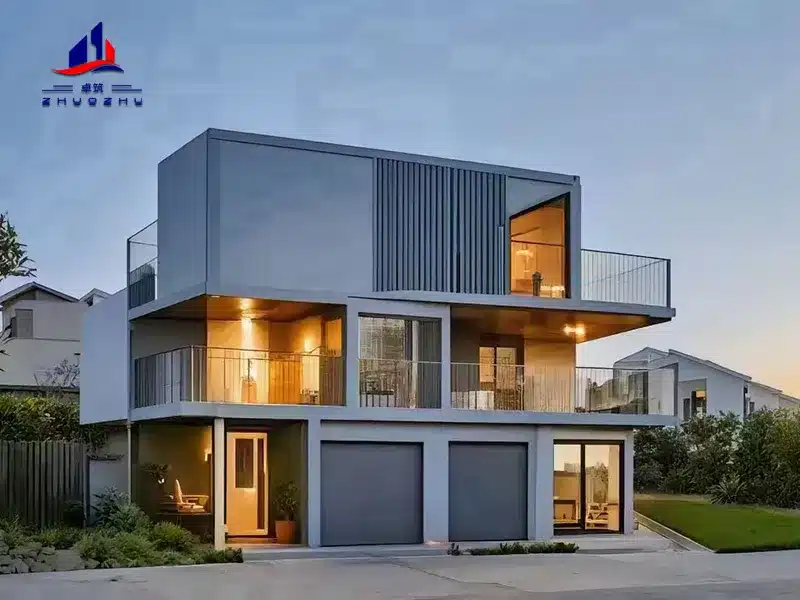
Prefabricated Villas refer to high-quality independent residences constructed using factory-prefabricated components that are rapidly assembled on-site. Compared to traditional construction, they represent the highest application level of prefabricated house technology, integrating architectural design aesthetics, structural engineering, and advanced manufacturing processes.
1.2 Technical Framework and Material Systems
- Primary Structure: Uses high-strength light steel framing or heavy steel structures to ensure structural safety and building lifespan.
- Envelope System: Integrates high-performance PIR sandwich panels or rock wool sandwich panels as wall and roof materials, providing exceptional thermal insulation.
- Exterior Cladding: Options include metal carved panels, siding systems, or customized finishes to meet diverse aesthetic needs.
- Internal Systems: Pre-installed plumbing/electrical conduits, smart home systems, and energy-efficient equipment for a “ready-to-move-in” experience.
1.3 Core Advantage Analysis
| Advantage Dimension | Specific Manifestation | Vs. Traditional Construction |
|---|---|---|
| Construction Speed | Overall timeline reduced by 50-70% | Traditional: 6-12 months; Prefab: 2-4 months |
| Quality Control | Factory standardization ensures consistent quality | On-site quality varies significantly |
| Design Flexibility | Supports personalized custom design | High modification costs in traditional builds |
| Energy Efficiency | Excellent airtightness and thermal performance | Traditional buildings typically use 30-50% more energy |
| Environmental Friendliness | Reduces construction waste by over 80% | Traditional construction generates substantial waste |
1.4 Application Scenarios and Client Groups
- High-end Residential Market: High-income families seeking modern lifestyles.
- Holiday Villas: Second homes in tourist/resort areas.
- Rural Revitalization Projects: Modern housing in new countryside development.
- Overseas Real Estate Development: Rapid, cost-controlled overseas property projects.
1.5 ZHUOZHU’s Prefabricated Villa Solutions
We offer one-stop services from design consultation and factory manufacturing to on-site installation:
- Standard Series: Cost-effective solutions based on proven designs.
- Custom Series: Exclusive homes designed entirely to client specifications.
- Smart Series: Future-ready homes integrated with smart home and energy management systems.
- Passive House Series: Ultra-low-energy homes meeting international Passive House standards.
2. Prefabricated Worker Houses: Mobile Camps for Large Projects
2.1 Definition and Functional Positioning
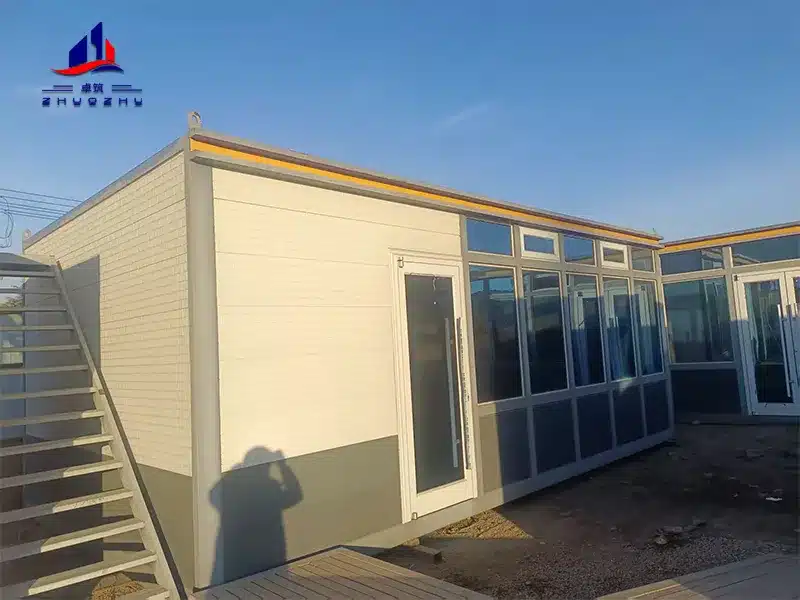
Prefabricated Worker Houses are temporary living facilities specifically designed for large-scale engineering projects (e.g., infrastructure construction, mining development, factory construction), primarily serving as worker dormitories, offices, and supporting facilities.

2.2 Design Features and Technical Specifications
- Modular Design: Uses standard-sized modules for flexible combination and expansion.
- Rapid Deployment: On-site installation takes only days to weeks.
- Integrated Basic Facilities: Pre-installed lighting, sockets, beds, etc.
- Durable Structure: Adapts to various climates and frequent relocation.
- Safety Standards: Complies with site safety regulations, equipped with firefighting facilities.
2.3 Configuration Grades and Selection
- Economy Dormitories: Basic accommodation, 4-8 person rooms.
- Standard Dormitories: 2-4 person rooms with private bathrooms.
- Management Dormitories: Single or double rooms with higher comfort.
- Supporting Functional Areas: Canteen, bathroom, laundry, recreation room modules.
2.4 Application Advantage Analysis
Large Project Needs → Prefab Worker House Solution → Enhanced Project Benefits
    │                          │                         │
Rapid Personnel Placement   Reduced On-site Work     Increased Worker Satisfaction
Cost-Effective Control    Flexible Scale Adjustment Ensured Project Schedule
Regulatory Compliance     Reusable Value           Reduced Project Risk
2.5 ZHUOZHU’s Professional Services
For different project needs, we provide:
- Project Assessment: Recommends suitable solutions based on project scale, timeline, and personnel count.
- Customized Design: Considers special factors like project location climate and cultural habits.
- Logistics Management: Optimizes transport plans to ensure timely delivery to remote sites.
- Installation Guidance: Provides on-site installation training and technical support.
- After-sales Service: Maintenance support and module upgrade services.
3. Prefabricated Capsule Houses: Efficient Single-Occupancy Solutions
3.1 Definition and Product Form
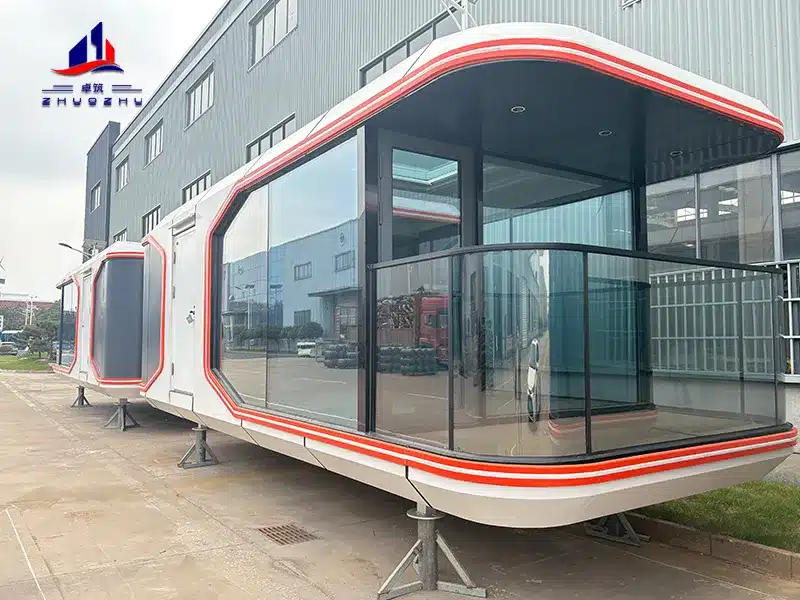
Prefabricated Capsule Houses, often called Prefabricated Container Houses, are independent living units designed based on standard container dimensions. These products are ideal for single occupancy and special applications due to their standardization, stackability, and high portability.
3.2 Product Variants and Functional Configurations
Basic Capsule House (12-18㎡)
    ├── Single Occupancy Unit: Bed, desk, storage, compact bathroom
    ├── Office Unit: Work area, meeting area, reception
    ├── Commercial Unit: Retail shop, service station, display room
    └── Special Purpose: Medical station, guard room, equipment room
3.3 Technological Innovation and Upgrades
- Insulation Upgrade: Uses EPS sandwich panels as envelope material to enhance thermal performance.
- Structural Reinforcement: Adds internal steel framing to increase load capacity and durability.
- Smart Integration: Pre-installed smart control systems for remote management.
- Eco-design: Sustainable features like solar integration, rainwater harvesting.
- Quick Connection: Modular interface design supports rapid combination and expansion.
3.4 Diverse Application Scenarios
- Urban Micro-housing: Affordable housing in high-density cities.
- Student Apartments: Student accommodation solutions near campuses.
- Tourism Accommodation: Seasonal lodging in scenic spots and camps.
- Emergency Housing: Rapid response for disaster relief and temporary resettlement.
- Mobile Offices: Site offices, field command centers.
- Commercial Space: Pop-up stores, temporary exhibitions, service stations.
3.5 Advantages of ZHUOZHU’s Capsule House Products
- Standardized Production: Based on ISO container standards, ensuring quality and compatibility.
- Flexible Configuration: Adjustable internal layout and facilities per client needs.
- Rapid Delivery: Ample stock of standard products supports urgent demands.
- Global Certifications: Products comply with international shipping and building safety standards.
- Upgrade Options: Multiple choices from basic to luxury models.
4. Technical Comparison and Selection Guide
4.1 Technical Comparison of Three Types
| Technical Parameter | Prefabricated Villa | Prefabricated Worker House | Prefabricated Capsule House |
|---|---|---|---|
| Structural System | Heavy/Light Steel Structure | Light Steel Modular Structure | Reinforced Container Structure |
| Service Life | 50+ years | 10-20 years | 10-15 years |
| Insulation Standard | High (meets residential standards) | Medium (meets basic needs) | Basic to Medium |
| Installation Time | 2-6 months | 1-4 weeks | Days to 2 weeks |
| Mobility | Essentially immovable | Relocatable but complex | Highly portable, stackable for transport |
| Unit Cost | High | Medium | Low to Medium |
4.2 Selection Decision Matrix
text
Consideration Factor    Weight        Prefab Villa    Prefab Worker House    Prefab Capsule House
Occupancy Duration      ⭐⭐⭐⭐⭐     Preferred       Alternative           Not Considered
Budget Constraints      ⭐⭐⭐⭐      Alternative     Preferred             Optimal
Rapid Deployment        ⭐⭐⭐        Alternative     Preferred             Optimal
Aesthetic Requirements  ⭐⭐⭐⭐      Preferred       Alternative           Not Considered
Long-term Value         ⭐⭐⭐⭐      Preferred       Alternative           Not Considered
Flexibility Needs       ⭐⭐⭐        Not Considered  Alternative           Preferred
4.3 ZHUOZHU’s Integrated Solutions
Understanding unique project needs, we provide:
- Hybrid Configuration Plans: Combine different types within the same project.
- Phased Implementation Strategy: Adjust housing supply according to project progress.
- Upgrade/Conversion Paths: Support transitioning from temporary to permanent structures.
- Full Lifecycle Service: End-to-end support from planning and manufacturing to maintenance.
5. Sustainability and Environmental Impact
5.1 Environmental Advantages
- Material Efficiency: Factory prefabrication reduces material waste by 30-50%.
- Energy Savings: High-performance envelope structures lower operational energy use.
- Reduced Disturbance: Less on-site work minimizes impact on surroundings.
- Circular Use: Modular design supports reuse and recycling.
5.2 Innovative Technology Applications
- Solar Integration: Building-integrated photovoltaic (BIPV) roof systems.
- Water Management: Integrated rainwater collection and utilization systems.
- Smart Control: Energy management systems optimize resource use.
- Green Materials: Use of environmentally certified building materials.
5.3 Social Benefits
- Rapid Response to Needs: Quickly provides shelter in emergencies.
- Improved Living Conditions: Offers safe, comfortable accommodation for workers.
- Promotes Community Development: Rapidly establishes complete residential communities.
- Supports Remote Development: Enables high-quality construction in areas with weak infrastructure.
6. Future Development Trends
6.1 Technological Innovation Directions
- Smart Upgrades: Application of IoT and AI in prefabricated houses.
- Material Revolution: Use of new composite materials, phase-change materials.
- Manufacturing Automation: Introduction of robotics, 3D printing technology.
- Energy Self-Sufficiency: Improvement and popularization of off-grid systems.
6.2 Market Development Predictions
- High-end Customization: Trend toward personalization in the prefab villa market.
- Emergency Response Systems: Improvement of disaster relief housing systems.
- Urban Renewal Applications: Role of prefab technology in urban regeneration.
- Global Standardization: Unification and mutual recognition of international standards.
6.3 ZHUOZHU’s Strategic Positioning
As an industry leader, we are committed to:
- R&D: Continuous investment in new materials and processes.
- Global Network: Establishing a service network covering major markets.
- Collaboration Ecosystem: Deep cooperation with design institutions and developers.
- Standard Setting: Participating in international standard development to lead industry progress.
Prefabricated houses are not just a construction technology but an effective solution to modern living needs. From luxurious prefabricated villas to practical worker accommodations and flexible capsule houses, each type offers unique value in specific scenarios. With a comprehensive product line, mature technical systems, and professional service capabilities, ZHUOZHU provides clients with the most suitable prefabricated house solutions, working together to build more efficient and sustainable living environments.
About the Author
This article is based on years of project experience and client feedback from the ZHUOZHU Prefabricated Construction Division. Our team has participated in various prefabricated house projects ranging from polar research stations to tropical resorts, from urban micro-housing to large industrial camps, accumulating rich experience across climates and cultures.
Explore Prefabricated Building Solutions: Contact Us
