
Introduction to Cold Room Panel Technology
Cold room panels represent a critical component in temperature-controlled environments, serving as the primary barrier against heat transfer in refrigeration and freezing applications. These specialized sandwich panels are engineered to maintain precise temperature control while providing structural integrity and long-term durability. As leading cold room panel manufacturers, we understand the intricate requirements of various cold chain applications, from food processing facilities to pharmaceutical storage centers.

Core Material Technologies in Cold Room Panels
Polyurethane (PUR/PUF) Core Panels
PUF panels dominate the cold storage industry due to their exceptional thermal performance and moisture resistance. The polyurethane cold room panels feature:
- Thermal Conductivity: 0.022-0.024 W/(m·K)
- Closed-cell Structure: ≥95% closed-cell content prevents moisture absorption
- Density Optimization: 40-45 kg/m³ for optimal strength and insulation
- Temperature Range: Suitable for applications from +15°C to -50°C
EPS Core Alternatives
While PUF panel cold room applications are most common, EPS coolroom panels offer:
- Cost-effectiveness: Budget-friendly solution for moderate temperature requirements
- Adequate Performance: Suitable for temperatures above -25°C
- Lightweight Construction: Easier handling during installation
Structural Design and Connection Systems
Advanced Joint Technology
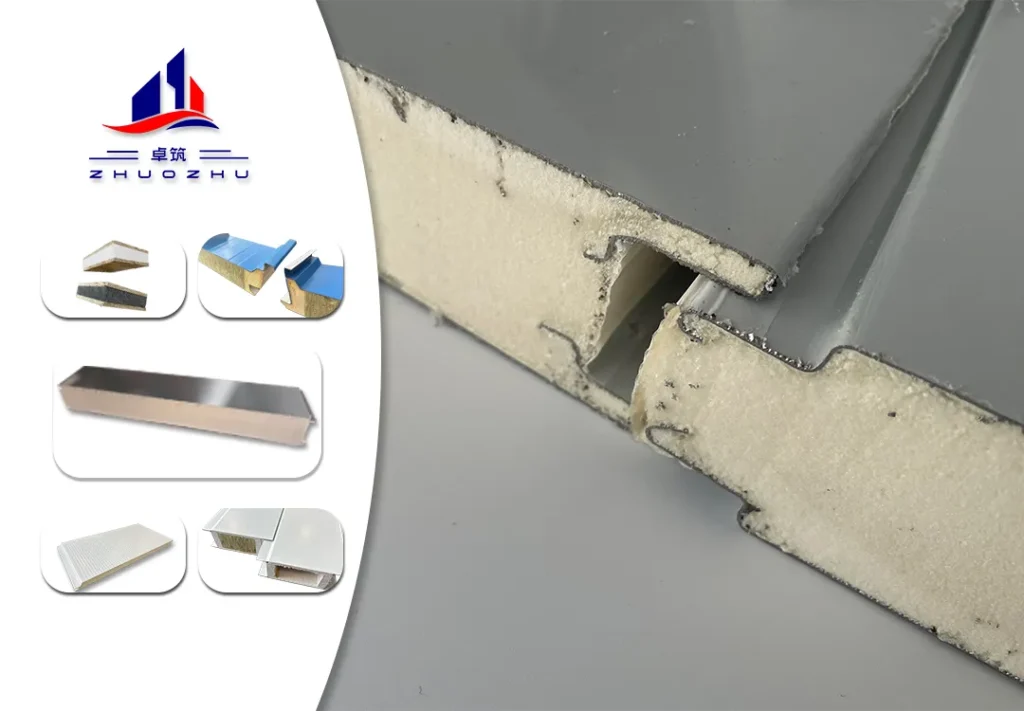
Our cold room panels feature precision-engineered connection systems with:
- Tight-fitting Joints: Thermally optimized connections eliminate thermal bridging
- Quick Assembly: Reduced installation time and labor costs
- Superior Sealing: Integrated EPDM gaskets ensure air-tightness
- Structural Integrity: Mechanical interlock system enhances panel stability
Panel Configuration Options
- Wall Panels: Standard cold room wall panels with vertical load-bearing capacity
- Roof Panels: Specifically designed cold room roof panels with enhanced structural properties
- Floor Panels: Heavy-duty cold room floor panels with exceptional compressive strength
Technical Specifications and Performance Metrics
Thickness Variations and Applications
- 25mm Coolroom Panels: Ideal for temperature ranges above 0°C
- 50mm Cold Room Panel: Standard for freezer applications (-18° to -25°C)
- 75-100mm Coolroom Panels: Ultra-low temperature freezing (-35° to -50°C)
- Custom Thickness: Available for specialized applications
Performance Characteristics
- Thermal Resistance: R-values from R-15 to R-50 depending on thickness
- Fire Performance: Class B1 fire-rated options available
- Hygienic Properties: FDA-compliant surfaces for food applications
- Structural Capacity: Withstands operational loads and environmental stresses
Applications Across Industries
Food Processing and Storage
- Blast Freezers: Rapid cooling applications requiring precise temperature control
- Processing Areas: Cool room wall panels with hygienic surface finishes
- Loading Docks: Temperature-maintained transition areas
- Storage Facilities: High-bay cold storage panels for warehouse applications
Pharmaceutical and Healthcare
- Vaccine Storage: Precise temperature maintenance for sensitive pharmaceuticals
- Laboratory Facilities: Clean room compatible cold room panels
- Research Facilities: Specialized cold storage control panel integration
Commercial and Retail
- Supermarket Freezers: Customer-accessible cooler room panels
- Restaurant Walk-ins: Durable cold room PUR/PIR panel construction
- Distribution Centers: Large-scale cold store panels for logistics operations
Installation and Integration Best Practices
Site Preparation
- Foundation Requirements: Level and stable base for cold room floor panels
- Vapor Barrier Installation: Critical for preventing moisture migration
- Utility Planning: Pre-planned penetrations for electrical and plumbing systems
Panel Assembly
- Sequential Installation: Systematic approach for sandwich panel cold room construction
- Sealing Protocols: Continuous application of low-temperature sealants
- Quality Verification: Regular checks for alignment and joint integrity
Accessory Integration
- Door Systems: Specialized cold room doors with thermal breaks
- Control Systems: Integration with cold room control panel and monitoring equipment
- Lighting Solutions: Vapor-proof fixtures compatible with low-temperature operation
Economic Considerations and Value Analysis
Cost Factors
- Material Selection: PUF panel cold room vs. EPS coolroom panels cost comparison
- Thickness Requirements: Impact of panel thickness on cold room panels price
- Accessory Integration: Additional costs for specialized components
- Installation Complexity: Labor considerations for advanced joint systems
Lifecycle Value
- Energy Efficiency: Reduced operational costs through superior insulation
- Maintenance Requirements: Minimal upkeep for properly installed systems
- Durability: Long service life exceeding 25 years with proper maintenance
- Adaptability: Modular design allows for future expansion or reconfiguration
Quality Assurance and Compliance
Manufacturing Standards
- Factory Controls: ISO 9001 certified production processes
- Material Testing: Regular verification of thermal and structural properties
- Performance Certification: Third-party validation of claimed performance metrics
Regulatory Compliance
- Food Safety: FDA and USDA compliance for food contact surfaces
- Building Codes: Adherence to international building and energy standards
- Environmental Regulations: Use of environmentally friendly blowing agents
Innovation and Future Trends
Advanced Materials
- Enhanced Insulation: Improved foam formulations for better thermal performance
- Sustainable Solutions: Bio-based polyols and reduced GWP blowing agents
- Smart Integration: Embedded sensors for real-time performance monitoring
Manufacturing Innovations
- Precision Engineering: Automated production for consistent quality
- Custom Solutions: Tailored configurations for specific applications
- Integrated Systems: Complete cold room solutions from single-source suppliers
Conclusion: Selecting the Optimal Cold Room Solution
Choosing the right cold room panels requires careful consideration of temperature requirements, operational needs, and budget constraints. The superior thermal performance of PUR/PIR sandwich panels makes them the preferred choice for most applications, while EPS alternatives provide cost-effective solutions for less demanding environments. Our advanced connection system ensures quick, reliable installation and long-term performance.
As experienced cold room panel manufacturers, we recommend consulting with technical experts to determine the optimal panel configuration for your specific application. Proper selection, professional installation, and regular maintenance will ensure your cold storage facility delivers reliable performance throughout its operational life.
Technical Summary & Selection Guide
For High-Temp Applications (+2°C to +15°C):
- 25-50mm PUR/PIR sandwich panels
- Standard joint connections
- Galvanized or Galvalume surfaces
For Standard Freezer Applications (-18°C to -25°C):
- 75-100mm PUF panels
- Enhanced joints with thermal break
- Stainless steel or hygienic coatings
For Ultra-Low Temperature Applications (-35°C to -50°C):
- 120-150mm PUF sandwich panels
- Specialized joint systems
- Enhanced vapor barrier systems
Maintenance Protocols:
- Regular inspection of seals and joints
- Periodic cleaning of surfaces
- Monitoring of thermal performance
- Prompt repair of any damage
Warranty Considerations:
- Material and workmanship guarantees
- Thermal performance warranties
- Long-term support availability
- Technical service response times
