
Introduction: Understanding the Critical Importance of Building Insulation and Material Selection
In today’s context of rising global energy costs and increasingly stringent environmental requirements, building insulation has transformed from a secondary consideration to a crucial factor determining building operational costs and environmental adaptability. The thermal performance of building envelopes directly impacts indoor temperature stability, energy consumption, and usage comfort, thereby affecting the entire lifecycle cost of buildings. Traditional building materials like brick and concrete, while having a long history of use and reliable performance in structural aspects, struggle to meet modern buildings’ strict requirements for energy efficiency and environmental protection in terms of specialized thermal insulation performance.

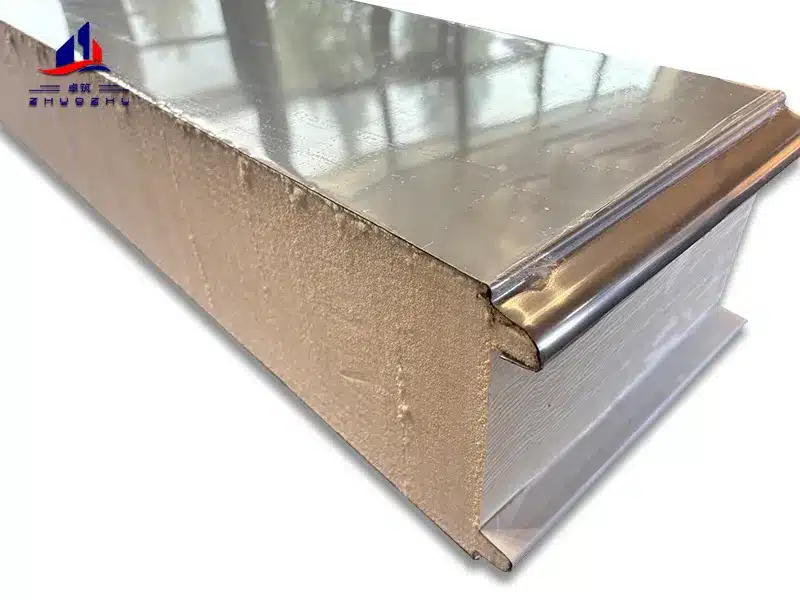
Sandwich panels, as composite materials, integrate insulation core materials with metal facings, fundamentally changing the construction method of building envelope systems. The emergence of this material represents not merely a simple material substitution but the inevitable result of construction industrialization development and technological progress. ZHUOZHU, as a leading Chinese manufacturer and exporter of thermal insulation building materials, has been at the forefront of this innovation, providing cutting-edge sandwich panel solutions for global construction projects.
This article will deeply analyze the essential differences between sandwich panels and traditional building materials in terms of thermal performance from multiple dimensions including heat conduction mechanisms, material structures, and engineering applications. Combined with characteristics of different core materials, requirements for various building components, and diverse application scenarios, we will provide scientific selection basis for engineering technicians and building owners.
Through specific data comparison, engineering case analysis, and economic benefit calculations, we will demonstrate the exceptional performance of sandwich panels in various building applications. Whether you are planning new industrial plants, cold chain facilities, or considering energy-saving renovations for existing buildings, this article will provide comprehensive, professional technical reference.
Chapter 1: Core Indicators of Thermal Performance and Their Engineering Significance Explained
The Physical Essence and Engineering Value of Thermal Conductivity
Thermal conductivity is the core physical parameter measuring a material’s heat conduction capability, defined as the amount of heat transferred through 1 square meter of area in 1 second when the temperature difference between the two surfaces of 1-meter-thick material is 1 degree under stable heat transfer conditions. This parameter is crucial because it directly determines the material’s ability to阻止 heat transfer. The lower the value, the better the material’s insulation performance. In practical engineering, thermal conductivity is the basis for calculating the heat transfer coefficient of building envelopes, which in turn directly relates to the building’s heating and cooling loads.
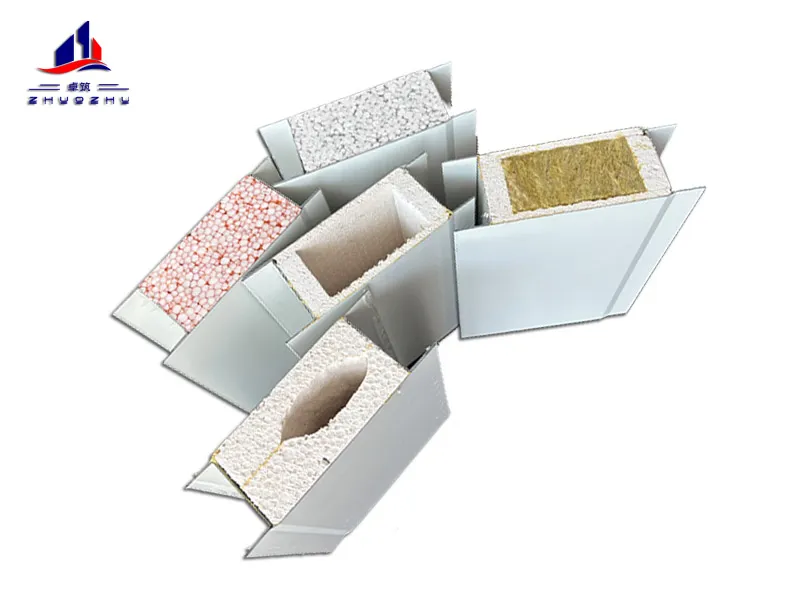
From a microscopic perspective, a material’s thermal conductivity depends on the resistance of its internal microstructure to heat conduction. Insulation materials used in ZHUOZHU sandwich panels, such as PUR/PIR, rock wool, and EPS, contain countless tiny pores or cavities. These pores are filled with air, a poor conductor of heat, effectively hindering both conduction and convection. Traditional building materials like concrete and brickwork, on the other hand, have a relatively dense internal structure, providing a continuous path for heat transfer and, therefore, a higher thermal conductivity.
The Practical Significance of the Equivalent Thickness Concept
Equivalent thickness refers to the thickness required by different materials to achieve the same insulation effect (i.e., the same thermal resistance value). This concept has important guiding significance in engineering practice because it directly relates to building space utilization, structural load, and construction cost. Through comparative analysis, we can find enormous differences in the thickness required by different materials to achieve the thermal resistance of R-value 3.5 m²K/W (this value roughly equivalent to the insulation requirements for building exterior walls in cold regions).
Specifically, the insulation effect achieved with 100mm thick PUR sandwich panels would require 600mm thickness if using solid wood, 1.8 meters thickness for brick masonry, and an astonishing 7 meters thickness for concrete. This thickness difference is unacceptable in practical engineering, fully demonstrating the huge advantage of professional insulation materials in space utilization efficiency. In modern building design, improving space utilization means obtaining larger usable area under the same footprint, or reducing building volume for the same usable area, both directly translating into economic benefits.
Thermal Bridge Effect and Its Control Strategies
Thermal bridge refers to local areas in the building envelope with higher thermal conductivity, which become the main channels for heat loss. In traditional buildings, structural parts such as beams, columns, and window lintels often form significant thermal bridges, leading to significantly lower inner surface temperatures in these areas compared to others, not only increasing energy loss but potentially causing condensation and mold issues.
ZHUOZHU sandwich panels adopt the design concept of continuous insulation, where metal facings and insulation core materials are prefabricated in the factory to form a complete insulation shell, fundamentally eliminating the generation of thermal bridges. This continuous insulation characteristic makes the thermal performance of the building envelope more uniform and reliable, avoiding local energy loss problems. In practical engineering, this characteristic is particularly important for places requiring precise temperature control such as laboratories and clean workshops.
Chapter 2: Performance Characteristics of Different Core Materials and Their Engineering Applicability Deeply Analyzed
Technical Advantages and Application Scenarios of PUR/PIR Core Materials
PUR (Polyurethane) and PIR (Polyisocyanurate) are currently the sandwich panel core materials with the best insulation performance. Both materials use closed-cell foam structures, with closed-cell rates typically reaching over 95%, meaning that most pores inside the material are independent closed small cells. This structure not only effectively blocks heat conduction paths but also prevents heat exchange generated by air convection while limiting water vapor penetration, ensuring long-term stability of insulation performance.
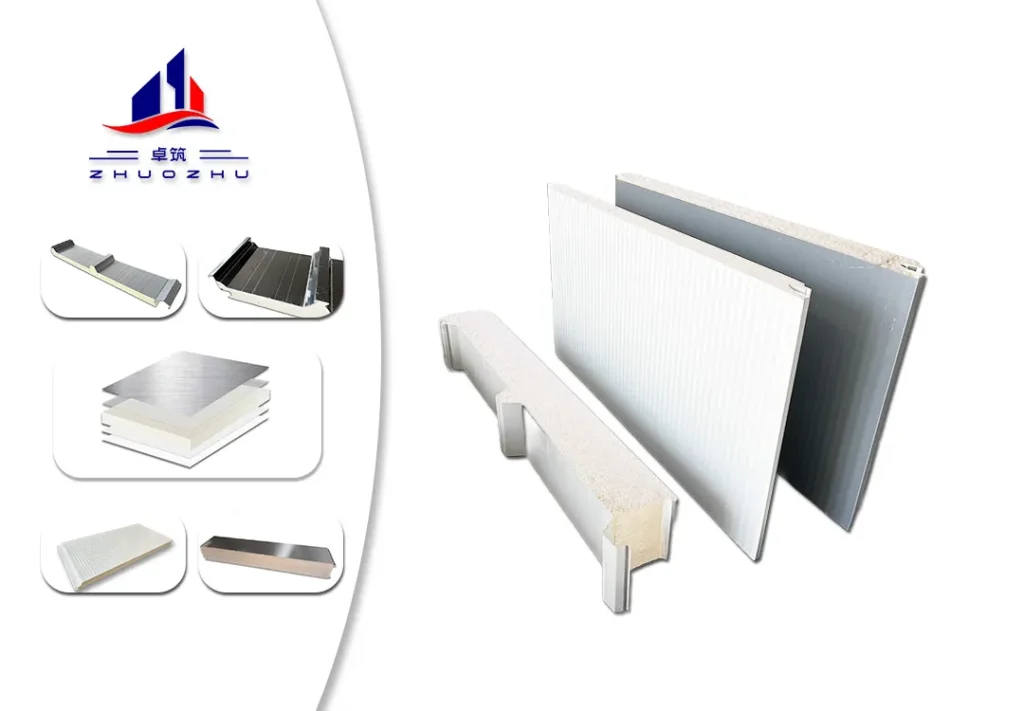
From a molecular structure perspective, PIR is obtained through modification treatment based on PUR, introducing more aromatic ring structures into its molecular structure, giving PIR materials better temperature resistance and fire performance. The upper-temperature limit for PIR materials can reach 120℃, while PUR is typically 100℃. In terms of fire performance, PIR can typically achieve Class B1 (flame-retardant) standard, while PUR is mostly Class B2 (combustible). This difference makes PIR materials more widely used in places with higher fire requirements.
In practical engineering, ZHUOZHU PUR/PIR sandwich panels are particularly suitable for occasions with extremely high insulation performance requirements. For example, in cold chain logistics centers, using 200mm thick PUR sandwich panels can effectively maintain a low-temperature environment of -25℃, reducing energy consumption by over 50% compared to traditional insulation solutions. In constant temperature and humidity laboratories, the stable performance of PIR sandwich panels can ensure temperature fluctuations controlled within ±0.5℃ range, providing reliable environmental protection for precision experiments.
Safety Characteristics and Application Conditions of Rock Wool Core Materials
Rock wool is an inorganic fiber material made mainly from natural basalt, melted at high temperature and made through centrifugal process. Its biggest characteristic is Class A non-combustible fire performance, which is the highest level among various insulation materials. The melting point of rock wool exceeds 1000℃, which not only will not burn in case of fire but can also effectively block the spread of flames, providing valuable time for personnel evacuation and fire fighting.

From the perspective of insulation mechanism, rock wool relies on its interwoven distributed fiber structure to lock air, forming a stable air layer to achieve insulation effect. Although its thermal conductivity is slightly higher than PUR/PIR, it is still much lower than traditional building materials. Another advantage of rock wool is good sound absorption performance, and its porous fiber structure can effectively absorb sound wave energy and reduce noise propagation.
In engineering applications, ZHUOZHU rock wool sandwich panels are particularly suitable for places with strict fire safety requirements. For example, in chemical workshops, gas stations, and other environments with fire risks, rock wool sandwich panels can provide the highest level of fire protection. In high-rise buildings, the use of rock wool sandwich panels can significantly improve the overall fire safety of the building. In addition, rock wool materials also have good corrosion resistance, suitable for corrosive environments such as electroplating workshops and sewage treatment plants.
Economic Characteristics and Application Scope of EPS Core Materials
EPS (Expanded Polystyrene) is one of the oldest and most widely used insulation materials. Its production process is relatively simple and cost is low, which gives EPS sandwich panels obvious advantages in price. EPS material is made by pre-foaming, curing, and molding of polystyrene beads, maintaining the closed-cell structure formed by bead fusion inside.
Although the insulation performance of EPS is slightly inferior to PUR/PIR, its thermal conductivity is still maintained at a low level, fully able to meet the insulation requirements of general buildings. The main limitation of EPS lies in its fire performance. Ordinary EPS materials have a fire rating of Class B2 (combustible). Although they can be improved by adding flame retardants, it is still difficult to achieve Class B1 standard. This characteristic limits the application of EPS in places with higher fire requirements.
In practical engineering, ZHUOZHU EPS sandwich panels are mainly suitable for temporary or general buildings that are cost-sensitive and have low fire requirements. For example, in temporary facilities such as construction site temporary offices and construction personnel dormitories, EPS sandwich panels can provide rapid construction and cost-economic solutions. In ordinary industrial plants, storage facilities, and other places with low fire requirements, EPS sandwich panels can significantly reduce construction costs while ensuring basic insulation requirements.
Chapter 3: Insulation Solutions and Technical Points for Different Building Components
Design Requirements and Solutions for Wall Panel Systems
The insulation design of building walls needs to comprehensively consider multiple factors such as insulation performance, structural strength, installation convenience, and aesthetic requirements. In industrial buildings, walls usually occupy the largest area of the building envelope and are the main part of energy loss. Therefore, the selection of wall panels directly affects the energy consumption level of the building.
For general industrial plants, it is recommended to use 100-150mm thick PUR wall panels. This thickness can ensure good insulation effect while controlling material costs within a reasonable range. The excellent insulation performance of PUR materials can reduce heating load in winter and reduce air conditioning energy consumption in summer for the plant, achieving annual energy savings. During installation, attention should be paid to the connection sealing between panels to ensure the air tightness of the entire wall system.
In farm applications, insulation design needs to specially consider environmental corrosivity and fire safety. It is recommended to use 150mm thick rock wool wall panels. This configuration can provide sufficient insulation effect, prevent animals from freezing in winter, resist the erosion of corrosive substances such as ammonia in the breeding environment, and meet fire safety requirements. The breathability of rock wool materials also helps regulate indoor humidity and improve the breeding environment.

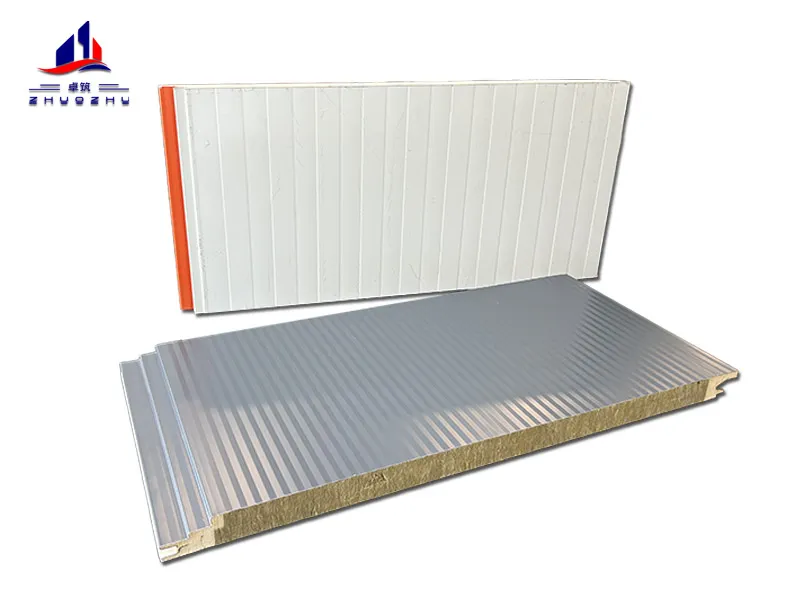
For temporary buildings such as construction camps and emergency facilities, 75-100mm thick EPS wall panels provide the best cost performance. These places usually have short service periods and relatively low fire requirements. EPS wall panels can provide necessary insulation effects at lower costs, and are quick to install, easy to disassemble and transfer.
Special Requirements and Technical Solutions for Roof Panel Systems
The building roof is another important part of energy loss, especially in summer when the roof directly receives solar radiation. If the insulation performance is insufficient, it will lead to a significant increase in indoor temperature. In addition to insulation performance, roof panel design also needs to meet special requirements such as waterproofing, load-bearing, and durability.
In large industrial buildings such as production workshops, it is recommended to use 150mm thick PIR roof panels. The excellent insulation performance of PIR materials can effectively block the transfer of solar radiation heat and reduce summer air conditioning load. At the same time, the temperature resistance of PIR materials can adapt to the high-temperature environment that the roof may encounter in summer. In terms of structural design, roof panels need to have sufficient bearing capacity to withstand possible wind loads, snow loads, and the weight of maintenance personnel.
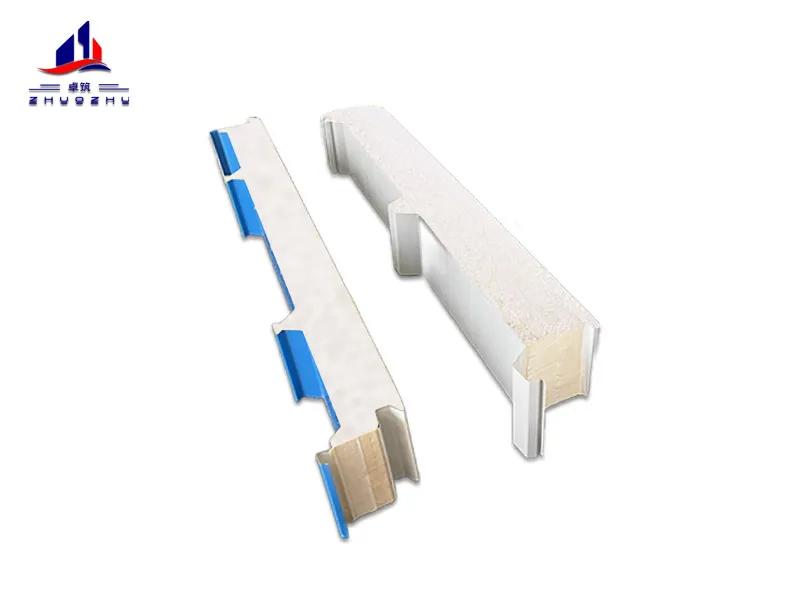
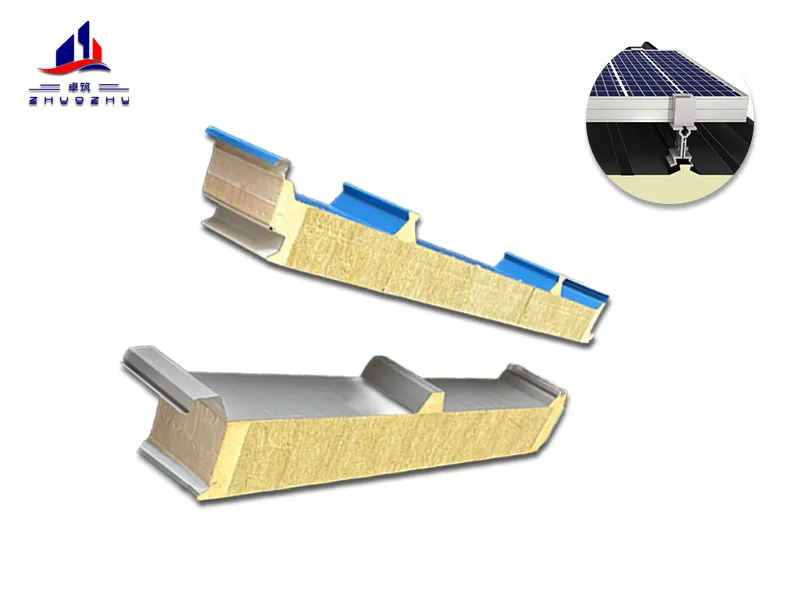
For places with extremely high insulation performance requirements such as cold storage rooms, it is recommended to use 200mm thick PUR roof panels. Thicker insulation layers can minimize heat transfer and maintain a stable low-temperature environment. When selecting roof panels, special attention should be paid to the sealing treatment at the joints to prevent the generation of cold bridges. The metal facing of the roof panel is recommended to choose materials with better corrosion resistance to cope with the corrosion problems that may be caused by condensate water.
In places with strict requirements on indoor environment such as clean workshops, 100mm thick rock wool roof panels are an ideal choice. The Class A fire performance of rock wool materials provides the highest safety guarantee for clean workshops, and its good sound absorption performance also helps reduce indoor noise levels. During the installation process, special attention should be paid to maintaining the flatness and cleanliness of the roof panel surface to avoid dust accumulation and bacterial growth.
Chapter 4: Technical Requirements and Solution Depth Analysis for Typical Application Scenarios
Special Environmental Requirements and Coping Strategies for Breeding Agriculture
Buildings for breeding agriculture have special requirements for environmental control. Suitable temperature environments directly affect animal growth efficiency and health status. Taking pig farms as an example, piglets are very sensitive to temperature changes, and the suitable temperature range is usually between 18-25℃. Too low temperature will cause animals to consume more energy to maintain body temperature, reducing feed conversion rate; too high temperature will cause heat stress, affecting animal health.

Aiming at the characteristics of farms, it is recommended to adopt a solution of 150mm thick PUR wall panels with 200mm thick PIR roof panels. PUR wall panels have good insulation performance, which can effectively maintain stable temperature inside the house and reduce the stress impact of temperature fluctuations on animals. PIR roof panels provide a higher level of insulation effect, preventing heat loss through the roof. Compared with traditional brick-concrete structures, this configuration can reduce energy consumption by more than 60%, significantly reducing operating costs.
In addition to insulation performance, breeding buildings also need to consider environmental ventilation and humidity control. The sandwich panel system can be well combined with mechanical ventilation systems to provide sufficient fresh air volume while ensuring insulation effect. The sealing design between panels can effectively prevent drafts and avoid local chilling of animals. In addition, the metal facing of sandwich panels is easy to clean and disinfect, which is beneficial to maintain the hygiene standards of the breeding environment.
Environmental Control Requirements and Technological Innovation of Clean Workshops
Clean workshops have extremely strict requirements on the environment, requiring not only constant temperature and humidity but also controlling particles and microorganisms in the air. Such places usually require temperature control within 22±2℃ and relative humidity control within 50±10%. Any fluctuation in temperature or humidity may affect the production process and product quality.
For clean workshops, it is recommended to use 100mm thick rock wool sandwich panels. The Class A fire performance of rock wool materials provides the highest level of safety protection for clean workshops, which is particularly important in industries such as electronics and medicine. The rock wool sandwich panels have high surface flatness and tight joints, which can effectively prevent dust accumulation and bacterial growth. The board surface is usually treated with special coating to make it easier to clean and disinfect.
In the design of clean workshops, the air tightness of the sandwich panel system is a key consideration. High-quality sandwich panels can achieve very low gas permeability, effectively maintaining indoor positive or negative pressure environment. Professional sealing systems are used between panels to ensure the integrity of the entire envelope structure. In addition, sandwich panels can also be conveniently opened with various openings, perfectly matching with equipment such as transfer windows and air outlets to meet the special functional requirements of clean workshops.
Insulation Technical Requirements and Solutions for Cold Chain Logistics Centers
Cold chain logistics centers are the type of buildings with the most stringent insulation requirements, with different storage areas needing to maintain temperature environments ranging from -25℃ to +15℃. The insulation performance of such buildings is directly related to energy consumption and operating costs. Any insulation defect may lead to temperature fluctuations, affecting the quality of stored goods.
For low-temperature refrigeration areas (-25℃), it is recommended to use 200mm thick PUR sandwich panels with stainless steel facings on both sides. This configuration provides the highest level of insulation performance. The extremely low thermal conductivity of PUR materials can effectively prevent the entry of external heat. The stainless steel facing provides excellent corrosion resistance, able to resist the corrosive effect of condensate water in low-temperature environments. Special sealing design is required at the connections between panels to prevent the generation of cold bridges.
During the design and construction process, special attention should be paid to the continuity of the envelope structure to ensure the effective connection of insulation layers on walls, roofs, and floors. Openings such as doors and windows need to adopt specially designed insulation doors and sealing systems to reduce cold loss. In addition, ground anti-frost heave measures need to be considered. Usually, heating systems are set under the ground insulation layer to prevent soil frost heave from causing damage to the building structure.
Economic Requirements and Flexible Solutions for Temporary Buildings
Temporary buildings such as construction camps, exhibition venues, and emergency shelters have special requirements for construction costs and construction speed. These buildings usually have short service periods and need to reduce construction costs as much as possible while ensuring basic functions, and achieve rapid construction and demolition.
For such applications, 75mm thick EPS sandwich panels provide the best cost performance. The cost advantage of EPS materials makes the price of sandwich panels more competitive, and their insulation performance can fully meet the basic requirements of temporary buildings. EPS sandwich panels are lightweight, easy to transport and install, and can significantly shorten the construction period. Standard panel types and connection systems make the installation process simple and fast, without special tools and technology.
In the design of temporary buildings, the detachability of the building and the reusability of materials also need to be considered. The modular design of sandwich panels makes it easy to disassemble the panels after use and reassemble them at new sites. This characteristic not only reduces overall costs but also conforms to the concept of sustainable development. For places that need frequent relocation such as construction camps, this characteristic is particularly important.
Chapter 5: Deep Analysis and Experience Summary of Engineering Cases
Transformation and Upgrade Case of Modern Farms
A large modern pig farm faced the problem of how to balance construction costs and operating costs during expansion. Although the construction cost of traditional brick-concrete structure pig houses is relatively low, the energy consumption problem caused by poor insulation performance has always plagued the owner. After detailed technical and economic comparison, the owner finally chose the sandwich panel solution of 150mm thick PUR wall panels and 200mm thick PIR roof panels.
During project implementation, the factory production of ZHUOZHU sandwich panels ensured quality stability, and the on-site installation speed was nearly three times faster than traditional masonry methods, greatly shortening the construction period. Operation data after commissioning showed that compared with traditional pig houses, the winter heating energy consumption of sandwich panel pig houses was reduced by 65%, and summer ventilation energy consumption was reduced by 40%. According to local energy prices, about 120,000 yuan in energy costs can be saved annually.
More importantly, the stable temperature environment improved the health level of the pig herd. Temperature records showed that the daily temperature fluctuation of the sandwich panel pig house did not exceed 2℃, while the fluctuation of the traditional pig house reached over 5℃. This stable environment significantly reduced the stress response of the pig herd, increased the feed conversion rate by 8%, and reduced the mortality rate by 3%. Comprehensive calculation showed that the investment payback period of the sandwich panel solution was only 2.1 years, showing good economic benefits.
Precise Environmental Control Case of Biopharmaceutical Laboratory
A biopharmaceutical enterprise built a new R&D center, and the core laboratory required temperature control within 22±0.5℃ and relative humidity control within 50±5% strict range. Traditional concrete walls with external insulation systems were difficult to meet such precise control requirements, with temperature fluctuations usually reaching above ±2℃.
After multiple demonstrations, the project finally selected 100mm thick rock wool clean sandwich panels as the envelope system. The Class A fire performance of rock wool materials met the high standard safety requirements of the laboratory. The factory prefabrication of sandwich panels ensured the surface flatness and dimensional accuracy, laying the foundation for achieving precise environmental control. During installation, special attention was paid to the sealing treatment of panel seams, adopting a double-layer sealing system to ensure air tightness.
Monitoring data after the laboratory was put into use showed that indoor temperature fluctuations were stably controlled within ±0.3℃ range, and relative humidity fluctuations were controlled within ±4% range, fully meeting the accuracy of design requirements. This stable environment ensured the reliability and repeatability of experimental results, and the first success rate of product development increased by 15%. In addition, the good insulation performance of the sandwich panel envelope system reduced the energy consumption of the air conditioning system by 30% compared with traditional buildings, achieving the dual goals of energy saving and precise control.
Cold Chain Upgrade Case of Regional Food Distribution Center
A regional food distribution center faced the challenge of how to control operating costs while ensuring temperature stability during the expansion of cold chain facilities. The original cold room used on-site foamed polyurethane insulation, and after years of use, problems such as aging of the insulation layer and large temperature fluctuations occurred.
The new cold storage adopted a 200mm thick PIR sandwich panel solution. The thermal conductivity of 0.022W/m·K of PUR material provided excellent insulation performance, and the double-sided stainless steel facing ensured durability in low temperature and high humidity environments. The modular design of the sandwich panels made the installation process fast and orderly, completing the installation of the main structure in only half the time of traditional construction methods.
Operation data monitoring showed that the temperature stability of the new cold storage was significantly improved. Under summer conditions with an outdoor temperature of 35℃, the temperature fluctuation of the -18℃ freezer did not exceed 0.5℃, while the fluctuation of the original cold storage reached above 2℃. This stable temperature environment extended the quality retention period of food by 15%, reducing commodity loss. Energy consumption data showed that the unit area energy consumption of the new cold storage was 35% lower than that of the original cold storage, saving about 150,000 yuan in electricity costs annually. Considering that the service life of the sandwich panel system can reach more than 25 years, the long-term economic benefits of the project are very significant.
Chapter 6: Scientific Selection Guide and Engineering Implementation Suggestions
Systematic Selection Method Based on Thermal Performance
When selecting sandwich panels, the thermal performance requirements of the building must first be clarified. This includes specific parameters such as the climate conditions of the building location, indoor use temperature requirements, and energy consumption standards. For places with different temperature requirements, the recommended panel thickness configurations are significantly different.
For ultra-low temperature environments such as deep cold warehouses (-25℃ and below), it is recommended to use ≥200mm PUR panels. This thickness of insulation layer can effectively prevent heat transfer and maintain a stable low-temperature environment. When selecting, attention should also be paid to the continuous use temperature range of the panels to ensure the stability of material performance at low temperatures.
For conventional low-temperature environments (0℃ to -25℃), 150mm thick PIR panels are a cost-effective choice. While maintaining good insulation performance, PIR materials provide better fire safety, which is particularly important for storage buildings. The selection of panel thickness also needs to consider the frequency of use and the number of door openings of the building. Places with frequent access may need to appropriately increase the panel thickness.
For normal temperature environments (+5℃ to +30℃), 100mm thick rock wool or EPS panels can meet most application requirements. Rock wool panels are suitable for places with high fire requirements, such as crowded public places, hazardous goods warehouses, etc. EPS panels are more suitable for general industrial buildings and temporary facilities that are cost-sensitive.
Selection Considerations Based on Fire Safety Requirements
The fire safety requirements of the building are an important basis for selecting sandwich panel core materials. Buildings with different usage functions and personnel densities have significantly different requirements for fire ratings.
For crowded places, high-rise buildings, and hazardous goods storage places, Class A fire-resistant rock wool sandwich panels must be selected. The non-combustible characteristics of rock wool materials can effectively prevent the spread of fire in the event of a fire, buying valuable time for personnel evacuation and fire fighting. In these places, even if the cost is higher, fire safety must be prioritized.
General industrial plants and storage facilities can choose Class B1 fire-resistant PIR sandwich panels. PIR materials have self-extinguishing characteristics when exposed to fire and will not contribute to the spread of fire. At the same time, PIR materials produce low smoke toxicity when burning, reducing the occurrence of secondary hazards.
For temporary buildings and ancillary facilities with low fire requirements, Class B2 fire-resistant EPS sandwich panels can be considered. However, corresponding fire prevention measures need to be taken during use, such as setting up fire extinguishing equipment and maintaining safe distance, to ensure use safety.
Economic Selection Based on Service Life Expectation
The service life expectation of the building directly affects the economy of material selection. Sandwich panels with different core materials have differences in service life and maintenance requirements, and need to be selected according to the project’s use plan.
For permanent buildings with a design service life of more than 25 years, it is recommended to choose PIR or rock wool sandwich panels. These two materials have excellent aging performance and can maintain long-term stable performance under normal use conditions. Although the initial investment is high, they have better economy over the entire use cycle.
For medium-term buildings with a service life of 10-25 years, PUR sandwich panels provide good cost performance. The performance stability of PUR materials can meet the use requirements of this time span, and the cost is relatively low, achieving a good balance between investment and long-term performance.
For temporary buildings with a service life within 10 years, EPS sandwich panels are the most economical choice. EPS materials can fully meet functional requirements in short-term use, and the lower cost makes project investment more reasonable. If considering the detachability and reuse of the building, the lightweight characteristics of EPS sandwich panels are more advantageous.
Chapter 7: Full Life Cycle Cost Analysis and Investment Decision Support
Detailed Analysis of Initial Investment Composition
The initial investment of sandwich panel buildings mainly includes material costs, transportation costs, installation costs, and auxiliary system costs. Compared with traditional construction methods, the sandwich panel system has obvious characteristics in the composition of various costs.
In terms of material costs, the price range of sandwich panels is usually between 200-500 yuan/square meter, depending on the core material type, panel thickness, facing material, and special functional requirements. The price of PIR panels is usually 10-15% higher than PUR panels, rock wool panels are 15-20% higher than PUR panels, and EPS panels are the most economical, 20-30% lower than PUR panels.
Transportation costs need to consider the advantages brought by the lightweight characteristics of the panels. The weight of sandwich panels is usually only 1/3 to 1/2 of traditional building materials, which significantly reduces the transportation cost per unit weight. Especially for projects with long-distance transportation, this advantage is more obvious.
Installation cost is another advantage area of the sandwich panel system. The modular design improves installation efficiency by more than 50% compared with traditional construction methods, and labor costs are correspondingly reduced. At the same time, the shortening of the installation period also reduces on-site management costs and machinery rental costs.
Comprehensive Comparison of Operating Costs
Operating cost is an important indicator for evaluating building economy. Sandwich panel buildings show obvious advantages in energy costs, maintenance costs, and usage costs.
Energy cost is the main component of operating cost. The excellent insulation performance of sandwich panel buildings can reduce heating and cooling energy consumption by 40-60%. According to the current commercial electricity price, the energy cost saved annually is considerable. Especially in the context of continuously rising energy prices, this advantage is more prominent.
In terms of maintenance costs, the sandwich panel system hardly requires special maintenance. The durability of the metal facing can ensure the building appearance remains in good condition for a long time, without the need for regular painting or repair like traditional buildings. The sealing system of panel seams is also designed as maintenance-free, without the need for regular replacement of sealing materials.
Usage costs include indirect costs generated by the impact of building performance on production operations. For example, a stable temperature environment can improve the stability of the production process and reduce the defective product rate; a good working environment can improve employee work efficiency, etc. Although these indirect benefits are difficult to accurately quantify, they should be fully considered in decision-making.
Accurate Calculation Method of Investment Payback Period
The investment payback period is a key indicator for evaluating project economy. For sandwich panel projects, dynamic calculation methods can be used to accurately evaluate. The calculation needs to comprehensively consider the initial investment increment, operating cost savings, maintenance cost savings, and other indirect benefits.
The initial investment increment refers to the investment difference between the sandwich panel solution and the traditional solution. It should be noted that this difference is not necessarily positive. In some cases, the sandwich panel solution may have a lower initial investment, especially when considering installation efficiency and auxiliary system simplification.
Operating cost savings need to be calculated based on detailed energy consumption simulation. It is recommended to use professional building energy consumption simulation software, input local meteorological data, usage patterns, and energy prices to calculate accurate annual energy savings. At the same time, the expected rising trend of energy prices should be considered to make the calculation results more in line with the actual situation.
Maintenance cost savings can be estimated based on the empirical data of similar projects. Usually, the annual maintenance cost of sandwich panel buildings can be 30-50% lower than that of traditional buildings, and the specific value depends on the use conditions and maintenance standards of the building.
Considering these factors, the investment payback period of most sandwich panel projects is between 1-3 years. For some projects with particularly high energy saving requirements, such as cold chain facilities, the payback period may be shortened to within 1 year. For some projects with relatively low insulation requirements, the payback period may be around 3 years. Overall, sandwich panel projects have good investment value.
Conclusion: Future Prospects of Sandwich Panel Technology Development and Selection Suggestions
Innovation Development Trend of Sandwich Panel Technology
As a mature building envelope system, the technological innovation of sandwich panels is still ongoing. The future development trend is mainly reflected in three aspects: material performance improvement, functional integration, and intelligent manufacturing.
In terms of material performance, the research and development of new insulation materials will further improve the insulation performance of sandwich panels. The application of new technologies such as aerogel composite materials and vacuum insulation panels is expected to reduce the thermal conductivity to below 0.015W/m·K. At the same time, the development of bio-based insulation materials will also improve the environmental performance of sandwich panels.
Functional integration is another important development direction. In addition to the already achieved solar integration function, sandwich panels may integrate multiple functions such as lighting, ventilation, and energy collection in the future. Intelligent sandwich panels may have built-in sensors and control systems to monitor building performance in real time and automatically adjust the indoor environment.
Intelligent manufacturing will completely change the production method of sandwich panels. The application of digital factories, robot production, and intelligent logistics systems will further improve product quality and production efficiency. The integrated design and production system based on BIM can achieve full digital management of the project and precise control of the entire process from design to installation.
Selection Suggestions Based on Sustainable Development Concept
In the current context of promoting green buildings and sustainable development, the selection of sandwich panels should not only consider economic factors but also pay attention to their environmental benefits. The factory production mode of the sandwich panel system itself has the characteristics of less resource consumption, less construction waste, and less on-site pollution, and is a construction method that conforms to the concept of sustainable development.
From the perspective of material life cycle, the main materials of sandwich panels are recyclable. The recovery rate of metal facings can reach over 95%, and the recycling technology of insulation core materials is also constantly improving. Choosing sandwich panels with high recyclable material content can further reduce the environmental impact of buildings.
Energy performance is a key indicator for evaluating building sustainability. The excellent insulation performance of sandwich panel buildings can significantly reduce operating energy consumption and carbon emissions. In some regions, buildings constructed using sandwich panels can obtain green building certifications such as LEED, BREEAM, or China’s Green Building Label. These certifications can not only enhance building value but may also obtain policy support.
Practical Suggestions for Engineering Technicians and Building Owners
For engineering technicians and building owners who are considering using sandwich panels, it is recommended to start from the actual needs of the project, comprehensively consider performance requirements, economy, and long-term operating costs, and make scientific choices.
First, clarify the specific requirements of the project, including key parameters such as temperature requirements, fire rating, and service life. These parameters will directly determine the selection of sandwich panels. It is recommended to consult professional technicians for detailed technical and economic analysis to avoid over-design or under-design.
Second, choose reputable suppliers and installation teams. The quality of the sandwich panel system depends not only on the panels themselves but also on the installation quality. Professional installation teams can ensure the integrity and reliability of the system, avoiding the impact of installation problems on use performance.
Finally, pay attention to the overall performance of the system. As part of the building envelope, sandwich panels need to coordinate and cooperate with other systems such as doors, windows, roofs, and floors. It is recommended to carry out overall design to ensure performance matching and reliable interfaces between systems.
ZHUOZHU sandwich panel technology has matured and has a wide range of application cases in various buildings. Through scientific selection and professional implementation, the ZHUOZHU sandwich panel system can provide reliable thermal insulation solutions for buildings, creating lasting value for your projects.
