
Introduction: The Critical Decision in Building Envelope Systems
In modern architectural design, the selection of wall panels and roof panels not only impacts aesthetics but directly determines a building’s energy efficiency, safety performance, and service life. Among various insulated panels, PIR sandwich panels and EPS sandwich panels represent two distinct technological paths and market positions. As a professional insulated panel manufacturer, ZHUOZHU provides an in-depth analysis in this article of the differences between these two materials in wall and roof applications, helping you make the most suitable strategic choice for your project.

Part I: Material Characteristics and Performance Comparison
PIR Sandwich Panels: The High-Performance Engineered Solution
Chemical Structure & Physical Properties:
- Molecular Structure: Stable triazine ring structure of polyisocyanurate
- Closed-Cell Content: Fine, closed-cell structure with up to 90%-95%
- Temperature Range: Broad range applicable from -50°C to +110°C
- Density Range: Typically 35-45 kg/m³, adjustable based on application
Core Performance Advantages:
- Exceptional Thermal Performance: Thermal conductivity 0.022-0.026 W/(m·K), R-value up to R6.5-R7.0 per inch
- Superior Fire Performance: Can achieve Class B1 fire rating, self-extinguishing
- Excellent Dimensional Stability: Minimal creep under long-term load
- Outstanding Moisture Resistance: Extremely low water absorption and vapor permeability
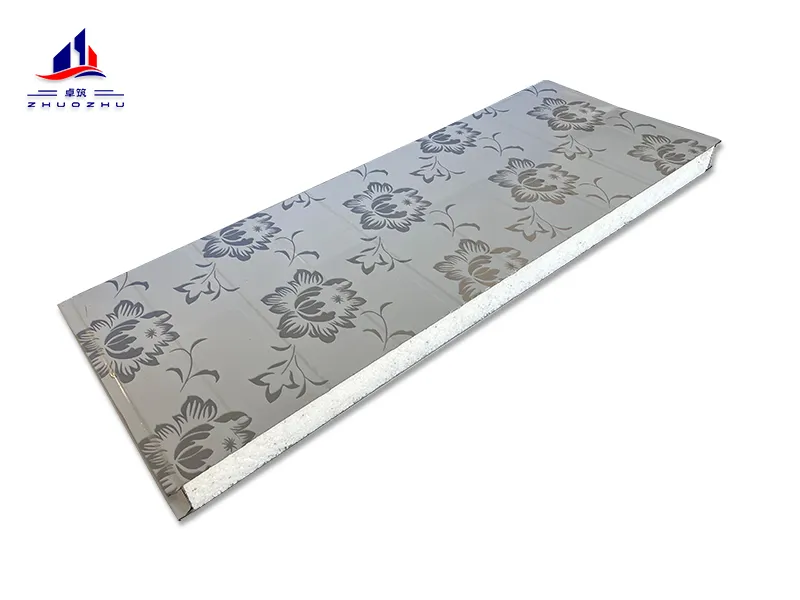
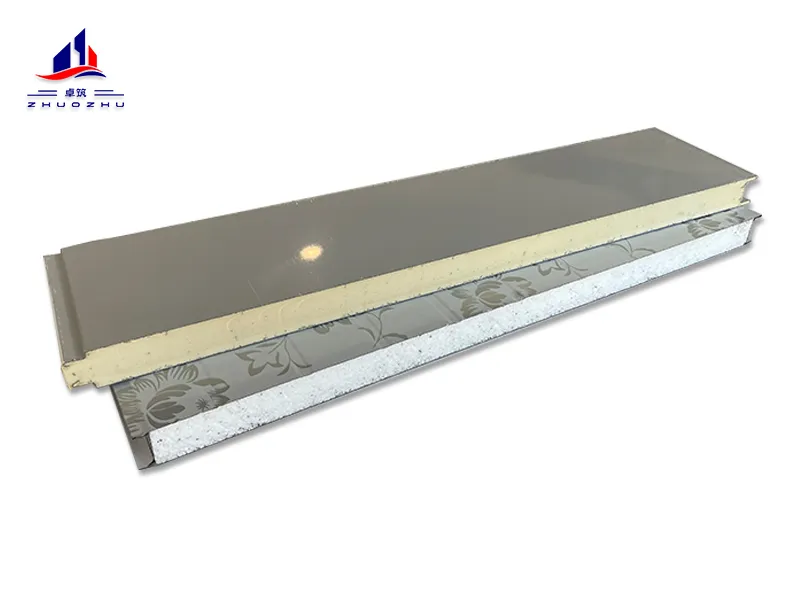
EPS Sandwich Panels: The Economical & Practical Classic Choice
Material Properties & Structure:
- Physical Structure: Porous structure formed by fused expanded polystyrene beads
- Density Range: 15-30 kg/m³, lightweight and economical
- Production Process: Mature process of pre-expansion, curing, and molding
- Environmental Feature: Fully recyclable and reusable
Performance Characteristics:
- Good Thermal Performance: Thermal conductivity 0.034-0.040 W/(m·K), R-value approximately R4.0 per inch
- Cost-Effectiveness Advantage: The most price-competitive insulation material
- Ease of Installation: Lightweight, easy to cut, simple installation
- Moisture Resistance: Beads themselves are non-absorbent, but moisture can penetrate between beads
Part II: Professional Selection for Wall Panel Applications
The Strategic Value of PIR Wall Panels
Advantages for Building Exterior Wall Systems:
- Maximized Energy Efficiency: 40%-50% better insulation effect at the same thickness
- Optimized Wall Thickness: Can reduce wall thickness by 30%-40% while maintaining the same insulation performance
- Long-Term Performance Stability: Less than 5% thermal performance degradation over a 20-30 year service life
- Enhanced Fire Safety: Meets higher building fire rating requirements
Special Application Scenarios:
- Cold Room Wall Panels: Low-temperature environments like food processing, pharmaceutical storage
- High-Demand Commercial Buildings: Offices, malls with strict energy efficiency requirements
- Extreme Climate Regions: Building envelopes in severely cold or hot areas
- Building Retrofits: Space-constrained exterior wall energy-saving renovations
Technical Parameter Comparison:
| Parameter | PIR Wall Panel (100mm) | EPS Wall Panel (100mm) |
|---|---|---|
| U-value | 0.22 W/(m²·K) | 0.35 W/(m²·K) |
| Fire Rating | Class B1 | Class B2 (Flame Retardant) |
| Sound Insulation | 30-35 dB | 25-30 dB |
| Service Life | ≥ 25 years | 15-20 years |
The Practical Choice of EPS Wall Panels
Applicable Scenario Analysis:
- Standard Industrial Buildings: Plants, warehouses with moderate insulation requirements
- Budget-Conscious Commercial Projects: Buildings with limited budgets but basic insulation needs
- Temporary Structures: Exhibition halls, temporary facilities for short-term use
- Temperate Climate Regions: Areas where winter temperatures do not fall below -10°C
Cost-Benefit Analysis:
- Material Cost Savings: 30%-50% savings compared to PIR panels
- Installation Efficiency: Lightweight material increases construction speed by 20%-30%
- Maintenance Costs: Lower costs for periodic inspection and necessary replacement

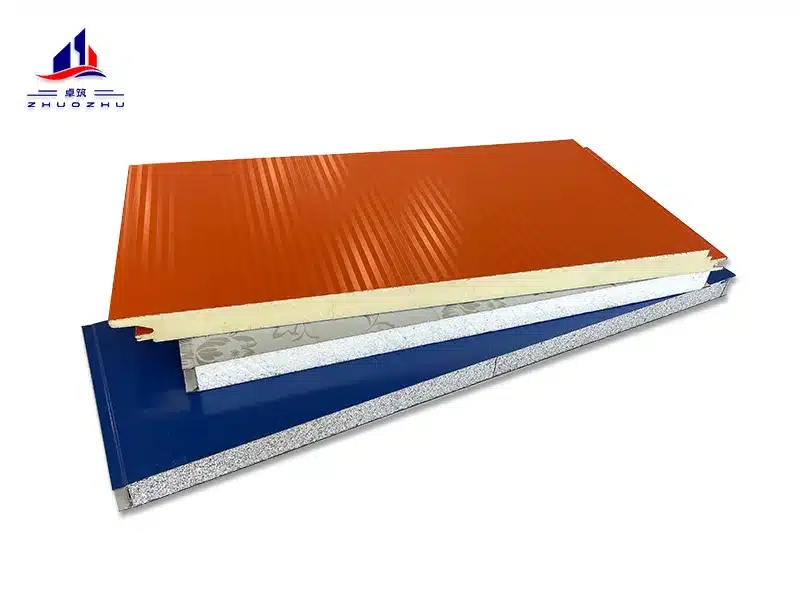
Part III: Professional Considerations for Roof Panel Systems
The Outstanding Performance of PIR Roof Panels
Special Requirements for Roofing Systems:
- Load-Bearing Capacity: Must withstand snow, wind, and maintenance loads
- Temperature Adaptability: Roof temperature differentials can reach 70-80°C, requiring excellent dimensional stability
- Fire Safety: The fire rating of roofing material directly impacts overall building safety
- Long-Term Durability: Must withstand long-term environmental impacts like UV, rain, freeze-thaw cycles
Advantages of PIR Roof Panels:
- Continuous Insulation: Eliminates thermal bridging common in traditional roofing systems
- Integrated Structure: Combines insulation and structural functions
- Reliable Waterproofing: Provides reliable waterproof performance with professional roofing systems
- Easy Maintenance: Various coating options for the surface reduce maintenance needs

Example Technical Specifications (PIR Roof Panel – 120mm):
- Thermal Performance: U-value ≤ 0.18 W/(m²·K)
- Bending Load Capacity: ≥ 2.0 kN/m²
- Fire Performance: Class B1
- Minimum Slope: ≥ 5%
- Weather Resistance: 30-year warranty
The Applicable Solution of EPS Roof Panels
Application Conditions & Limitations:
- Moderate Load Requirements: Areas with snow loads not exceeding 1.5 kN/m²
- Medium Fire Requirements: Building fire rating requirement of Class B2 is sufficient
- Gentle Temperature Fluctuations: Regions with small daily and annual temperature variations
- Strict Budget Control: Situations where total project investment must be tightly controlled
Economic Analysis:
- Initial Investment Savings: 40%-60% savings compared to PIR systems
- Reduced Construction Timeline: Simple installation can shorten the construction period by 15%-25%
- Controllable Maintenance Costs: Lower costs for periodic inspection and partial replacement
Part IV: Decision Matrix & Application Guide
Key Conditions for Choosing PIR Sandwich Panels
Scenarios where PIR Panels should be prioritized:
- Stringent Energy Efficiency Requirements: Passive House, ultra-low energy buildings, LEED-certified projects
- Higher Fire Standards: Public buildings, high-rises, densely populated places
- Special Environmental Needs: Cold rooms, constant temperature/humidity environments, extreme climate zones
- Long-Term Value Orientation: Permanent buildings with a service life exceeding 20 years
- Strict Space Constraints: Renovation projects or projects needing to maximize usable space
Suitable Conditions for Choosing EPS Sandwich Panels
Scenarios适合 for using EPS Panels:
- Budget-First Projects: Economical projects where total investment must be tightly controlled
- Basic Insulation Needs: Meeting the minimum requirements of local building energy codes
- Short-Term Use Buildings: Temporary or transitional buildings with a service life not exceeding 15 years
- Temperate Climate Zones: Regions where winter minimum temperatures are above -10°C
- Moderate Fire Requirements: Projects where a building fire rating of Class B2 is sufficient
Part V: ZHUOZHU’s Professional Solutions
PIR Sandwich Panel System Solutions
Product Series Features:
- High-Performance Wall Panel Systems: Various thicknesses to meet different climate zone requirements
- Specialized Roof Panel Systems: Enhanced structural design for various roof loads
- Cold Room Specific Panels: High-density core, precision interlocking systems
- Decorative Integrated Panels: Multiple surface finishes for aesthetics and performance
Technical Service Support:
- Thermal Calculation Service: Customized insulation calculations based on project location and building type
- Structural Verification Service: Ensures panels meet wind, snow, and other structural loads
- Detail Design Guidance: Provides professional connection and sealing solutions
- Installation Technical Training: Professional guidance for construction teams
EPS Sandwich Panel System Solutions
Product Advantages:
- Economical Wall Panel Systems: Standard specifications, fast supply
- Lightweight Roof Panel Systems: Reduces structural load, lowering foundation costs
- Rapid Installation Systems: Complete installation accessories and tools
- Flexible Customization Service: Adjustable specifications and colors based on project needs
Value Delivery Commitment:
- Quality Stability: Strict raw material control and production processes
- Supply Reliability: Ample inventory and fast delivery capability
- Cost Competitiveness: Optimized production costs and logistics
- Technical Support: Basic technical guidance and after-sales service
Part VI: Lifecycle Cost Analysis
Return on Investment Calculation Method
Long-Term Value of PIR Systems:
| Metric | Value |
|---|---|
| Initial Investment | 1,000,000 CNY |
| Annual Energy Savings | 150,000 CNY/year |
| Payback Period | ~6.7 years |
| 20-Year Net Profit | 2,000,000 CNY |
| Return on Investment (ROI) | ~15%/year |
Economic Analysis of EPS Systems:
| Metric | Value |
|---|---|
| Initial Investment | 600,000 CNY |
| Annual Energy Savings | 80,000 CNY/year |
| Payback Period | ~7.5 years |
| 20-Year Net Profit | 1,000,000 CNY |
| Return on Investment (ROI) | ~8.3%/year |
Influencing Factor Analysis
Key Variables to Consider:
- Energy Price Trends: Future energy price increases will shorten the PIR payback period
- Building Service Life: The longer the service life, the more apparent the long-term value of PIR
- Maintenance Cost Differences: Consider the maintenance and replacement costs of different materials
- Policy Incentive Impact: Potential incentives for energy-efficient buildings
Conclusion: A Strategic Framework for Scientific Decision-Making
Choosing between PIR sandwich panels and EPS sandwich panels essentially involves finding the optimal balance between performance and cost, long-term and short-term, and safety and economy. We recommend the following decision-making framework:
Step 1: Define Core Project Requirements
- Building type and intended use
- Energy efficiency targets and fire requirements
- Budget constraints and ROI expectations
- Building lifespan and maintenance strategy
Step 2: Technical-Economic Comparison
- Calculate initial investment for different options
- Evaluate long-term operational costs
- Analyze full lifecycle value
- Consider risk factors and uncertainties
Step 3: Professional Consultation & Verification
- Consult专业 technical personnel
- Reference similar project cases
- Conduct small-scale testing and verification
- Develop implementation plans
As your strategic partner, ZHUOZHU not only provides high-quality PIR sandwich panel and EPS sandwich panel products but also offers comprehensive professional services ranging from solution design and technical calculations to construction guidance. We believe that through scientific analysis and professional support, you can make the best choice most suited to your project’s needs.
