
Climate is the Primary Factor in Insulation Material Selection
Globally, different climate zones have vastly different requirements for building insulation. This guide, based on the Köppen climate classification system and ZHUOZHU’s comprehensive product range, provides professional guidance for selecting insulation materials worldwide, ensuring your project achieves optimal energy efficiency and comfort in any climatic condition.

Global Climate Zoning and Building Characteristics
1. Polar Climate (EF, ET)
- Representative Regions: Northern Canada, Russian Siberia, Northern Europe
- Climate Characteristics: Extremely cold and long winters, short cool summers
- Core Needs: Maximum thermal insulation, prevention of heat loss, resistance to freeze-thaw cycles
2. Temperate Climate (Cfa, Cfb, Cfc)
- Representative Regions: Western Europe, Northern USA, Northern China, Japan
- Climate Characteristics: Distinct four seasons, cold winters, warm summers
- Core Needs: Balanced thermal insulation and heat resistance, adaptation to seasonal changes
3. Mediterranean Climate (Csa, Csb)
- Representative Regions: Southern Europe, California (USA), Central Chile, Cape Town (South Africa)
- Climate Characteristics: Hot dry summers, mild rainy winters
- Core Needs: Focus on heat insulation, considering winter warmth
4. Continental Climate (Dfa, Dfb, Dwa, Dwb)
- Representative Regions: Central Asia, Midwestern USA, Eastern Europe
- Climate Characteristics: Large annual temperature range, hot summers, cold winters
- Core Needs: Dual performance, requiring both thermal insulation and heat resistance
5. Tropical Climate (Af, Am, Aw)
- Representative Regions: Southeast Asia, Amazon Basin, Central Africa, South Asia
- Climate Characteristics: Consistently high temperatures and humidity, abundant rainfall
- Core Needs: Heat insulation, moisture prevention, ventilation, and heat dissipation
6. Arid (Desert) Climate (BWh, BWk)
- Representative Regions: Middle East, Sahara, Australian Outback
- Climate Characteristics: Large diurnal temperature range, intense solar radiation, dry with little rain
- Core Needs: Reflective insulation, solar heat gain reduction
Recommended Insulation Materials and Technical Solutions by Climate Zone

Polar Climate – Maximum Insulation Solution
- Primary Solution: ZHUOZHU PUR/PIR OSB SIPs System
- Thermal Conductivity: ≤0.022 W/(m·K)
- Recommended Thickness: 150-200mm
- Special Consideration: Double-layer staggered installation to eliminate thermal bridges
- Supplementary Measures:
- Triple-pane windows
- Heat recovery ventilation systems
- Perimeter ground insulation
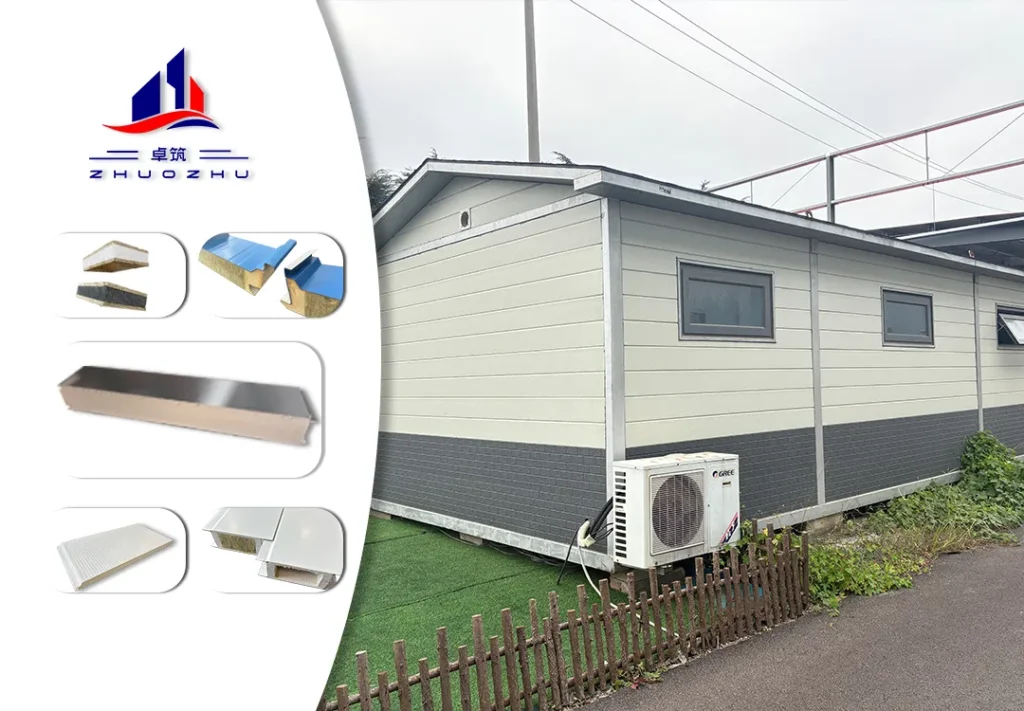
Temperate Climate – Balanced Performance Solution
- Exterior Wall System: ZHUOZHU Decorative Insulated Wall Cladding
- Thermal Conductivity: 0.022-0.024 W/(m·K)
- Recommended Thickness: 80-100mm
- Advantage: Integrated insulation and decoration, adapts to variable weather
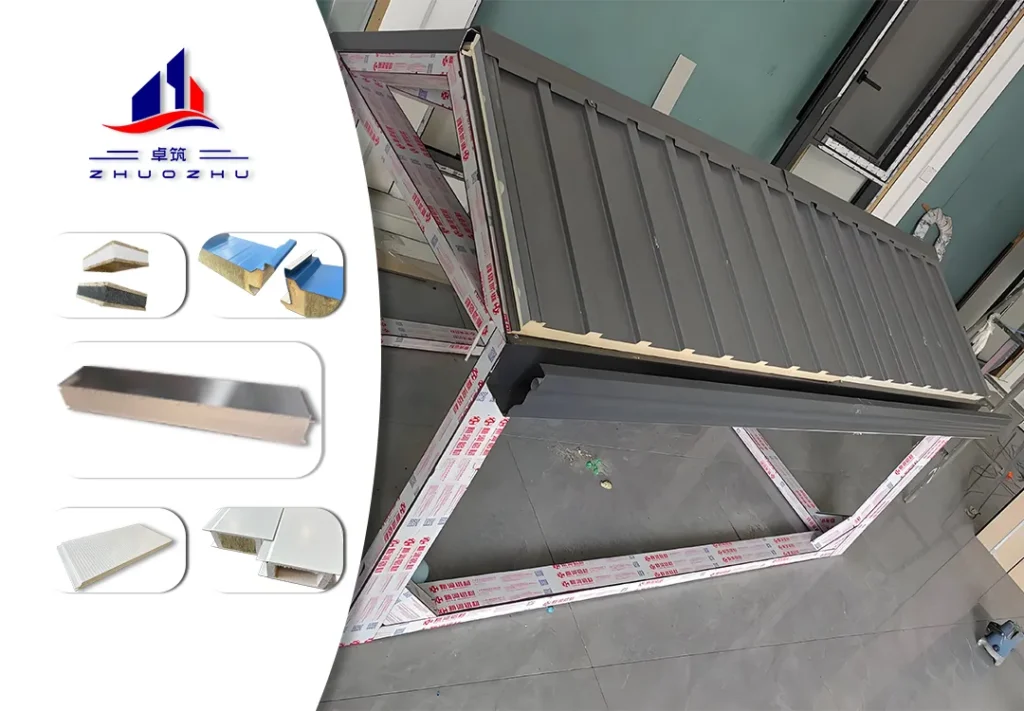
- Roof System: Metal Sandwich Panel
- Recommended Thickness: 100-120mm
- Characteristic: Resists rain/snow, high durability
Mediterranean Climate – Insulation-Focused Solution
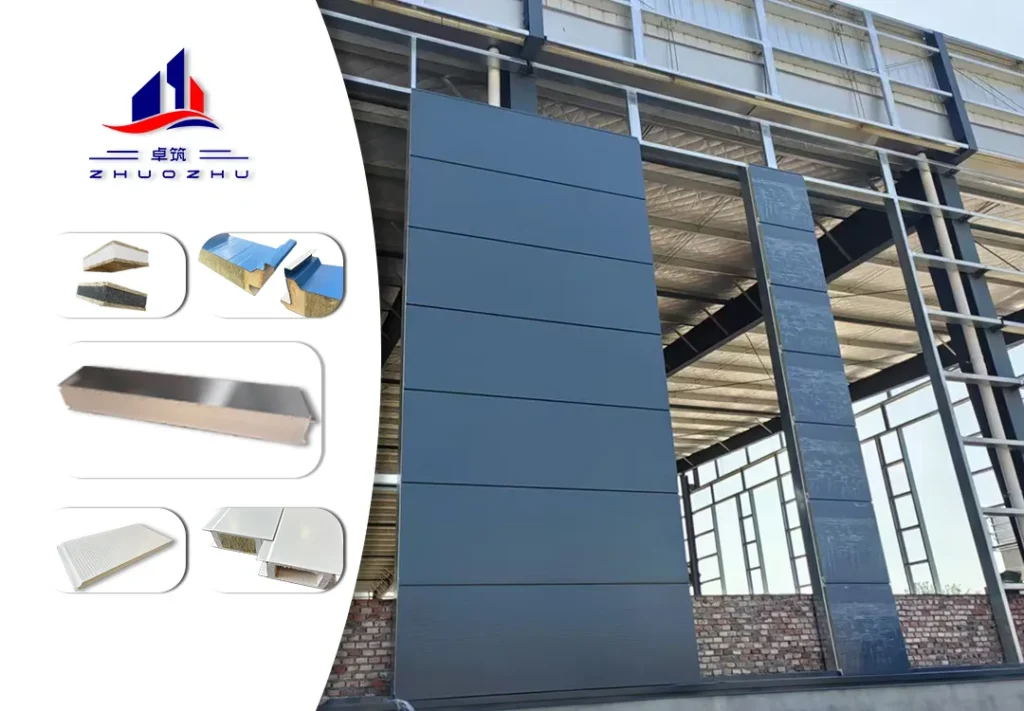
- Key Solution: ZHUOZHU Great Wall Aluminum Insulated Panel
- Solar Reflectance: ≥0.85
- Thermal Conductivity: 0.022-0.025 W/(m·K)
- Characteristic: Reflects most solar radiation
- Exterior Wall System: Light-colored Decorative Insulated Panel
- Recommended Colors: White, Light Gray
- Solar Reflectance: ≥0.70
Continental Climate – Dual Performance Solution
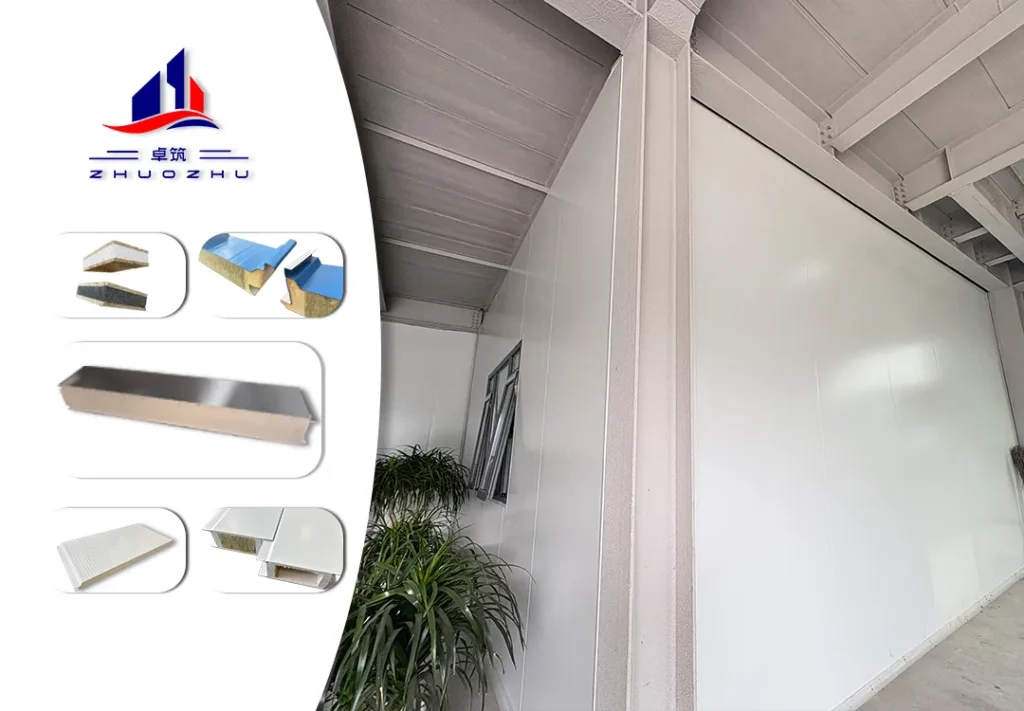
- Best Choice: ZHUOZHU Rockwool Sandwich Panel
- Thermal Conductivity: 0.036-0.042 W/(m·K)
- Recommended Thickness: 120-150mm
- Advantage: Class A Fire Rating, good thermal stability
- Supplementary Solution: Seasonally adjustable insulation systems
Tropical Climate – Insulation & Moisture Control Solution
- Core Material: ZHUOZHU FEPS Cleanroom Panel
- Thermal Conductivity: 0.034-0.038 W/(m·K)
- Mold Resistance Level: Class 0
- Characteristic: Excellent moisture and mold resistance
- Supporting Measures:
- Ventilated cavity design
- Anti-pest/termite treatment
- Sunshade systems
Arid (Desert) Climate – Reflective Insulation Solution
- Primary Material: ZHUOZHU High-Reflectivity Metal Panel
- Solar Reflectance: ≥0.90
- Thermal Emittance: ≥0.85
- Characteristic: Cool roof technology, significantly reduces surface temperature
- Supplementary Material: Phase Change Material (PCM) Composite Panels
- Function: Moderates indoor temperature fluctuations
- Applicability: Regions with large diurnal temperature swings
Special Environmental Considerations
High-Altitude Regions
- Focus: UV radiation protection
- Recommendation: PVDF surfaced insulated panels
- Additional Requirement: Enhanced wind load resistance
Coastal Regions
- Focus: Corrosion resistance
- Recommendation: Aluminium-Magnesium-Zinc coated panels
- Special Treatment: Enhanced sealing measures
Seismic-Prone Zones
- Focus: Structural safety
- Recommendation: Lightweight insulation materials
- Special Requirement: Flexible connection systems
Economic Analysis & Return on Investment (ROI)
Initial Investment Comparison
- Polar Regions: Insulation investment share 15-20%
- Tropical Regions: Insulation investment share 10-15%
- Temperate Regions: Comprehensive investment share 12-18%
Payback Period
- Developed Countries: 3-5 years
- Developing Countries: 5-8 years
- Extreme Climate Zones: 2-4 years
Implementation Advice & Key Considerations
Design Phase
- Conduct detailed climate data analysis.
- Select insulation systems suited to the local climate.
- Consider the impacts of future climate change.
Construction Phase
- Ensure continuity of the insulation layer.
- Pay attention to detail in joint and connection treatment.
- Perform on-site quality testing.
Maintenance Phase
- Regularly inspect the integrity of the insulation system.
- Repair damaged sections promptly.
- Adjust maintenance cycles based on climatic characteristics.
In today’s globalized world, construction projects often span multiple climate zones. Leveraging its complete product line and global project experience, ZHUOZHU can provide the most suitable insulation solutions for buildings in any climatic condition. Choosing the correct insulation material not only significantly enhances building energy efficiency but also creates a comfortable and healthy indoor environment for occupants.
