
In today’s evolving construction landscape, steel structures combined with sandwich panels are emerging as a powerful alternative to traditional concrete and wood construction. This innovative approach offers numerous advantages that are reshaping how we think about residential building.
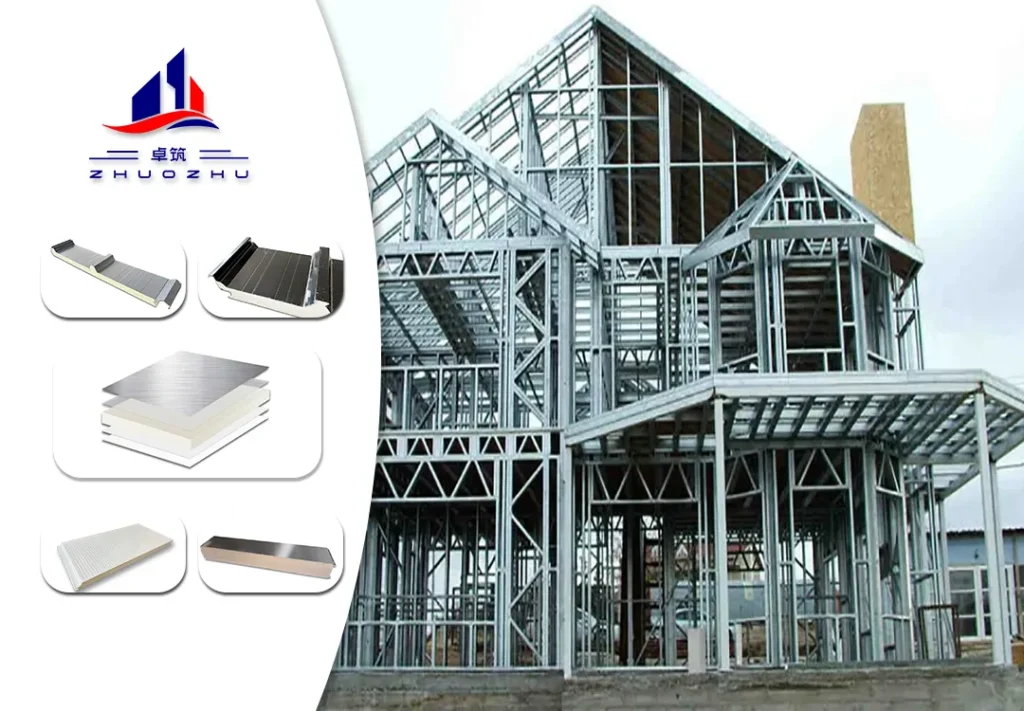
The Core Advantages of Steel and Sandwich Panel Construction
Speed and Efficiency
The most significant benefit lies in construction speed. While traditional concrete structures require weeks for curing and setting, steel frame with sandwich panel systems can be erected in days. Prefabricated components arrive on-site ready for assembly, reducing construction time by up to 60% compared to conventional methods.
Superior Thermal Performance
Sandwich panels, with their insulated cores, provide exceptional thermal resistance:
- Typical U-values of 0.15-0.25 W/m²K
- Consistent insulation without thermal bridges
- Immediate occupancy without drying time
Strength and Durability
Steel’s strength-to-weight ratio outperforms both concrete and wood:
- Higher resistance to seismic activities
- Better performance in extreme weather conditions
- Non-combustible construction when using mineral wool cores
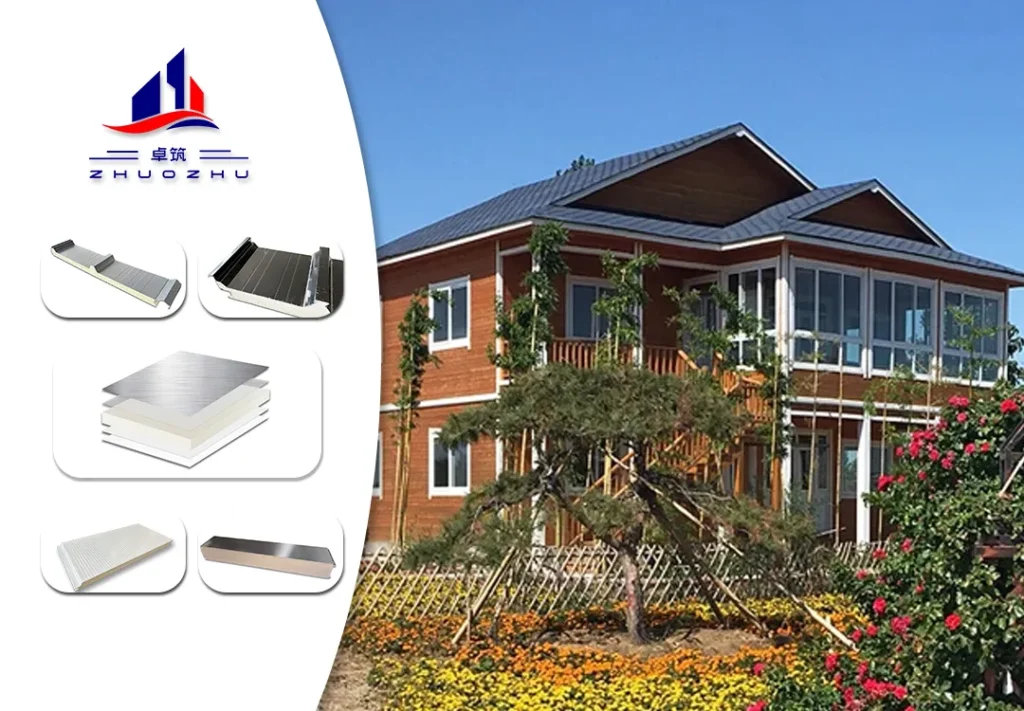
Comparative Analysis: Steel vs. Traditional Materials
Versus Concrete Construction
- Weight: Steel structures are 60-70% lighter
- Construction Time: 50-70% faster completion
- Foundations: Lighter loads mean simpler, less expensive foundations
- Design Flexibility: Larger spans without intermediate supports
- Environmental Impact: Fully recyclable materials vs. concrete’s carbon footprint
Versus Wood Construction
- Consistency: Factory-controlled quality vs. natural material variations
- Fire Resistance: Inherently non-combustible vs. wood’s flammability
- Durability: Immune to rot, insects, and moisture damage
- Dimensional Stability: No warping, shrinking, or settling over time

Technical Superiority in Practice
Energy Efficiency
Modern sandwich panels achieve thermal performance that would require much thicker traditional walls. For example:
- 150mm PIR core panel ≈ 600mm concrete wall insulation value
- Continuous insulation eliminates thermal bridging
- Air-tight construction reduces energy losses
Environmental Benefits
- Recyclability: Steel is 100% recyclable, sandwich panels up to 90%
- Reduced Waste: Precision manufacturing minimizes construction waste
- Lower Carbon Footprint: Efficient manufacturing and transportation
- Sustainable Sourcing: Responsible material sourcing practices
Long-term Performance
- Maintenance-free exterior surfaces
- Consistent performance over decades
- Resistance to environmental degradation
- Excellent acoustic insulation properties
Cost Considerations
Initial Investment
While material costs may be higher than some traditional methods, the overall project economics tell a different story:
- Faster completion reduces financing costs
- Earlier occupancy generates quicker returns
- Reduced labor requirements offset material costs
- Lower foundation costs due to lighter structure
Lifecycle Value
- Energy savings of 30-50% compared to conventional construction
- Minimal maintenance requirements
- Longer service life with consistent performance
- Higher residual value due to durability
Application Versatility
Residential Adaptability
This construction method suits various housing needs:
- Single-family homes and multi-story apartments
- Temporary and permanent housing solutions
- Extreme climate adaptations
- Urban infill and rural construction
Design Flexibility
- Clean, modern aesthetics
- Wide color and finish selections
- Integration with other materials
- Adaptable to various architectural styles
Addressing Common Concerns
Thermal Comfort
Advanced sandwich panel systems provide:
- Stable indoor temperatures year-round
- Elimination of cold spots and drafts
- Excellent humidity control
- Consistent comfort throughout the living space
Acoustic Performance
Properly designed systems offer:
- Sound transmission class (STC) ratings of 45-55
- Effective noise reduction between rooms
- External noise attenuation
Structural Integrity
Modern engineering ensures:
- Compliance with all building codes
- Resistance to extreme weather events
- Long-term structural stability
- Proven performance in seismic zones
The Future of Residential Construction
As technology advances, steel and sandwich panel construction continues to improve:
- Smart panel integration with built-in services
- Enhanced environmental performance
- Improved manufacturing efficiency
- Better integration with renewable energy systems
Making the Right Choice
When considering steel and sandwich panel construction:
- Evaluate local climate conditions
- Consider long-term energy costs
- Assess construction timeline requirements
- Review local building regulations
- Calculate total lifecycle costs
The combination of steel framing and sandwich panels represents a sophisticated, efficient, and sustainable approach to modern housing. While traditional materials like concrete and wood have their place, the benefits of speed, efficiency, durability, and sustainability make steel and sandwich panel construction an increasingly attractive choice for forward-thinking homeowners and developers.
This construction method not only meets today’s needs for rapid, quality housing but also addresses growing concerns about energy efficiency, environmental impact, and long-term value. As construction technologies continue to evolve, steel and sandwich panel systems are poised to play an increasingly important role in shaping our built environment.
For your next project, consider the modern alternative that combines strength, efficiency, and sustainability in one complete package.
